

Audio By Carbonatix
The government is seeking to rename the National Investigations Bureau (NIB) to the Bureau of National Intelligence (BNI) under sweeping reforms captured in the proposed Security and Intelligence Agencies Bill, 2025.
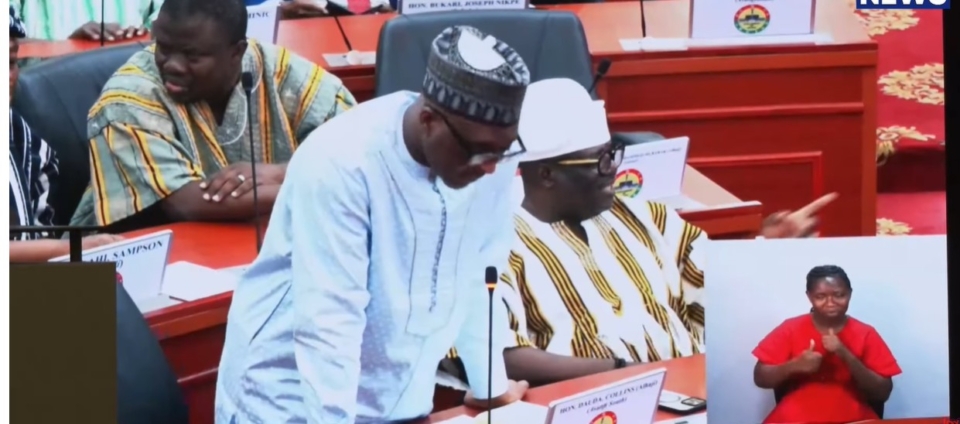
Interior Minister Mohammed Mubarak Muntaka disclosed the plan on the floor of Parliament on Thursday, January 19, explaining that the rebranding is meant to end longstanding public confusion between the NIB and the similarly abbreviated National Investment Bank.
Presenting the rationale to lawmakers, the minister stressed that clarity in the naming of security agencies is critical to effective national security administration and aligns with international best practice.
"Everywhere in the world, you make sure that the acronyms for the security agencies do not match anything else, and in fact, it is supported by law to make sure that nobody can name anything after an acronym of any of the security agencies," he said.
He noted that the current overlap has created avoidable ambiguity in public discourse and official communication.
"Unfortunately, we have a situation where, when you say NIB, people are wondering whether you're talking about the bank or you're talking about the security agency. So Mr Speaker, one of the significant things that we are trying to do is to reintroduce the name BNI at this time. Even though the BNI of yesterday was the Bureau of National Investigation, this BNI will remain the Bureau of National Intelligence."
Broader security restructuring
Beyond the proposed name change, the bill introduces wider institutional reforms intended to streamline Ghana’s national security architecture.
A key provision seeks to abolish the dedicated portfolio of Minister for National Security. Instead, the President would be authorised to assign oversight of the National Security Coordinator to an existing minister, rather than maintaining a standalone ministry.
Mr. Muntaka argued that the adjustment is necessary to eliminate role conflicts and duplication within the security ecosystem.
"...A detailed ministerial role and the function of the national security coordinator, because he's supposed to coordinate all the activities within the space. And if you assign or leave a ministry called the Ministry of National Security, which is likely supposed to play an oversight role, and if you are not careful, they begin to conflate, and they begin to have misunderstandings, and that affects the security architecture that we have in the country.
"So one of the things that we are trying to do is to keep this position as more or less that of the President, and then he gets one of his ministers to play that oversight without the necessarily fine, detailed designation of a minister for national security, so that as much as possible you try to avoid the conflict between the minister and the National Security coordinator".
Minority raises red flags
However, the proposal has drawn sharp criticism from the Minority in Parliament.
Minority Leader Alexander Afenyo-Markin warned that the bill, in its current form, could centralise excessive authority in the office of the National Security Coordinator without adequate safeguards.
He questioned the urgency of the reforms, arguing that the accompanying memorandum fails to demonstrate weaknesses in the existing legal regime.
"The memorandum before us does not provide any empirical evidence to suggest that ACT 1030 has failed. It appears that this bill is more founded on partisan political interest than a national security interest for good governance.
"What is being proposed? So much power is being given to the coordinator; it is not clear how his powers are going to be fettered, Mr Speaker. My submission is that if you give such powers to the coordinator, and you do not provide for a clear path of responsibility, accountability, and oversight, it becomes problematic to you yourself as a government, and when the rights of citizens are being abused, the man will come and tell you that in the name of national security. There will be the need for the Minister to sit with us as a house, do further winnowing, and incorporate the major concerns raised by the minority on this floor."
Parliamentary scrutiny expected
The competing positions set the stage for rigorous parliamentary debate as lawmakers scrutinise the bill’s implications for accountability, institutional balance, and civil liberties within Ghana’s national security framework.
If passed, the reforms would mark one of the most significant restructurings of the country’s intelligence architecture in recent years.
Latest Stories
-
Kwaku Azar writes: A-G vs OSP
31 minutes -
Mfantsipim–Adisadel rivalry built excellence, not division – Sam Jonah
56 minutes -
Vice President launches Mfantsipim’s 150 years of shaping Ghana’s greatest mind
1 hour -
I assure Otumfuo, Mahama will join him to commission KNUST Teaching Hospital by end of this year – Haruna Iddrisu
2 hours -
Barcelona dominate derby to extend La Liga lead
2 hours -
Gov’t to roll out free special education for persons with disabilities from July 1 – Education Minister
2 hours -
Importers and Exporters Association declares full support for Publican AI port system
3 hours -
“We used it to test our officiating officials’ readiness” – Bawah Fuseini after CAA Athletics event
3 hours -
Volleyball emerges as Ghana’s fastest rising sport
3 hours -
National Sports Fund needs strong leadership from the top – Administrator David Wuaku
3 hours -
JoySports Exclusive: Steve McLaren in talks with GFA after expressing interest in Black Stars job
3 hours -
Fire guts auto parts warehouse at Bubuashie, one fire officer injured
3 hours -
I owe my victory to coach Ofori Asare – Allotey after winning WBA Africa Gold Super Flyweight belt
3 hours -
Church of Pentecost supports over 2,000 BECE candidates in Obuasi with career guidance seminar
5 hours -
Brandon Asante and Coventry all but promoted to Premier League despite Sheffield Wednesday draw
5 hours