

Audio By Carbonatix
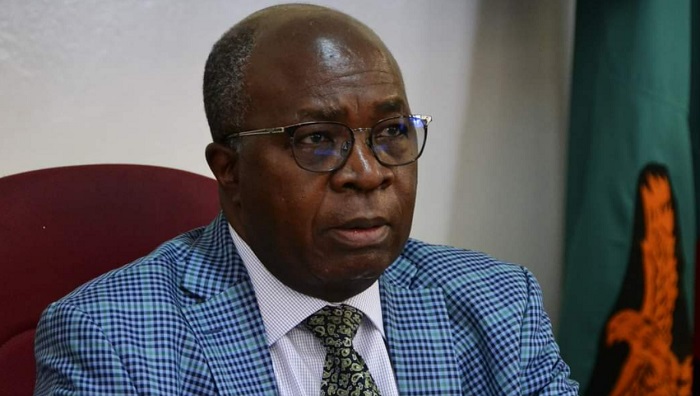
Zambia’s Minister of Finance and National Planning, Situmbeko Musokotwane, has advised Ghana to have restrictive laws on debt accumulation.
“We put a law in Parliament which tied my hands to say, going forward, you can’t be like those in the past. So, we tied our hands for Parliament to have more power and restrictions on borrowing,” he said.
That should be combined with reforms to maintain credibility with creditors, the international community, and citizens, as well as create a conducive environment for private sector investment for value addition.
He expressed confidence that such an action would hasten the processes of concluding debt treatment, grow the economy, increase domestic revenue, create more jobs, uplift the living standards of people, and help avoid future debt crises.
Minister Musokotwane said this as he shared the experience of Zambian authorities, who on Saturday, October 14, 2023, formalised a Memorandum of Understanding (MoU) with its Official Creditors on restructuring of some US$6.3 billion debt.
Zambia, the first African country to default on its debt during the COVID-19 pandemic, reached an agreement in principle in June, and currently awaiting to sign an MoU for the restructuring of its debt.
He spoke at the African Finance Ministers press briefing on Saturday, October 14, 2023, in Marrakech on the sidelines of the International Monetary Fund (IMF)/World Bank Group (WBG) Annual Meetings.
He explained that it was important for the country to take prudent measures not to accumulate high debts by having strong structural and sustainable reforms while investing in education, healthcare, infrastructure and industrialisation.
“To get the support of the international community – lenders and other people, obviously, must conclude that you’re worthy of their support and willing to take steps to assist yourself,” he noted.
“We’ve learnt a lot, and for people like you [Ghana], you’ve been lucky,” Mr Musokotwane said, with respect to Ghana gaining external creditors assurance and securing an IMF programme in five months.
Among others, Ghana has a Fiscal Responsibility Act, 2018 (Act 982), which requires the government not to spend beyond a threshold that would push fiscal deficit above five per cent of Gross Domestic Product (GDP).
However, it was suspended in 2020, following the outbreak of the COVID-19 pandemic, as the government envisaged that it would not meet the five per cent deficit threshold.
In the meantime, the Ministry of Finance and Bank of Ghana (BoG) have signed an MoU, providing for zero monetary financing throughout the IMF US$3 billion loan-support programme with Ghana.
Meanwhile, Ghana’s economic growth had averaged 3.2% for the first two quarters of 2023, something that Dr Ernest Addison, Governor, BoG, explained, should make the government “operate without access to central bank financing.”
Latest Stories
-
Ghana at the heart of global PR excellence
3 minutes -
Ghana Institute of Architects clarifies position on ARC-ASG dispute amid ongoing case
4 minutes -
NDC supporters storm Fomena constituency office over alleged disqualification of chairman aspirant
7 minutes -
NPA CEO assures tanker drivers of action on welfare concerns
8 minutes -
Karpowership seeks contract extension as Ghana’s power demand grows
11 minutes -
Gender Ministry inaugurates committee to drive early childhood development
13 minutes -
Four Schools, One Crown: Prempeh, Corpus Christi, Mfantsipim and St Augustine’s battle for NIQ trophy
13 minutes -
HIV status cannot be used to deny employment under Ghana law – Ghana AIDS Commission
15 minutes -
Buffer Stock calls for expansion of national storage capacity as it falls below 50,000 metric tonnes
15 minutes -
Central Regional Minister urges use of religious platforms to change environmental, sanitation practices
38 minutes -
Henry Kweku Banning
38 minutes -
Execution of US murderer Christa Pike halted an hour before it was due to happen
41 minutes -
GoldBod generates US$1.87bn in FX in September, exceeds monthly target
44 minutes -
SOE comments controversy: ‘We must never abandon our humanity because of judicial office’ – CJ
54 minutes -
Samuel Kojo Brace declares intention to contest NPP parliamentary primary in Ahanta West
55 minutes