

Audio By Carbonatix
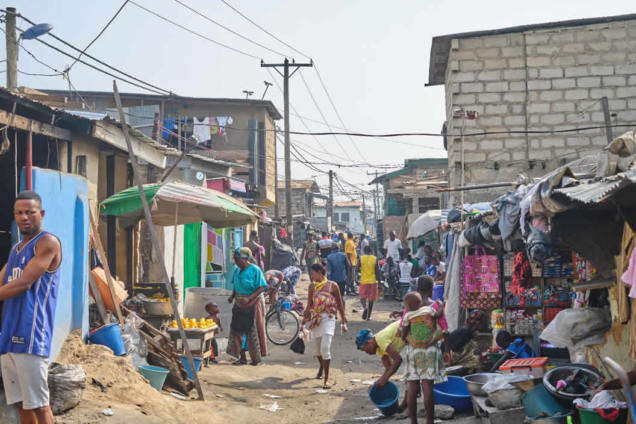
The latest Ghana Multidimensional Poverty Report published by the Ghana Statistical Service (GSS) has painted a stark picture of poverty levels across the country, revealing that employment and living conditions are the largest contributors to multidimensional poverty.
Employment and living conditions contribute the highest to multidimensional poverty in most regions ranging from 47.8 percent to 12.7 percent and 35.9 percent to 15.5 percent respectively.
According to the Director of Social Statistics at the GSS, Omar Seidu, the root causes of the complex poverty are often linked to educational attainment of household heads.
"Four out of ten households where the head of household has no education, then that household is multidimensionally poor," he explained.
Key Findings: Widespread Poverty
The report identified that a total of 7.3 million Ghanaians, representing 24.3% of the household population, are multidimensionally poor.
This type of poverty measures deprivation in several dimensions simultaneously, including education, health, and living standards. Of these, 43.8% are experiencing severe poverty.
Rural vs. Urban
Multidimensional poverty affects a significant portion of the rural population, with 36.7% of rural residents falling below the poverty threshold. The severity of poverty is nearly identical in rural (44.0%) and urban (43.4%) areas.
Regional Disparities
The Savannah Region stands out with the highest proportion of multidimensionally poor households, at 49.5%, almost double the national average of 24.3%.
Despite this, the Ashanti Region has the largest number of multidimensionally poor individuals, totaling 959,031.
Seidu highlighted, “However, the actual number of persons who are multidimensionally poor, the Ashanti Region tops (18%) because it has a lot of population. This is more than most of the regions.”
The Multidimensional Poverty report showed that nine regions exhibit alarming poverty levels, with over a quarter of their populations facing multiple deprivations. These regions include Savannah (49.5%), North East (48.1%), Upper East (43.0%), Oti (40.8%), Northern (38.4%), Upper West (37.4%), Volta (27.3%), Western North (27.0%), and Western (25.7%).
Employment and Living Conditions
Employment contributes 32.6% and living conditions 27.9% to multidimensional poverty, making them the primary factors. Health insurance also plays a critical role, accounting for 21.5% of the poverty indicators.
Demographic Insights
The incidence of poverty is notably higher among female-headed households (27.0%) compared to male-headed households (23.0%). Younger household heads below 25 years and older heads above 60 years are also more susceptible to poverty.
Educational Disparities
Educational attainment significantly affects poverty levels. "Four in ten multidimensionally poor persons have never attended school," the report indicates. Households whose heads have only basic education have a poverty incidence of 20.0%, which is 12.9 percentage points higher than those with tertiary education (7.1%).
Sectoral Impact
Households headed by individuals working in agriculture face the highest poverty rates (34.3%), compared to those in the services sector, who are more than 5.5 times better off, and those in the industry sector, who are 3.8 times better off.
The findings underscore the need for targeted interventions to address the root causes of multidimensional poverty. Enhancing educational opportunities, improving living conditions, and creating sustainable employment are crucial for alleviating poverty and fostering equitable development in Ghana.
Latest Stories
-
Daily Insight for CEOs: Building customer-centric leadership
6 minutes -
Democracy must deliver food, jobs and healthcare, not just elections – Mahama
7 minutes -
Capacity constraints must never be a barrier to restitution – Mahama
8 minutes -
COMAC pushes for suspension of sections of Customs Act 2026
10 minutes -
Mahama calls for Great African Museum to anchor continent’s heritage revival
12 minutes -
Mahama cites return of Mpomponsuo sword as model for restitution
13 minutes -
Mahama: Africa must inherit more than the story of what it lost
16 minutes -
Mahama pushes for permanent UN system for restitution of African artefacts
17 minutes -
Ghana is arguably Africa’s most stable democracy, says Mahama
18 minutes -
Mahama calls for investment in Africa’s cultural infrastructure
19 minutes -
‘Africa’s cultural heritage story must continue with its return’ – Mahama insists
22 minutes -
Some reporters denied White House access despite judge overturning Trump media ban
23 minutes -
Mahama urges Netherlands, Germany and France to deepen restitution efforts
26 minutes -
Mahama demands unconditional return of African artefacts and human remains
35 minutes -
‘Gov’t doesn’t understand our plight; 8% fare hike is too small’ – Kumasi drivers
35 minutes