

Audio By Carbonatix
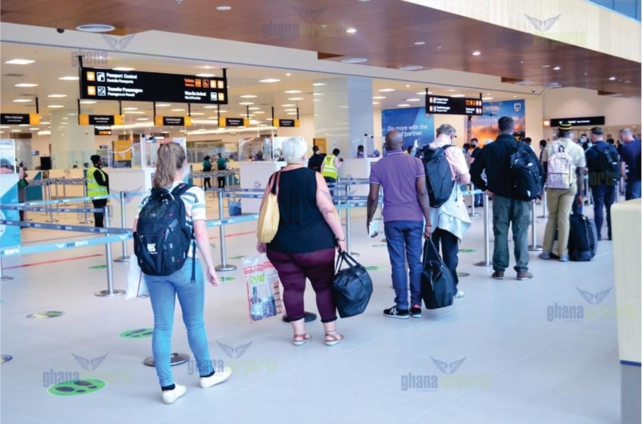
Eight months after the outbreak of the COVID-19 pandemic, many countries are working their ways to open up their borders to international travel. Ghana opened the Kotoka International Airport (KIA) to international travel in the first week of September 2020.
Measures put in place to prevent SARS-CoV-2 infected people from entering the country included the provision of on-the-spot testing on arrival. Although many Ghanaians expected the authorities of the KIA to use the popular reverse transcriptase real-time polymerase chain reaction (PCR) test, instead the antigen-based test was used at a cost of $150 per test.
The test type and cost were met with public anxiety and displeasure. For example, one person said in a radio interview “What possible purpose can a test serves in a pandemic if it misses about 30 of every 100 infections, leaving those 30 cases undetected, untreated, and uncontained?”
Maybe persons raising concerns about the perceived low accuracy of the antigen-based test are right since the antigen-based test fail to match the diagnostic accuracy of the gold-standard PCR-based test. Moreover, the superiority of the PCR-based test makes it the preferred choice of the World Health Organization (WHO) for SARS-COV-2 detection.
The silver lining came from Ghana’s FDA which stated the diagnostic accuracy (sensitivity and specificity) of the antigen-based test currently being used at the KIA to be 99% – although the details of the antigen test device were not clear.
But wait a minute! What possible prevention purpose a PCR-based test can serve in a pandemic if it returns positive results in people who have already cleared the virus and pose no risk of further transmission? In other words, like many viral infections; SARS-CoV-2 usually persist for weeks to months although the individual has recovered from the infection.
Therefore, the multimillion-dollar question is; what good is a PCR-based test that identifies non-infectious individuals as candidates for quarantine when the virus is ‘all over the place’? At the initial phase of the pandemic, the use of PCR-based test was undisputable.
However, considering the application of PCR-based test in the busy airport environment where at peak times more than 8000 passengers will be tested within a period of about 3 hours, the antigen-based test with accuracy levels of above 90% will be preferred based on short turnaround time, cost and convenience.
On average, the antigen-based test cost $5 per test outside the airport environment e.g. BinaxNOW COVID-19 Ag Card (a typical rapid diagnostic antigen test) has a diagnostic accuracy above 98% according to the United States of America FDA.
When it comes to the prevention of SARS-CoV-2 spread and containing outbreaks, it is the infectious people that need to be identified and isolated. Not everyone who has detectable levels of SARS-CoV-2 virus in their airways is shedding the virus in sufficient quantity to pose a transmission risk to others. More so, not all persons infected with SARS-CoV-2 are spreaders.
Although the accuracy of the antigen-based test is approximately 70%, that is on the average it exhibits a 30 per cent false-negative rate which is considered poor for diagnosing SARS-CoV-2 infection, it is likely the better tool for screening large populations in the shortest possible time in settings such as the airports, schools, market places, etc as compared to the PCR.
Unlike the PCR-based test, the antigen-based test does not pick faint signals of residual viral materials outside the period of infectiousness. This means that the antigen-based testing is highly specific in terms of identifying infectiousness as compared to the PCR-based test.
Hence, for purposes of surveillance screening, those antigen-based test negatives nerve-wracking Ghana’s FDA are not false negatives at all but rather are true negatives for disease transmission. Far from being problematic, in the context of outbreak containment, the antigen-based test’s limited window of sensitivity is a major asset.
The antigen-based test is ideally suited to yield positive results precisely when the infected individual is maximally infectious. Moreover, antigen testing sensitivity peaks when the infected persons are highly infectious i.e. infectiousness depends on “viral burden.” The more virus a person has in the airways, it is believed that the more likely that person could transmit to others.
In conclusion, rapid antigen-based testing is an essential weapon in the fight to resume many of the activities and reopen many of the venues that comprise what we used to call “normal life.”
It is practical, convenient, cost-effective, and easily scaled. It is time to stop asking what possible use we might have for a test with a 30 per cent false-negative rate. Instead, it is the time to start asking why it is taking the FDA so long to approve this essential disease prevention technology for the average Ghanaian to benefit.
My candid opinion!
*****
Professor Mohamed Mutocheluh
Molecular Virologist and Immunologist at KNUST.
Email: mmutocheluh.chs@knust.edu.gh or mutocheluh@gmail.com
Latest Stories
-
Education Ministry extends 2026 SHS placement exercise by one week
57 minutes -
Better roads will create sustainable jobs for Ghana’s youth – Joyce Bawah Mogtari
1 hour -
Kumasi Expressway to cut travel time, boost economic activity – Joyce Bawah Mogtari
1 hour -
GOIL could hold fuel prices despite $100 crude oil shock – Edward Bawa
1 hour -
Fitch lifts Ghana’s 2026 current account surplus forecast to 7.8%
1 hour -
Do not identify yourself as Ziavi Paramount Chief or Queen – Volta Region House of Chiefs warns
2 hours -
Sosu demands probe into $260m cocaine shipment seized in France
2 hours -
Mahama to receive cleared Accra-Kumasi Expressway right-of-way today
2 hours -
Mahama to cut sod for US$1.3bn Sentuo Airport Garden City on Tuesday
2 hours -
Ghana, China agree to tighten crackdown on illegal mining
2 hours -
Ghana, INTERPOL make strides in crime combat – CID boss
2 hours -
Fuel prices may rise, but GOIL says 30% transport fare hike doesn’t add up
2 hours -
Minority questions why alleged masterminds behind US$350m cocaine haul remain free
2 hours -
AGI calls for workplace training to boost youth employability
2 hours -
Mahama inspects proposed site for Upper West Regional Airport
2 hours