

Audio By Carbonatix
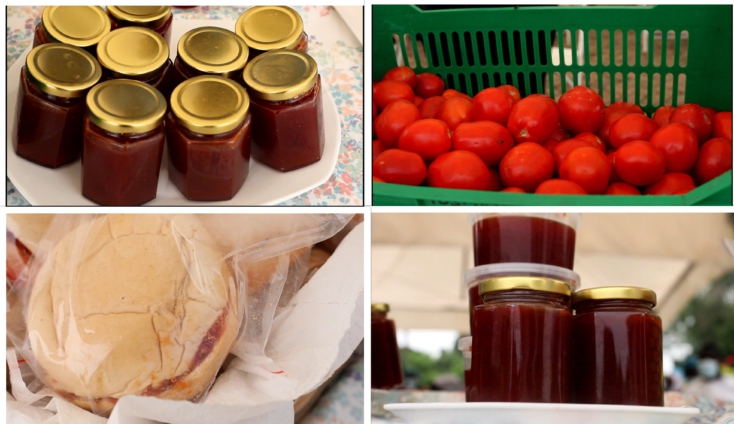
The Crop Research Institute of the Council for Scientific and Industrial Research (CSIR-CRI) has produced a tomato jam as its contribution to help address post-harvest losses in tomato production.
Ghana is the world's second-largest tomato consumer, behind only Germany.
Available statistics indicate postharvest losses of tomato occur at the pre-consumer level, estimated at between 20 and 50 percent. To reduce these losses, postharvest technologies are suggested.
Ghana’s crops research institute and the Korea Africa Food and Agriculture Cooperation Initiative (KAFACI) believe the tomato jam is critical to improve production and increase the shelf-life of tomatoes on the market.
The Project
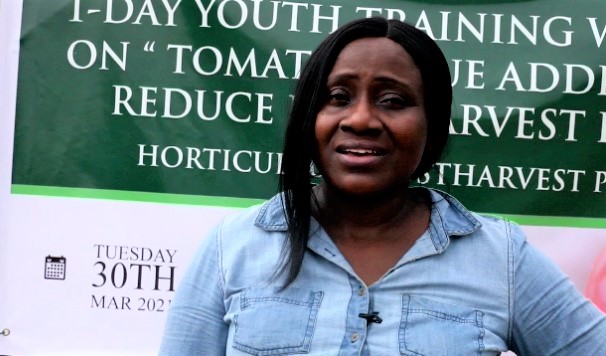
Dr Evelyn Adu-Kwarteng with the Horticulture division of the CSIR-CRI is the Lead project coordinator under which the jam was developed.
According to her, the project has trained farmers in improved production methods that will increase the value of tomatoes right at the farm level rather than waiting for the traders and bulk farmers to come to the farm gate and dictate prices to the farmer.
“If people in the communities have this capacity to process tomatoes, and present it to the outlet in the city, it becomes a trump card for the farmers such that they can also have a say in how much their fresh produce is sold for from their farms”, she said.
The first phase of the horticulture post-harvest project started with three crops; orange, pepper and tomatoes. The second phase is focused on value addition for tomatoes.
This is a project that has helped single out tomatoes, as a key crop that the production systems must improve right through to marketing.
It was supposed to have wrapped up in February but because of the covid-19 pandemic, it has been extended to August.
“We now have the opportunity to look at the value addition aspect of our tomatoes industry, though at the micro industrial level we know that most of the countries that have made it, did it at the micro industries, cottage level industries, a lot of them teaming up and making impact”, she added.
What constitutes the Jam?
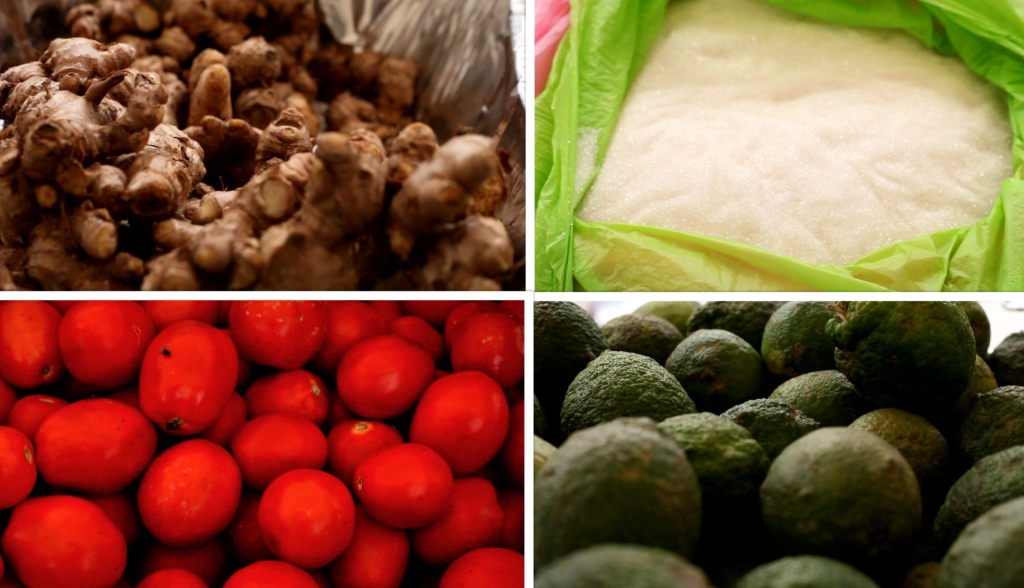
Ingredients for the jam include healthy tomatoes, sugar which is the thickening and preserving agent, then lemon (the juice) and then ginger.
Dr Evelyn Adu-Kwarteng explains that, “Jam in particular is a fruit-based product so we are trying to expose the Ghanaian consumer or the would-be industrialist to this very useful avenue of taking up excess tomatoes from the market”.
For Tomato jam, she explains that if it is taken through a proper sterilization process, it should be able to stay on the shelf for up to one year without deteriorating. This is even without the addition of any chemical preservative as is often done for commercial ventures.
“For what we have taught them, it should be able to stay on the shelf for a couple of months compared to you losing a large part of just a few days of your freshly harvested tomatoes”, she added.
Training
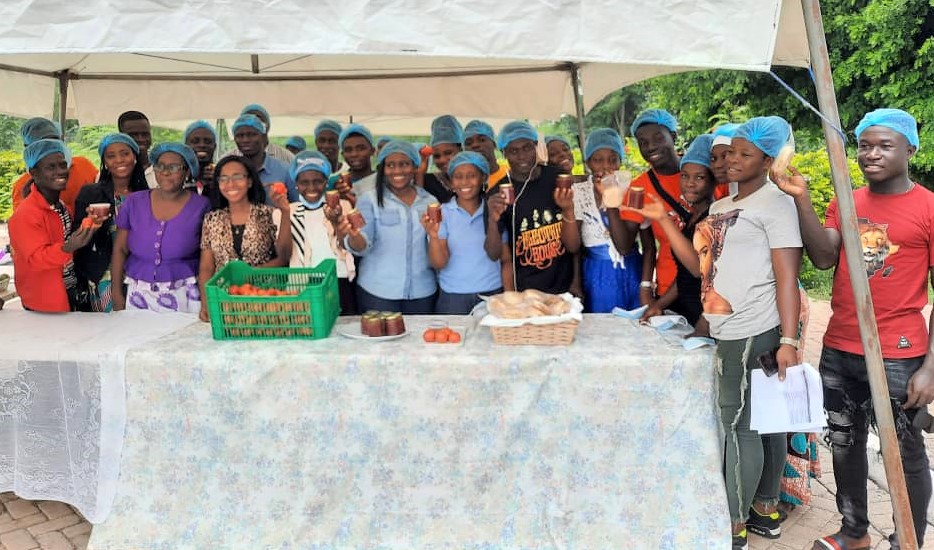
The youth training workshop on “tomato value addition to reduce postharvest losses”, organized by the crop research institute was held on the premises of the institute.
More than twenty youth drawn from Agogo and Akomadam areas in the middle belt of the country benefitted from the training.
The training which focused on uses of the tomatoes to address post-harvest losses was meant to improve the production systems and look at the value-addition at the micro industrial level in Ghana.
Deputy Director at the Crops Research Institute, Professor Marian Quain,says catching them young is critical, bringing the youth together and training them on other uses they can put their tomatoes to.
“We can all attest to how much tomatoes we lose in the farm gate, in our kitchen, and even in the market so if we are able to train those who do the production on other uses to which they can put the tomatoes to guard against the post-harvest loses we suffer, that will go a long way.”
She continued that, “the training targeting the youth is very critical and timely. There isn’t any critical time than now that we are fighting covid because tomatoes have a lot of anti-oxidant which we need to boost your immunity for you to fight against the virus.”
The Korean-sponsored project exists in 15 African countries.
Latest Stories
-
‘I predicted Tinkler would resign as Kotoko coach’ – Kojo Addae Mensah
11 minutes -
Ghana-China programme opens AI pathways for young Ghanaians
23 minutes -
We went to the ground – NDC defends research behind 2024 manifesto
31 minutes -
NDC orders halt to premature parliamentary campaign activities
37 minutes -
GoldBod dismisses claims of rift with BoG over Asiama’s board exit
43 minutes -
NDC communicator defends manifesto process, Mahama’s delivery record
45 minutes -
Ghana, Algeria explore stronger scholarship and academic exchange opportunities
46 minutes -
Law enforcement officers trained to tackle emerging human trafficking threats
52 minutes -
Ministries, assemblies cannot claim blanket exemption from vehicle tint laws – ACP Alexander
58 minutes -
Is Ghana safely becoming a narcotic transit coast?
1 hour -
Tinted vehicles could facilitate crime and endanger road users — ACP Alexander
1 hour -
BoG Governor appoints Second Deputy Governor Matilda Asante-Asiedu as rep on GoldBod board
1 hour -
The fight against terrorism requires regional and international cooperation – Mahama
2 hours -
Arrest Nana Boakye and probe into drug lab claims – NDC’s James Agbey
2 hours -
Refugees in South Africa face mounting tensions as September 30 deadline looms
2 hours