

Audio By Carbonatix
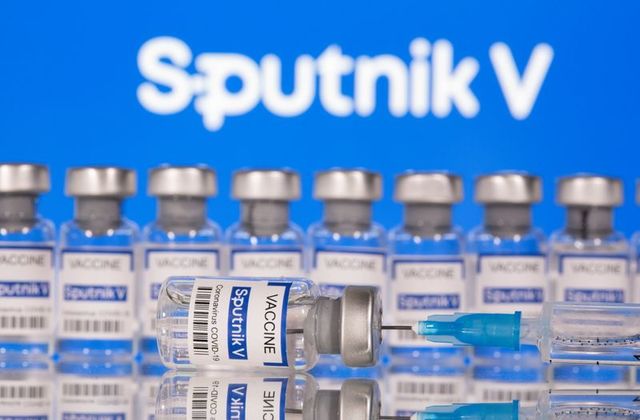
Ghana is set to roll out clinical trials for two separate COVID-19 vaccines as it joins global efforts to gather more information on how to defeat the virus.
About 1,500 volunteers will receive at least one full dose of the Russian-made Sputnik Light vaccine or the SANOFI Vaccine in a space of 13 months.
African governments have been largely criticized for their failure to significantly contribute to the campaign to develop vaccines and ensure mass inoculations.
Already similar trials are being run in at least eight other countries including USA, Russia, Egypt and the UAE.
Team Lead for the trials of the Sputnik Light in Ghana, Dr. Alberta Amu said, “if we are able to generate data that shows that the vaccine is efficacious and safe against the virus, it is going to be added to the other two vaccines already in use and hopefully increase vaccine availability in sub-saharan Africa”.
With the current global shortage of vaccines due to vaccine nationalism, Director at the Research and Development Division of the Ghana Health Service, Dr. Abraham Oduro believes Ghana's participation in the advanced clinical trials will better position it to access the jabs when they are ready.
“When you contribute in developing the product, you have a better chance of accessing the vaccine to you either for free or at a cheaper rate.
“Because you are going to compete for the vaccine and you have not participated it is going to be difficult to get them”, he said.
This is coming at a time where scientist have discovered a new and deadly strain of the Delta Variant described as the most contagious Covid-19 variant first seen in India.
Meanwhile, Director of Public Health at the Ghana Health Service Dr. Franklin Asiedu Bekoesays the country is stepping up surveillance at the airport to properly monitor and contain the Delta strain of the virus first seen in India.
About the Delta Virus
The most contagious Covid-19 variant, originating from India, has been recorded in Ghana.
Head of the West Africa Center for Cell Biology and Infectious Pathogens (WACCBIP) of the University of Ghana, Professor Gordon Awendare, confirmed that the Indian variant, also known as the Delta variant, is one of the 45 variants which are currently in Ghana.
The Indian strain has caused huge spikes in India and a serious increase in cases in the UK even though large sections of the population in those countries are vaccinated.
A mutation is elevated from a “variant of interest” to a “variant of concern” (VOC) when it shows evidence of fulfilling at least one of several criteria, including easy transmission, more severe illness, reduced neutralisation by antibodies or reduced effectiveness of treatment and vaccines according to the global health body.
Latest Stories
-
Sedina Tamakloe may not be innocent; except that someone did a poor job – Ivan Kyei
5 minutes -
I was scandalised after reading Sedina Tamakloe judgment – Solomon Owusu
21 minutes -
KOICA donates ICT Centre to Wesley Girls’ Basic School
27 minutes -
Music never made me any money – Konnected Minds Podcast founder
29 minutes -
We are teaching theory when students need practical skills – Konnected Minds founder
36 minutes -
From hospitals to prisons: Ghana Medical Trust Fund extends lifeline to prisoners
41 minutes -
‘Invest $9,000 in my preparation and give me $1,000 if I win gold’ – Raphael Botsyo urges Government
1 hour -
Waala chiefs alarmed by deteriorating state of 109-year-old Wa Municipal Hospital
1 hour -
Commercial tricycle rider jailed seven years for defiling minor
1 hour -
Ghana Boundary Commission assesses border challenges in Nkwanta North
2 hours -
‘Children are not your future spouses’ — DJ Switch criticises MP over viral comments
2 hours -
GTBank set to host 5th edition of Autism workshop and consultations to advance inclusion through action
2 hours -
Court of Appeal decision on Sedina raises questions about prosecution standards and appeal process — Gary Nimako
2 hours -
Court of Appeal ruling on Sedina could reshape criminal prosecutions, says Inusah Fuseini
2 hours -
Police: Recruitment exercise will continue in batches until 2028
3 hours