

Audio By Carbonatix
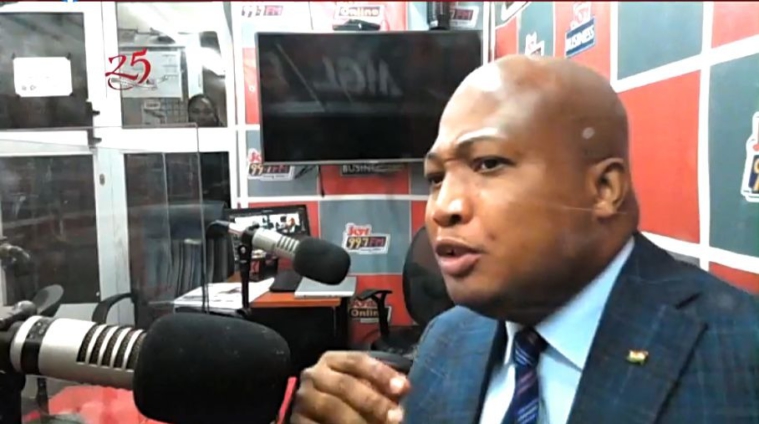
North Tongu MP, Samuel Okudzeto Ablakwa has called on government to roll out immediate measures to bridge the high salary inequalities between Article 71 officeholders and public servants.
Expressing his concerns in an interview with JoyNews' Joseph Opoku Gakpo on Tuesday, Mr. Ablakwa noted that the average pay of an Article 71 officeholder is much higher than the salary of workers in the public service.
"We should also be looking at the disparities, let's bridge the gap. We should not have the situation where just a few people in some specialised category appear to be taking all the remuneration."
The Ranking Member of Parliament's Foreign Affairs Committee's comment comes on the back of a report by the Ntiamoah Emoluments Committee indicating that as of 2016, ordinary public sector workers earned about six per cent of the monthly average salary of Article 71 officeholders.
The report observes that the highest-paid public servant in that year earned 28% of the salary of a Member of Parliament.
Reacting to that, Mr Ablakwa said the situation is worrying and has to be reversed as soon as possible.
For him, a pay cut as a solution to the high salary inequalities could be a better option.
"Let the independent committee determine if we don’t have enough resources as a country. And if some people would have to take a pay cut why not, I would not mind at all.
"At the end of the day this 6% that is what the other public sectors workers who are really in the majority are taking when you compare with what we are taking, it’s most unfair. I mean it can’t sit well with your conscience.
"I mean every other jurisdiction they are aligning and making sure that those who govern are not earning unnecessarily and unreasonably high remuneration which leaves the people agitated, leaves the people impoverished and leaves the people justifiable angry," he stated.
Meanwhile, Mr Ablakwa has been criticizing government for over-spending its 2020 approved budget by 8.8 billion Ghana Cedis.
Who is an Article 71 Office Holder
Article 71 Office Holders include the President, the Vice-President, the Speaker of Parliament, the Chief Justice and Justices of the Supreme Court.
The rest are; Members of Parliament (MPs), Ministers of State, political appointees, and public servants with salaries charged to the Consolidated Fund but enjoying special constitutional privileges.
A public sector workers
On the other hand, per the Public Services Commission Act, 1994 (Act 482), public sector workers are persons who work in; the Civil Service; Judicial Service; Audit Service; Education Service; the Prisons Service; Parliamentary Service; the Health Service; Statistical Service; National Fire Service; Customs, Excise and Preventive Service; Internal Revenue Service; Police Service and Immigration Service among others.
Latest Stories
-
Young girls demand climate action, stronger protection against child marriage
3 minutes -
Ex-gang boss sentenced to 40 years for orchestrating Tupac Shakur’s murder
3 minutes -
From near-deferral to three awards: UMaT graduate’s academic journey
6 minutes -
Atta Akyea denies seeking presidential pardon for Wontumi in galamsey case
43 minutes -
Photos: Mahama commissions 85-bed Police Hospital ward, donates two ambulances
52 minutes -
GTEC directs Ghana’s public universities to reopen by October 16 and begin lectures on October 19
53 minutes -
Star Oil donates GH¢1million towards construction of new CID facility
57 minutes -
Court hands Adjetey Sowah, two others lifetime bans after Amputee Football legal dispute
1 hour -
NDC appoints Julius Kwame Anthony as a Deputy Communications Director
1 hour -
Ghana repatriates 120 Nigerians rescued from suspected cybercrime centres
1 hour -
NPP rejects Emelia Agbenyo’s appointment as Deputy EC Chair, demands withdrawal
1 hour -
EOCO grants Suame MP John Darko enquiry bail in GH¢27m SIC investigation
1 hour -
NPP cannot question EC appointment after appointing own people to Commission – Kwakye Ofosu
1 hour -
BoG deepens public trust with regional stakeholder forum in Techiman
2 hours -
‘We have turned the tide’ – Ato Forson says Ghana is ready to take off
2 hours