

Audio By Carbonatix
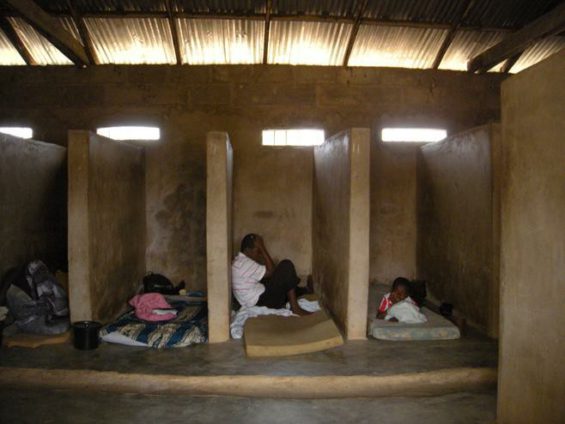
Challenges with shelter among the Ghanaian population is a factor when it comes to mental health issues confronting the country.
This is according to Professor Divine Ahadzie, Head of the Centre for Settlements Studies at the Kwame Nkrumah University of Science and Technology (KNUST).
He has proffered some solutions in providing affordable and decent housing in Ghana. Ghana has a social housing problem. The country has a housing deficit of 1.7million units.
To meet the shelter needs of the population, an estimated 170,000 housing units would have to be built annually. Prof. Divine Ahadzie observed that access to good descent houses promotes good health.
According to him, the housing problems such as high rent charges and frustrations dealing with homeowners, can worsen mental health problems.
"When you have the larger population having issues with housing, then there is a likelihood that the mental health of many people will be affected. It is linked to production at work, happiness and social life. Hence, once you take care of the home, mental health is also taken care of."

Prof. Ahadzie alluded to the compound housing concept as being helpful in meeting the accommodation needs of the populace.
He is prevailing on the government to upgrade the compound housing concept as an urban social housing strategy.
"Now compound houses are not economical in the cities, because if you put up a compound house you won’t get people to rent. Now compound houses are not built anymore. The existing ones are being upgraded so that sharing amenities are eliminated.
He continued that, "...this has raised the cost of rent pushing out the traditional compound house occupants, yet the government has not come in to fill the gap. Now the Minister is pushing for the National Housing Authority to be called to parliament and questioned on the policy for such people in addressing their housing needs."
Prof. Ahadzie also believes there are opportunities in reducing housing through the use of local materials.
"It has been established that over 70% of our soil composition is laterite. That is why we normally use it for construction of our roads and building of traditional houses.
However, through research and technology, he said that it has been upgraded to a new level of acceptable housing.
"Regardless of this, people still live with some regressive perception toward the laterite material. It is a matter of government policy and direction. People should also embrace it."
Latest Stories
-
Fuel prices set to rise again from Sept 1; petrol could hit GH¢16.21 – COPEC
2 hours -
REGSEC restricts Akwasidae celebrations in Denkyira amid security concerns
2 hours -
Eric Adjei distributes free fertiliser to farmers in Jaman North
2 hours -
Akufo-Addo urges NPP factions to unite behind Bawumia for 2028 victory
2 hours -
NDC mourns Western Regional Elections Director Papa Assan
2 hours -
Minerals Commission warns against fake job recruitment schemes
2 hours -
10 recruits dismissed for defying phone ban – Interior Minister
2 hours -
IEAG commends GoldBod, BoG for improving forex stability
3 hours -
Bawumia donates GH¢50,000 to St Jude Catholic Church at Weija
3 hours -
Mahama calls for faster mobilisation of AU Peace Fund resources
3 hours -
Improved roads bring new vehicle options to Tumu-Bolga, Tumu-Tamale, Tumu-Wa routes
3 hours -
Cedi records 7.9% depreciation against US dollar in first half of 2026
3 hours -
GIS launches operation on anti-human trafficking and exploitative street begging
3 hours -
Awutu-Senya District Assembly organises clean-up ahead of Awubia Festival
3 hours -
Vice President Opoku-Agyemang receives Democracy Cup
3 hours