

Audio By Carbonatix
The Centre for Social Impact Studies (CeSIS) is urging government to deliberately adopt strategies to attract, retain and encourage women to actively get involved in the management of natural resources in Ghana.
The group says as a show of this commitment, the Ministry of Lands and Natural Resources should prioritize women in artisanal and small-scale mining (ASM) in the allocation of concessions for the community mining initiative.
It observes regrettably that in spite of their immense contribution to artisanal mining particularly, women have largely remained invisible in the ASM sector.
“…we further appeal to mining companies to provide equal opportunities to women and men regarding conditions of service and take steps to mitigate potential systems, policies and cultural barriers that women face in the sector.”
Executive Director, Robert Ali Tanti said the practice where women miners earn less than their male counterparts should be reviewed immediately.
“It is discriminatory and against the fundamental human rights of the women”.
The statement continues that, “In addition to this important step, the companies must implement deliberate policies that encourage women to ascend the labour hierarchy and occupy top positions in the sector.
We also call on both government and the mining industry to provide more spaces for women to amplify their voices on the key challenges they face in the industry.”
A world where women living in mining communities have their livelihoods protected is possible. A world where women in ASM can have access to mineral concessions is possible. We need to take steps to end the bias and build a sustainable future with women
Statement Continues…
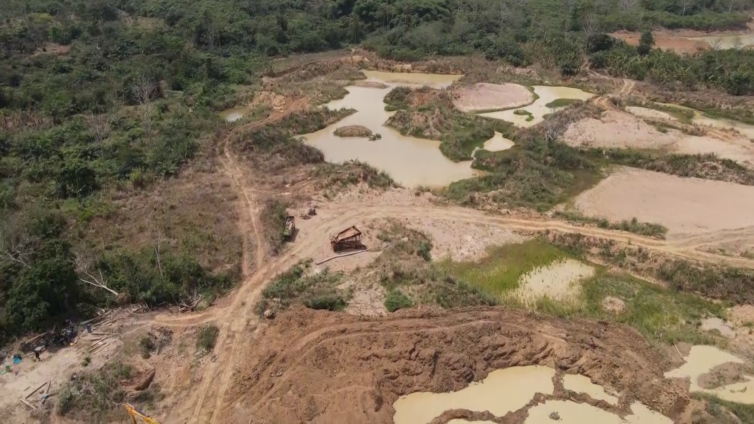
Women in mining communities shoulder the biggest burden of the negative impacts of mining being deprived of their livelihoods, trekking for miles to fetch water and food for the family (because water bodies have been polluted) in addition to catering to the needs of children and the aged in the society.
These responsibilities make it difficult for them to move to places in search of better livelihood opportunities.
Women who work for multinational mining companies also face the glaring discrimination of being paid less than their male counterparts for the same work done.
Such women are also less likely to climb to the top of the corporate ladder as compared to their male colleagues.
Finally, women in the artisanal and small-scale mining (ASM) sector also encounter diverse forms of discrimination including in access to mineral concessions.
It is in our view that without gender equality today, a sustainable future, and an equal future, remain beyond our reach in the extractive sector.
Latest Stories
-
Ghana needs a law to sustain constitutional reforms – CDD-Ghana
28 minutes -
COVID fumigation audit: Auditor-General has a lot of questions to answer – Akwatia MP
28 minutes -
Stranded Ghanaian medical graduates in Cuba appeal to Mahama for immediate return
36 minutes -
GNFS contains fire outbreak at Teshie Lekma Road near Lekma Hospital
7 hours -
Samia Nkrumah rejects the narrative that Ghanaians were happy after Nkrumah’s overthrow
8 hours -
A Mother’s pain: Tribute by Ivan Baidoo’s mother
8 hours -
‘Forgive us for staying away’ — Samia Nkrumah leads family back to Nkroful, pledges to preserve Nkrumah’s legacy
8 hours -
Ernest Nuamah scores twice as Lyon beat Rennes
8 hours -
‘My dear Ivan’ – A father’s tribute to a son tragically killed
8 hours -
GNPC Explorco advances Voltaian Basin drilling preparations with 13.5km access road
9 hours -
Cabinet approves facility manager for Borteyman Sports Complex – Kofi Adams
9 hours -
Sanitation is improving; critics may be ‘living in another world’ – Salaga South MP replies Bekwai MP
10 hours -
Government must do more to tackle sanitation crisis – Bekwai MP
10 hours -
World Cleanup Day: GFF begins sanitation education in local communities
10 hours -
EU Ambassador, IGP discuss stronger cooperation on policing and security
10 hours