

Audio By Carbonatix
The Institute for Economic Research and Public Policy (IERPP) has warned that Ghana’s natural resources are facing what it describes as a “systematic siege", citing weak enforcement, opaque mining arrangements, and persistent illegal mining activities.
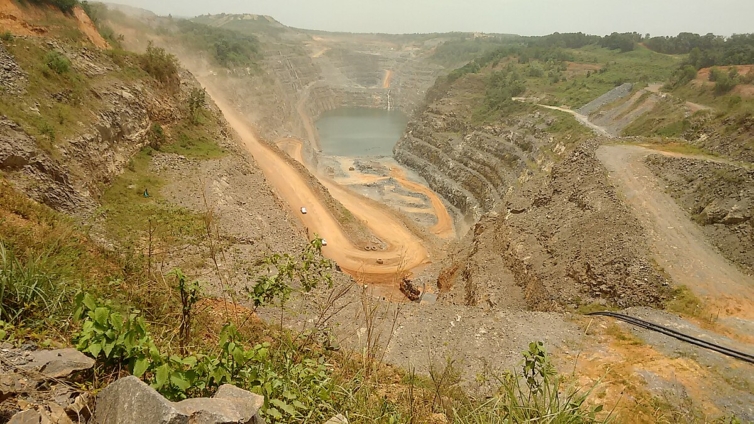
At a press briefing on Monday, April 20, the Institute’s Executive Director, Professor Isaac Boadi, raised specific concerns about the Damang mining operations, questioning the transparency surrounding recent developments in the asset’s management.
He said, "The hurried way the entire acquisition process went through has so much to be desired.”
Professor Boadi further questioned the level of public oversight and institutional accountability in the process. “Surprisingly, civil society organisations have gone completely quiet about it,” he noted.
He warned that Ghana’s resource governance system is increasingly vulnerable to exploitation if transparency is not strengthened.
“Ghana’s natural resources are under systematic siege. The evidence is documented, the perpetrators are named, and the financial and environmental damage is quantified,” he stated.
The IERPP also criticised government efforts to combat illegal mining (galamsey) and illegal logging, describing them as insufficient to address the scale of environmental destruction.
According to the think tank, illegal mining continues to contribute to significant annual revenue losses and widespread environmental degradation, including polluted water bodies and deforestation.
Professor Boadi argued that weak enforcement and limited civic pressure have worsened the situation. He added that the lack of strong public engagement has created a governance gap.
“The deafening silence from political actors and the muted response of major citizens… represent a governance failure of historic proportion,” he warned.
The Institute is calling for stronger transparency in mining deals, improved regulatory enforcement, and more active civil society participation in resource governance.
Latest Stories
-
FTBLRLIFE targets Ghana in expansion of global grassroots football network
25 minutes -
Former ‘American Idol’ contestant sentenced to life without parole for wife’s murder
2 hours -
Education Ministry commends Ghanaian teachers on World Teachers’ Day 2026
2 hours -
NPP can reconcile with aggrieved members who want to return – Nana Akomea
2 hours -
Tamale Child Deaths: Vehicle owner arrested as IGP deploys homicide team
3 hours -
From ShattaFest to MoMo Fest: Entertainment takes centre stage in youth engagement
3 hours -
Nigerian military aircraft crashes, killing 32
3 hours -
MTN encourages Ghanaians to use MoMo for saving, investing and financial planning
3 hours -
Absa Bank Ghana names Stephen Ato Frimpong as Board Chair
3 hours -
Pickford ‘almost caused crash’ with careless driving
3 hours -
Author and former politician Jeffrey Archer dies aged 86
3 hours -
No education reform can succeed without teachers – Education Ministry
3 hours -
Gauff condemns racist abuse after China Open win
4 hours -
Medvedev disqualified for hitting spectator with ball
4 hours -
Oliseh scores twice in late comeback win for France
4 hours