

Audio By Carbonatix
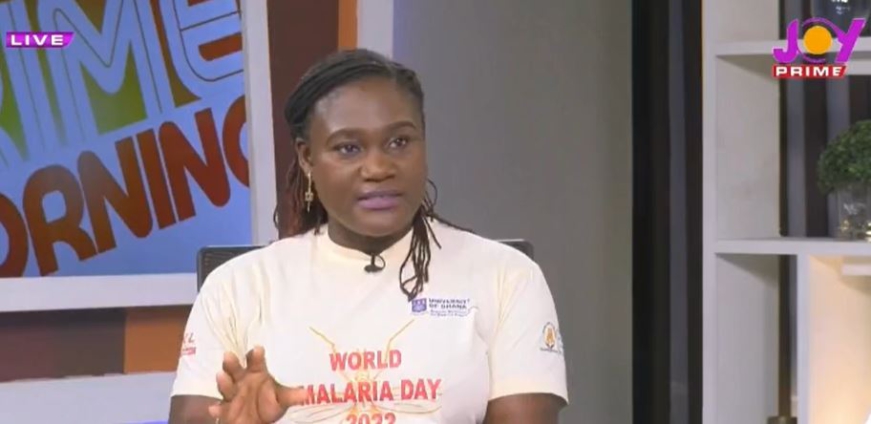
A Senior Research Fellow at the Noguchi Memorial Institute for Medical Research (NMIMR) has called for more reforms and investments to be made into the fight against malaria in the country.
Dr. Linda Eva Amoah said despite various interventions made to reduce malaria infections, pregnant women and children below five years remain highly susceptible to the disease.
She mentioned that cases of malaria among pregnant women usually affect the unborn babies, saying it is one of the leading causes of stillbirths in the country.
She warned this trend may get worse if practical steps are not taken to salvage the situation.
“They [children and pregnant women] are the ones that do suffer the most because for children under five, their immune system isn’t that well-developed and once you become pregnant, you also have become susceptible to a whole lot of different things.
“So, these two categories are very susceptible to malaria and most of our interventions are actually targeted to help them,” she said.
Dr Amoah stated in an interview on Prime Morning, Monday, that intervention efforts, investments and innovations must be accelerated by stakeholders to control spread and infections.
“I don’t think you can isolate one from the other; you need even to invest to become innovative. If you have a plan of how to make a very good diagnostic tool, without somebody investing in that idea, it can’t materialise.
“So, we do need investments – investment will help us actually even expand upon the current interventions that are ongoing and it will also help people who have some innovations to actually put their innovations out for it to actually materialise,” she added.
Currently, there is an indoor residual spraying exercise taking place nationwide to ensure that house walls are sprayed to prevent mosquitoes.
“Because the female anopheles mosquito lays its eggs in stagnant water, we have larviciding occurring across the country where we spray larvicides on the water bodies…that kills the mosquito larvae which would have grown into the adult mosquito.
“Then we have some control measures for pregnant women where women who go for ante-natal care are given medicine that prevents them from actually getting malaria,” Dr Linda Amoah listed.
Latest Stories
-
GoldBod must be more accountable to Ghanaians – Haruna Iddrisu
12 minutes -
Affi Agbenyo’s EC appointment is constitutionally appropriate, but politically, people have the right to remind us – Haruna Iddrisu
24 minutes -
Education is critical to Ghana’s future and development – Haruna Iddrisu
43 minutes -
Who’s Emelia Affi Agbenyo, the 43-year-old newly sworn-in Deputy EC Chair?
1 hour -
Haruna Iddrisu calls for limits on annual university accommodation fee increases
2 hours -
Today’s front pages: Tuesday, October 13, 2026
3 hours -
Wealth Over Water: How Galamsey Is Threatening Ghana’s Water Security
3 hours -
LA 2028: Black Queens pumped up for second leg of Mauritius tie
3 hours -
LA 2028: Black Queens hold final training session ahead of second leg against Mauritius
4 hours -
Standards are not Seasonal: What the EC appointments teach both sides
4 hours -
King Mohammed VI urges private sector to create youth jobs and spread benefits of growth
4 hours -
KGL U17 Colts 2026: Greater Accra win title after penalties win over Western Region
4 hours -
UK Investment Roadshow opens in London to advance UK-Ghana growth partnership
4 hours -
Assemblies of God requires pastors to resign before entering partisan politics – Rev. Wengam
5 hours -
Ghana targets 20% annual reduction in maternal deaths – Health Minister
5 hours