

Audio By Carbonatix
According to Luc Christiaensen, a lead Agriculture Economist with the World Bank, Africa’s food import bill has more than tripled, reaching about US$35 billion a year.
Perusing the article further, one notices that much of this imported food could be produced locally, creating much-needed jobs for the bulge population of African youth which averages 19.5 years.
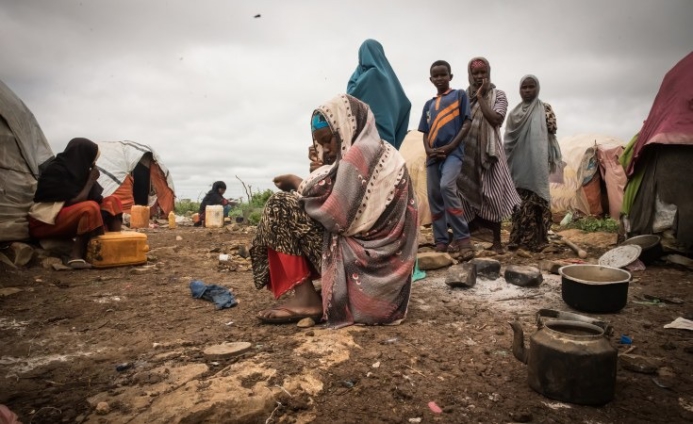
According to the World Food Programme, conflict, Covid, the climate crisis and rising costs have combined in 2022 to create jeopardy for the world’s 811 million hungry people. According to the WFP, conflict is still the biggest driver of hunger, with 60% of the world's hungry living in areas afflicted by war and violence.
Events unfolding in Ukraine are further proof of how conflict feeds hunger, forcing people out of their homes, wiping out their sources of income and preventing exports of goods from these countries. Also, the DW has reported that the ripple effects of western sanctions against Moscow have raised food prices, leaving millions of Africans facing a serious food emergency.
What has been bugging my mind is why the continent with the majority of vast acres of arable lands, the continent with the most youthful population and a combined population of 1.3 billion people relies on Europe - a continent with unfavorable agriculture conditions compared to Africa and with the average age of 44 years. I contend that there should be no single overarching reason for Africa’s growing food imports receipts.
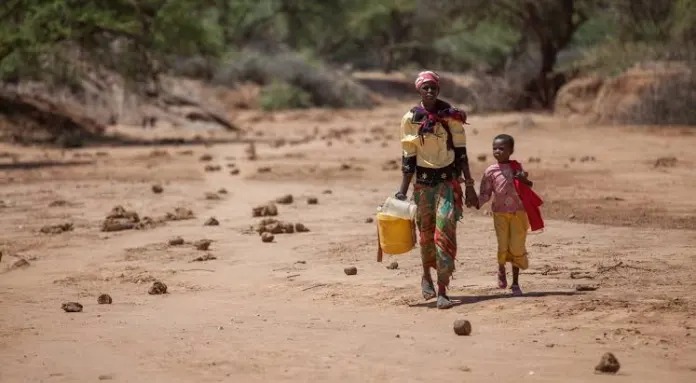
Traditionally, it is more profitable for Africa to grow and export cash crops that rack in millions in foreign exchange crops like cocoa, coffee, cashew, rubber, etc while opening the import doors to bring in indigenous crops that are needed for everyday survival.
While the continent gets the needed foreign exchange from the exportable crops, we must now have a rethink with all that is happening in Europe, Ukraine-Russia to be precise, and maximise the opportunity of the gap this has presented and fill it.
It is a herculean task because the agriculture systems in Africa are as structured and organised as in Europe. The farming practice still dates mostly led by smallholder farmers, largely women. These women lack the financial strength to mechanise their farms and get modern technology to improve their yields and expand.
Also, access to credit is another huge challenge to surmount to attain food sustainability. Still, on the finances, there must especially be more and sustained investment in rural public goods such as agricultural research and development, extension, irrigation and rural infrastructure. African governments have only been spending 3-4% of their total spending on agriculture since the 1980s compared with around 8% in East Asia and about 35% in Europe according to the EU.
We must also remove trade restrictions. These restrictions should not be left at the stage of pledges and promises and in speeches. It must materialise practically because while there may be excess milk in Uganda, Kenya will be buying milk from Switzerland.
We create jobs and build economies of Europe while our youth in Africa remain jobless, farmers impoverished and currencies depreciated. Africa must trade among herself to retain most of the finances here.
We also lack the means to process their needed food - this point to one thing, Africa and the leaders of the day need better-coordinated planning and programming to overhaul Africa’s agriculture system.
In most African nations today, it is cheaper to import because of the economies of scale - because farmers cannot match the levels of production; the cost of production. This makes importation attractive to many more than going into farming with all its associated challenges I have mentioned earlier.
The critical missing variables and why we are facing these food crises and soaring prices in Africa, especially in West Africa are labour (human capital), finances and technology. If we cannot feed ourselves with all the freely-given natural resources the creator blessed this continent with, then what we do?
We must get our acts together and prevent a cataphoric future about food, survival and sustainability.
Latest Stories
-
UK lawmakers demand new law to address AI threat to human rights
2 minutes -
WAFU B U-17 Girls Cup: Black Maidens depart Accra for tournament in Yamoussokro
3 minutes -
Sweden’s center-left bloc narrowly ahead as election remains too close to call
13 minutes -
GPL 2026/27: ‘We won ugly’ – Kotoko head coach unimpressed after Lions victory
16 minutes -
7 out of 10 human trafficking cases in Ghana never reach prosecution — JoyNews Research
32 minutes -
Music, football to converge at Music Meets Football Summit 2026 in Lusaka
37 minutes -
Putin invites young global leaders to partner with Russia in shaping future world order
38 minutes -
Putin calls for ‘just world’, says every nation must be free to choose its own path
45 minutes -
IFY 2026 food festival to serve 20,000 meals showcasing global cuisines in Russia
56 minutes -
Ghana has a Domestic Violence Act: But can a victim afford to use it?
60 minutes -
Young artists from 100 countries showcase works at IFY 2026 in Russia
1 hour -
Russia opens neo-Nazism exhibition at International Festival of Youth 2026
1 hour -
‘Let’s change the world together’ – Putin tells young people
1 hour -
VC inaugurates three committees ahead of UG’s 80th anniversary celebration
1 hour -
Today’s Front pages: Monday, September 14, 2026
2 hours