

Audio By Carbonatix
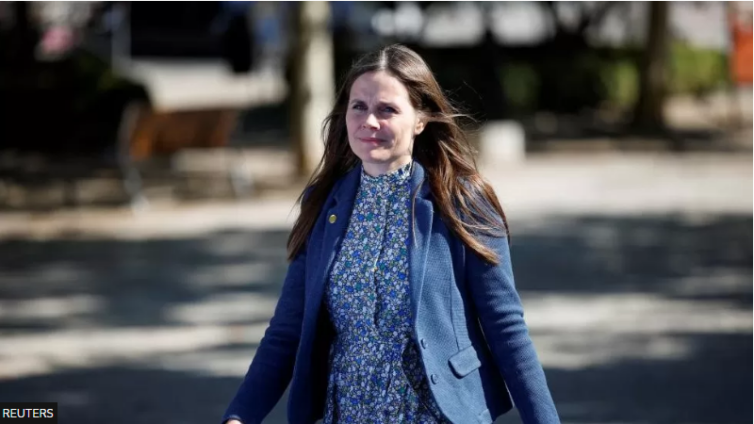
Tens of thousands of women in Iceland, including Prime Minister Katrín Jakobsdóttir, are refusing to work on Tuesday.
The "kvennafrí", or women's day off, has been called in protest at the gender pay gap and gender-based violence.
Fields in which women form the majority of workers, such as healthcare and education, are especially affected.
The planned walkout marks the first full-day women's strike since 1975.
Women and non-binary people have been urged to refuse paid and unpaid work on Tuesday, including household chores.
Some preschools and primary schools are closed, while some others that remain open are offering reduced services. Some museums, city libraries and zoos are also affected.
"I will not work this day, as I expect all the women [in cabinet] will do as well," Iceland's prime minister old the mbl.is website ahead of the protest.
Katrín Jakobsdóttir said her government was looking into how female-dominated professions are valued, in comparison to fields traditionally dominated by men.
According to the Icelandic Teachers' Union, women make up the majority of teachers at every level of the educational system, including 94% of kindergarten teachers.
Around 80% of workers at the National University Hospital of Iceland, the biggest in the country, are women.
Speaking to BBC Newshour, strike organiser Kristín Ástgeirsdóttir said violence against women remains a problem in Iceland despite high levels of gender equality.
"The theory was that the more gender equality, the less violence. That unfortunately does not seem to be the case," she said, adding: "Violence against women is deeply rooted in our culture."
Iceland has been ranked the best country in the world for gender equality by the World Economic Forum (WEF) for 14 years in a row. But the country is not completely equal, with the WEF assigning it an overall score of 91.2%.
"We're seeking to bring attention to the fact that we're called an equality paradise, but there are still gender disparities and urgent need for action," said Freyja Steingrimsdottir, one of the strike organisers, in quotes cited by Reuters news agency.
The volcanic island, which is one of the most sparsely-populated countries, ranks 14th in the world for economic participation, below countries including Liberia, Jamaica and Norway.
Around 90% of Iceland's female workforce went on strike in 1975, seeking to highlight the importance of women to the economy. The strike prompted the country's parliament to pass an equal pay law the following year.
Former Icelandic president Vigdís Finnbogadóttir told the BBC in 2015 that the 1975 strike was "the first step for women's emancipation in Iceland," which paved the way for her to become the first woman to be democratically elected head of state in the world in 1980.
Latest Stories
-
Former ‘American Idol’ contestant sentenced to life without parole for wife’s murder
27 minutes -
Education Ministry commends Ghanaian teachers on World Teachers’ Day 2026
49 minutes -
NPP can reconcile with aggrieved members who want to return – Nana Akomea
1 hour -
Tamale Child Deaths: Vehicle owner arrested as IGP deploys homicide team
1 hour -
From ShattaFest to MoMo Fest: Entertainment takes centre stage in youth engagement
1 hour -
Nigerian military aircraft crashes, killing 32
1 hour -
MTN encourages Ghanaians to use MoMo for saving, investing and financial planning
1 hour -
Absa Bank Ghana names Stephen Ato Frimpong as Board Chair
2 hours -
Pickford ‘almost caused crash’ with careless driving
2 hours -
Author and former politician Jeffrey Archer dies aged 86
2 hours -
No education reform can succeed without teachers – Education Ministry
2 hours -
Gauff condemns racist abuse after China Open win
2 hours -
Medvedev disqualified for hitting spectator with ball
2 hours -
Oliseh scores twice in late comeback win for France
3 hours -
Pentagon stops using Anthropic AI tools after blacklisting company, BBC told
3 hours