

Audio By Carbonatix
Stakeholders are raising alarms over the rise in female genital schistosomiasis (FGS) at Lakeside communities within the Volta Basin in the wake of the Akosombo Dam spillage.
The river-borne tropical disease, known as bilharzia, holds a significant share in causes of infertility and maternal morbidity, although registered among neglected tropical diseases (NTDs).
Mr Ben Sackey, the Director, Environmental and Sustainable Development Department of the Volta River Authority (VRA), said schistosomiasis was a “major challenge” that came with the construction of the dam, and is now feared dominant in over 400 communities in five regions sharing the Volta Basin.
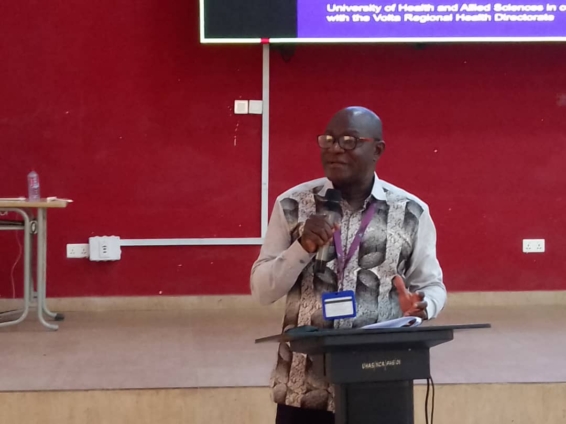
The Director was delivering an address at a symposium in Ho to mark the 2024 World NTDs Awareness Day.
He said the evading floods from the spillage carried along aquatic weeds bearing snails that carried the schisto worms.
“With the flood waters was the movement of the water weeds which harbours the schisto snail vector. What it means is that the weeds could now find themselves, in communities where hitherto, were not there.”
Speaking on plans for the control of post spillage, Mr. Sackey noted the inception of a baseline study on the spread of infection, which was being undertaken by the University of Health and Allied Sciences under an MoU with the VRA.
He said the provision of sanitary facilities including drinking water for affected communities was being sustained, while partnerships with the health authority continued to enable mass drug administration in hundreds of lakeside communities.
Projects including the dredging of the lower Volta are expected to take off soon, and the Director spoke of “a recent partnership” with the Massachusetts Institute of Technology and the KNUST to develop economic value for aquatic weeds.
Professor Morhe, Head of Obstetrics and Gynaecology at UHAS, said the waterborne tropical infection was first reported in 1899 in Egypt, and presently remains “the most neglected gynaecological condition in sub-saharan Africa”, affecting over 50 per cent of females.
He noted increased risk among women and girls in underdeveloped countries, counting an estimated 56 million in Africa south of the Sahara.
Blood flukes, known as the trematode worms, are parasites, and which Prof Morhe said could retain a lifespan of more than 40 years in a human host.
Common complications include infertility, ectopic pregnancies, preterm and underdeveloped babies, and HIV.
Prof Emmanuel Morhe said the release of inflammatory cells by the parasites attacked all foreign protein in the female fertility organs including fertilised ovaries, thereby affecting the menstrual cycle and ovulation.
He said a study conducted in eleven communities in the Volta basin showed that 36.21 per cent of the 400 women surveyed had the disease and was prevalent within the age brackets of adult teens and young adults.
Prof. Morhe added that the number of affected persons in the Volta basin remained unknown, and that stakeholders should consider disease prevention efforts including an end to open defecation and urination which infested water bodies with the parasites.
Dr. Alfred Kwesi Manyeh, a senior research fellow at UHAS, and an NTD expert who is leading the UHAS-VRA baseline study, said data so far, showed a culture of heavy dependence on the infested river.
He said although women less frequented the water body as compared to men, certain economic activities such as weaving, which sourced raw materials from the river, increased contact with the disease vectors.
Dr. Manyeh said the study was bringing to the fore, the issue of inadequate water supply, a lack of social mobilisation and sensitisation on mass drug administrations, lack of stakeholder engagement on the various interventions, and the fear of adverse drug reactions.
The symposium was on the theme “Addressing the Burden of Schistosomiasis and the Related Conditions in Ghana Towards Achievement of the 2023 Road Map” and was attended by stakeholders including heads of the Volta Regional Health Directorate, and various health experts.
A route march through the streets of Ho and Hohoe was held a day prior to raise community awareness to the NTDs, of which Schistosomiasis remains a dreaded member.
Latest Stories
-
EOCO court warrant authorised search of Baffour Awuah’s law firm, not residence – Afenyo-Markin
5 minutes -
NPP delegates conference: 3,000 to 4,000 police personnel deployed for security in Kumasi – Anthony Karbo
7 minutes -
KGL Foundation commits $200,000 to support juvenile football for the next two years
23 minutes -
UNDP invites Mahama Ayariga to Northern Peace Conference in Tamale
28 minutes -
Afoko can give NPP ‘new identity’ ahead of 2028 to overcome NDC – Political scientist, Dr Amakye-Boateng
42 minutes -
2 injured amid gunshots during raid at Nawara Mining office at Nsuapemso
46 minutes -
St Augustine’s College retains 2026 National Investment Quiz title
50 minutes -
KNUST Nursing and Midwifery School staff recognised at 2026 Health Ministry Excellence Awards
59 minutes -
JoyNews’ Esther Esi Nkrumah selected for UK Media Excellence for Emerging Technology Fellowship
1 hour -
Five NDC youth organisers in Western Region pay courtesy call on Armah-Kofi Buah
1 hour -
NACOC demands tighter port controls to prevent Tema Harbour drug trafficking
1 hour -
Ghana’s startup ecosystem must build sustainability into innovation – Ghana Hubs Network
2 hours -
Friday’s beachfront demolition was carried out at Labadi Beach Hotel’s request, not for flood mitigation – Stan Dogbe
2 hours -
LA 2028: Mukarama returns to Black Queens squad for Olympic Games qualifiers
2 hours -
Fusaini Yakubu Abanga leads NPP National Youth Organiser race with 45% in Global InfoAnalytics poll
2 hours