

Audio By Carbonatix
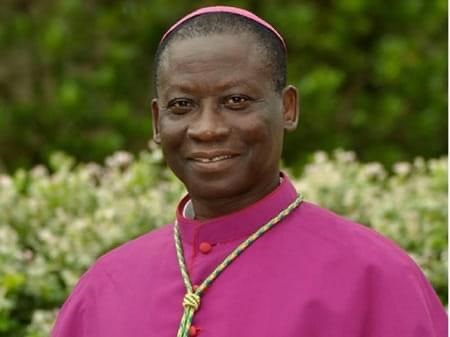
The President of the Ghana Catholic Bishops’ Conference, Reverend Matthew Kwasi Gyamfi, has emphasised that incarcerating homosexuals will not eradicate homosexuality; instead, it may exacerbate such behaviours.
He advocates for a reconsideration of the penalties outlined in the Proper Human Sexual Rights and Family Values bill.
Reverend Gyamfi argues that imprisoning individuals with such inclinations in Ghana's inadequate prison facilities may only reinforce their behaviour instead of facilitating rehabilitation.
In an interview with Citi FM on Thursday, February 29, he emphasised the importance of implementing corrective and reformative measures within the prison system to prevent potential adverse outcomes.
"We think that in the case of this particular law and the way it is being implemented, being placed in prison as the punishment that they have chosen, it is not going to solve the problem.
"Because you see if you round up same-sex people, and you know our prisons, they are going to end up in the same room, and what is going to prevent them from going through these activities in the prison?"
“And you are not going to put them there forever because they are going to be there for three months to six months.
"And then they practice this and come out as more experts at it than when you sent them there. Then you release them back into society. So, what is going to happen?"
“That is why we were concerned about a punishment that will correct them, that will reform them. So if the government is going this way or if the parliament is going this way that is why we are suggesting that in the prison there, they should add more of the corrective and reformative measures,” he stated.
On Wednesday, February 28, after nearly three years of deliberation, Parliament finally passed the highly controversial Anti-LGBTQ+ bill.
Introduced in the House as a private members' bill, the legislation received unanimous approval following the completion of the third reading.
Under the provisions of the bill, individuals involved in prohibited activities may face imprisonment ranging from six months to three years, while sponsors and promoters could be sentenced to three to five years imprisonment.
However, the bill has faced criticism from various quarters, with many people citing different reasons for their objections.
Latest Stories
-
Let The Constitution direct Chieftaincy to deliver “All Development Is Local”
1 hour -
John Jinapor outlines renewable energy, nuclear power priorities for 2027
2 hours -
Ghana explores centre of excellence for hearing, communication and cochlear implant care
3 hours -
Schizophrenia-related disorders lead mental health cases recorded in Ghana
3 hours -
Dutch authorities enlist Ghana in hunt for fugitive drug lord Bolle Jos
3 hours -
Ghana housing finance conference adopts communiqué to improve affordable housing access
8 hours -
Special Initiatives Minister urges Wa Technical Institute to enrol more girls as EU-backed solar training lab opens
8 hours -
In the matter of my first year at the Bar
8 hours -
ActionAid Ghana calls for an end to child marriage, greater investment in girls’ rights
8 hours -
Newsfile to tackle World Cup visa scandal, beach demolitions, education strikes, BRICS bid
9 hours -
UK-Ghana Trade & Investment Summit: Trade Resource Centre to help businesses maximise UK-Ghana trade opportunities
9 hours -
Embassy of Denmark celebrates World Maritime Day
9 hours -
Linking LEAP to productive inclusion could cut extreme poverty by 2030 – UNICEF
10 hours -
Trade Ministry backs use of creative arts to rehabilitate prison inmates
10 hours -
Negotiations with government to continue despite strike suspension – GNAT
10 hours