

Audio By Carbonatix
Blindness and various forms of vision loss contribute to a great cause of morbidity and disability globally. Out of the 1.1 billion people worldwide living with vision loss, including blindness due to lack of eye care services, 55% are women and girls.
This accounts for 112 million more women than men experiencing vision loss, including blindness. Women are 12% more likely to have vision loss than men (VLEG/GBD 2020 model). According to a 2018 report from the Ghana Health Service, eye problems were among the top 10 reasons why people visited a health facility in 2018 in Ghana.
The Ghana Blindness and Visual Impairment Study (2015) found women account for 54.8% of blindness in Ghana. These statistics highlight a gender disparity in visual impairment and blindness, with similar trends both globally and in Ghana, where various eye conditions are frequently reported in health facilities. Orbis International’s mission of preventing avoidable blindness underscores the point that Blindness is a Gender Issue.
Gender encompasses social and cultural distinctions between men and women, encompassing masculinity, femininity, and associated roles and responsibilities. It is however influenced by cultural, societal, and family variations and evolves with time.
The cultural disposition in Ghana largely defines gender roles that are clear and distinct. While women and girls are primarily involved in the greater portion of household activities such as cooking, sweeping, washing, cleaning, and taking care of children, with boys and girls lending some form of assistance, men tend to be primarily involved with more income generating activities like farming, masonry, welding, and carpentry. These defined traditional roles between men and women have seen some dynamism in recent years, with women engaging in income generating such as petty trading, selling food, hairdressing, and tailoring to complement their male counterparts, and men taking up supporting roles in otherwise traditional women’s roles like household chores and childcare.
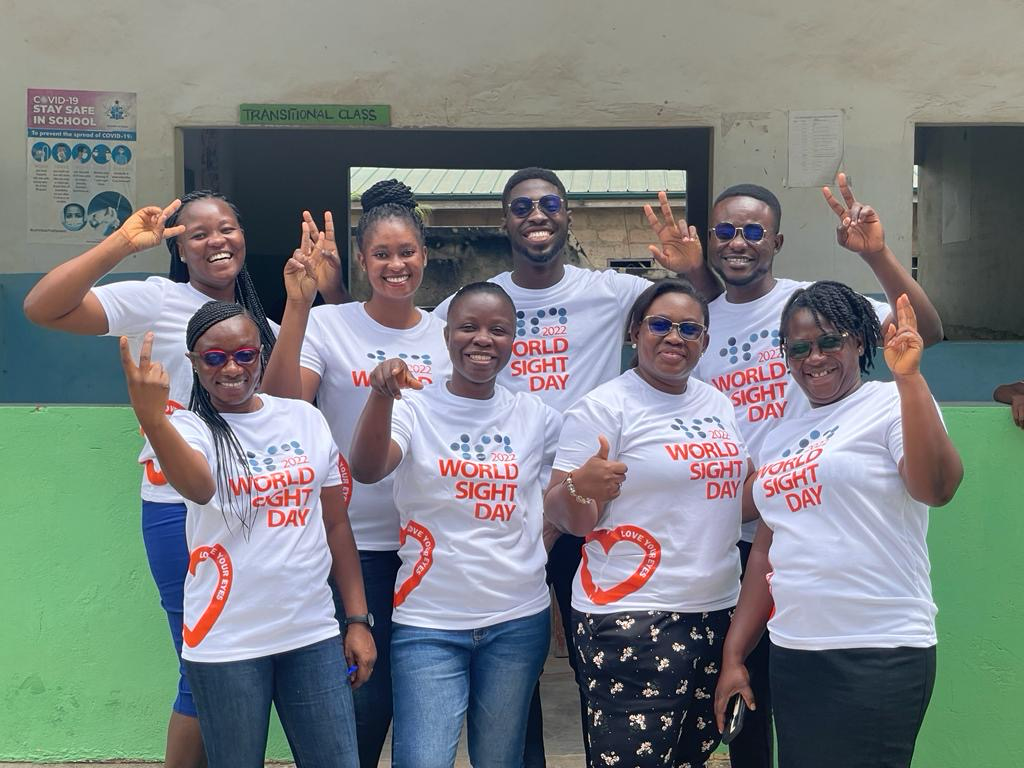
The unique division of labour between men, women, boys, and girls in the performance of household and economic activities exposes them to different levels of risk concerning eye health.
Men face occupational hazards from their economic or income-generating activities, including dust and wood particles from masonry and carpentry, and agrochemicals entering their eyes from farming. Women on the other hand are at high risk of trauma-related eye injuries such as heat, smoke, hot water, and oil splashing on their face resulting from accidents in the performance of household chores. .
In Ghanaian households. women often require permission from their husbands to access general health care, including eye care services. Additionally, men are the final decision-makers when it comes to eye-related surgery for their children. This can hinder timely access to eye care, placing women, boys, and girls at risk of vision impairment and avoidable blindness. One poignant example of this is a case from Kunsu Dotiem community of the Ahafo Ano Southwest district of the Ashanti region, Ghana.
Ama Dotiem (not her real name), a 28-year-old mother of 3 was unable to give her consent for 2 of her children aged 11 (girl) and 8 (boy) to receive free surgery to correct their congenital cataracts because her husband was unavailable to provide the needed concurrence. As her husband had the final say on care, the children eventually missed the opportunity to have a sight-saving surgery and still live with the condition. The need to seek permission and financial support before attending eye care does not only put women at risk of vision impairment and avoidable blindness but also boys and girls.
At the community level, decisions regarding health issues, including eye care, are predominantly made by men, despite women experiencing the primary health challenges.
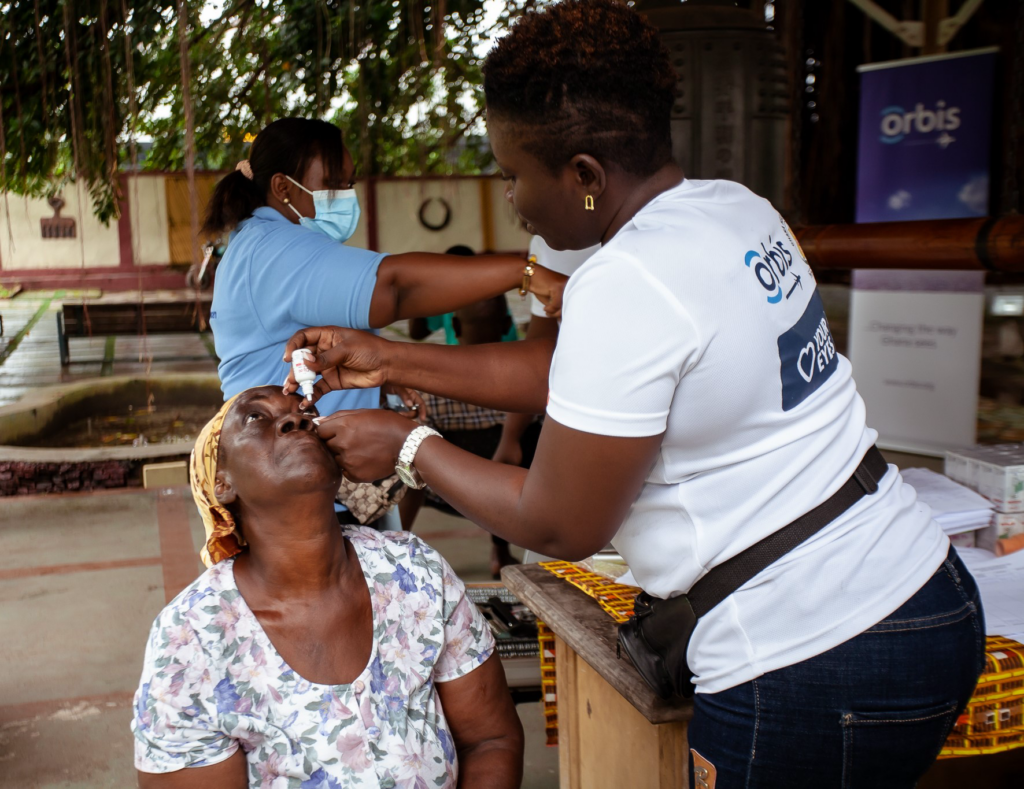
Though financial capabilities, access to health care, long wait times for health care services and a limited number of specialists prove to be major barriers for both men and women, spousal consent and support for childcare is a major factor and barrier that affects women exclusively.
Overcoming barriers to accessing eye health care services requires subsidized or free-of-charge community-based primary eye care services, to overcome proximity and financial barriers. National health insurance coverage for comprehensive eye care is crucial. For women, there is the need for additional support to enable them to access eye care, the key among them being support for childcare to allow women to travel and be consistent with their review appointments. A Gender analysis conducted by Orbis found that though more women access eye care services than men, lack of childcare support is found as the main reason men complete their referrals more than women. Financial independence empowers women to prioritize their health needs.
To achieve the 2030 agenda for Universal Health Coverage and combat vision impairment and avoidable blindness, special support for women is essential. This includes the active involvement of male partners in healthcare decisions, integrating women into decision-making processes, promoting women's financial independence, and improving access to eye health services at the policy level.
All individuals, regardless of age or gender, must be included in efforts to ensure healthy lives, including eye health and well-being for all.
Invest in Women: Accelerate Progress
Latest Stories
-
GNFS contains fire outbreak at Teshie Lekma Road near Lekma Hospital
6 hours -
Samia Nkrumah rejects the narrative that Ghanaians were happy after Nkrumah’s overthrow
7 hours -
A Mother’s pain: Tribute by Ivan Baidoo’s mother
7 hours -
‘Forgive us for staying away’ — Samia Nkrumah leads family back to Nkroful, pledges to preserve Nkrumah’s legacy
7 hours -
Ernest Nuamah scores twice as Lyon beat Rennes
7 hours -
‘My dear Ivan’ – A father’s tribute to a son tragically killed
8 hours -
GNPC Explorco advances Voltaian Basin drilling preparations with 13.5km access road
8 hours -
Cabinet approves facility manager for Borteyman Sports Complex – Kofi Adams
8 hours -
Sanitation is improving; critics may be ‘living in another world’ – Salaga South MP replies Bekwai MP
9 hours -
Government must do more to tackle sanitation crisis – Bekwai MP
9 hours -
World Cleanup Day: GFF begins sanitation education in local communities
9 hours -
EU Ambassador, IGP discuss stronger cooperation on policing and security
9 hours -
Africa Nations Volleyball Championship: Ghana set up quarterfinal clash with Cameroon after beating Chad
9 hours -
Meet Dr Benjamin Appiah Osei — Ghana’s three-time tourism awards winner
10 hours -
UEFA & CONCACAF demand Fifa pays $10m to all 211 members
10 hours