

Audio By Carbonatix
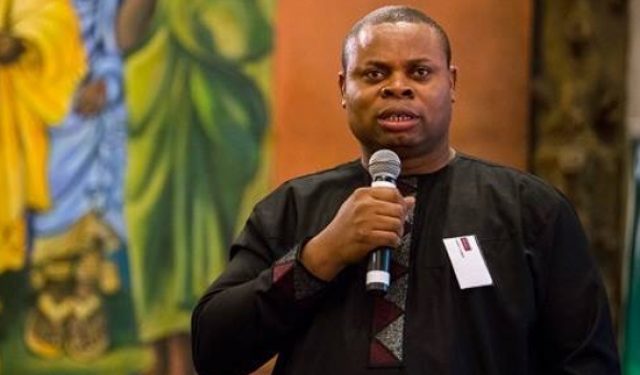
President of IMANI Africa, Franklin Cudjoe says that after the Free SHS had been implemented, there should have been some room created for parents to be actively involved in the funding of their children's education.
According to Mr Cudjoe, it is impossible for the government alone to provide high-quality education without the involvement of parents.
Speaking on JoyNews on March 18, he said “Even in communist entities, where you’d have thought that they normally would pay your fees and what have you, there are certain times when they allow parents have a say unless of course you are running the education in a prison.
“I’m trying to say that, the government itself became a victim of its own successful rollout of the policy from the get-go,” he said.
This comes after JoyNews’ documentary, ‘Empty Plates: The Free SHS Promise', which highlights the grim picture of the quantity and quality of food served to thousands of students on various campuses.
Mr. Cudjoe revealed that he received complaints from parents of students at Wesley Girls Senior High School even before the prefect spoke about the challenges in the school.
He said that the parents expressed concerns about the school's inadequate infrastructure and the general state of affairs in the school.
According to him, the free SHS policy was a major reason why the New Patriotic Party won the elections and did not have a solid policy framework from the beginning.
“We kept asking for it until somehow, we managed to get something that resembled the policy.”
Mr. Cudjoe pointed out that although the Free SHS policy was successful in winning votes for the NPP, there was a failure to assess the implementation of the Free SHS policy and determine whether it was achieving its intended goals.
“That’s why I’m saying they are victim of their own success.”
Mr. Cudjoe added that, said that headmasters must not remain silent and allow poor conditions and mismanagement of the Free SHS program to continue.
“Wesley girls, I heard, the capacity was beyond more than 100% of the population. Some of them were sleeping on the bare floor, parents have to visit them with food and all of that which is one leg of what the documentary is suggesting.”
“All of these things have come back as feedback, it only meant anybody who is serious would have taken this and said, we started this policy. There may be challenges and there are challenges. Let’s burden share,” he said.
Latest Stories
-
Sammy Gyamfi didn’t say BoG has ceded its forex role to us – GoldBod
48 minutes -
High Court sets November 4 for ruling on Wontumi’s bail application
1 hour -
Tetteh Kwetey files nomination for NDC Greater Accra Regional Chairmanship
1 hour -
Korle Bu appeals for more doctors, nurses as A&E Centre struggles under pressure
1 hour -
AFCON 2027Q: ‘I’m optimistic Black Stars can turn things around’ – Agyemang-Badu
1 hour -
Digital innovation could widen Africa’s inequalities if people are left out – Sam Jonah
1 hour -
Galamsey is an economic, health and moral problem – Sam Jonah
1 hour -
Africa must create AI technology instead of paying to use it – Sam Jonah
2 hours -
2026 U-17 WWC: Black Maidens to face Norway, Brazil and Canada in Group C
2 hours -
Agbodza, Sam George move to curb fibre optic cable cuts during road works
2 hours -
2026 U-17 WWC: Black Maidens unveil 21-player squad for competition in Morocco
2 hours -
South Africa evacuation and the minority’s half-truth
2 hours -
‘You never know tomorrow’ – Anthony Baffoe on contesting for GFA Presidency
2 hours -
Obuasi SHTS head accused of sexually abusing students is NDC Juaben secretary seeking chairmanship
2 hours -
Cedi depreciates by 7.11% against dollar in August 2026 – BoG report
2 hours