

Audio By Carbonatix
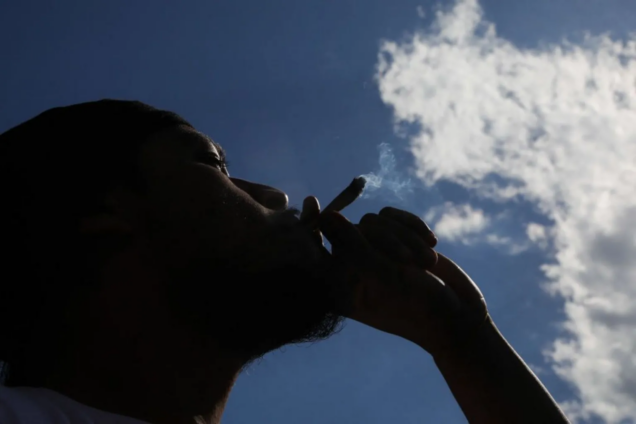
The number of Americans who smoke cannabis on a daily or near-daily basis now exceeds those who drink alcohol as often, a study has found.
The research, published in the journal Addiction, is based on data collected by the National Survey on Drug Use and Health over four decades.
In 2022, the survey recorded an estimated 17.7 million daily cannabis users, higher for the first time than the estimate of 14.7 million daily drinkers.
Alcohol still remains the more widely used substance of the two.
But the study found that, between 1992 and 2022, there was a 15-fold increase in the per capita rate of those who reported daily or near-daily use of cannabis.
Less than one million people said they used cannabis nearly every day in 1992, the lowest reported usage since the study began in 1979.
Dr Brooke Worster, the chief medical officer at EO Care, a medicinal cannabis firm, said that while there was increased use for a variety of reasons, "taking away the taboo" had led to more people openly reporting they used the drug.
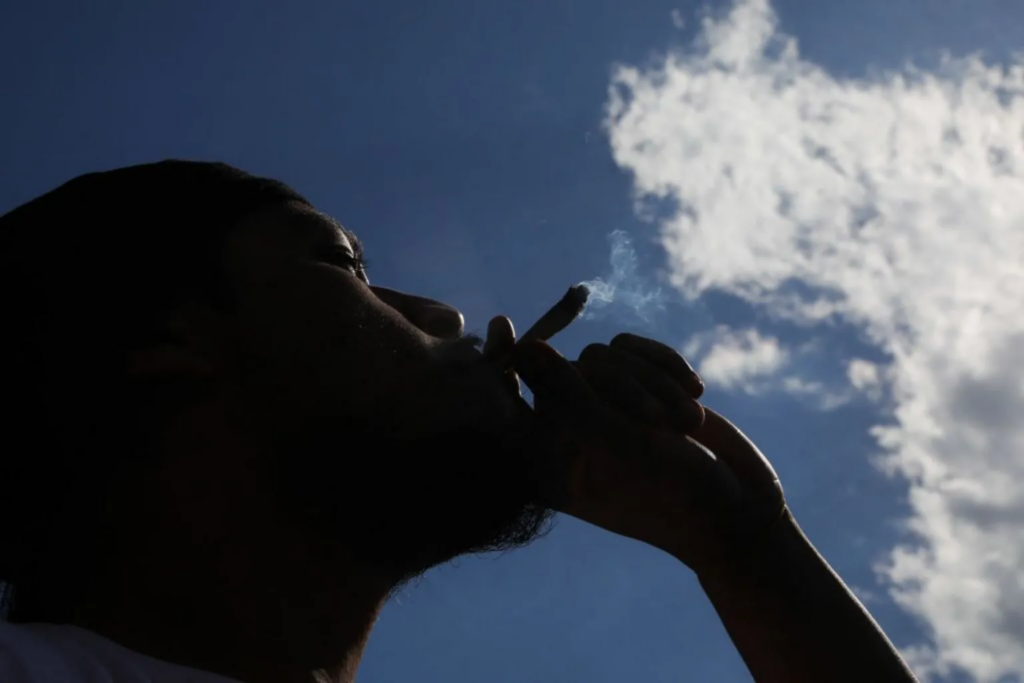
"The rates have not changed as dramatically as the survey indicates," she told the BBC. "People don't feel as scared to admit they're using it."
She added that the industry for legal cannabis products had also exploded in the past two decades, shaping a marketplace that includes many older adults too.
"It's not just a 20-year-old pothead in a dorm room any more," said Dr Worster.
Recreational use of cannabis is allowed in 24 states and the District of Columbia, while 38 states have legalised its medicinal use.
The government has so far resisted calls to legalise or decriminalise the drug at the federal level.
However, in the most significant drug reform in more than half a century, the justice department moved earlier this month to reclassify cannabis from a Schedule I controlled substance on a par with heroin, to a Schedule III substance.
President Joe Biden said: "Far too many lives have been upended because of our failed approach to marijuana."
Common misconceptions of cannabis as a "gateway" to other drugs have not been borne out by medical research over several decades, Dr Worster noted, and the majority of users do not progress to harder drugs.
But she said that younger adults and those who use high-potency products are at risk of contracting a cannabis-use disorder.
Cannabis-use disorder does not lead to organ damage or death unlike alcohol or opioid-use disorders, but it can cause that health and social problems that greatly impact a person's quality of life or even their safety.
"It signifies the need for guidance and oversight for high-frequency users," Dr Worster said.
Latest Stories
-
The brewing tension at KNUST; Beware the Ides of October….
12 minutes -
Health Ministry moves to integrate traditional medicine into mainstream healthcare
36 minutes -
550 pupils in Kintampo South get educational lifeline as ‘Seeds of Hope’ reaches farming communities
56 minutes -
Opoku Mensah urges Christian Council, House of Chiefs to speak up on democratic freedoms
1 hour -
Teacher unions’ strike: Minority demands immediate payment of teacher arrears, 20% deprived area allowance
1 hour -
The Accra-Kumasi Expressway: Building it right
1 hour -
Beyond gold exports: Building value and economic resilience from Ghana’s gold
2 hours -
2027 AFCONQ: Ghana under pressure as Gambia beat Somalia 2-1
2 hours -
Eastern NPP Women’s Organiser calls on AG, Police to secure bail for Salomey Baffoe
2 hours -
Poverty, illiteracy driving acceptance of vote-buying among women – Damongo Queen Mother
2 hours -
Photos: Democracy Is Not For Sale forum in Savannah region
3 hours -
GNFS launches 2026/27 National Anti-Bushfire campaign in Atebubu, records 62.8% reduction in bushfire cases
3 hours -
I’ll vote for a female president; women are less likely to steal from the state – Okyeame Kwame
3 hours -
More public education needed to stop vote-buying – Savannah Region MP
3 hours -
Absa Bank commissions new head office, commits to strengthening operations in Ghana
3 hours