

Audio By Carbonatix
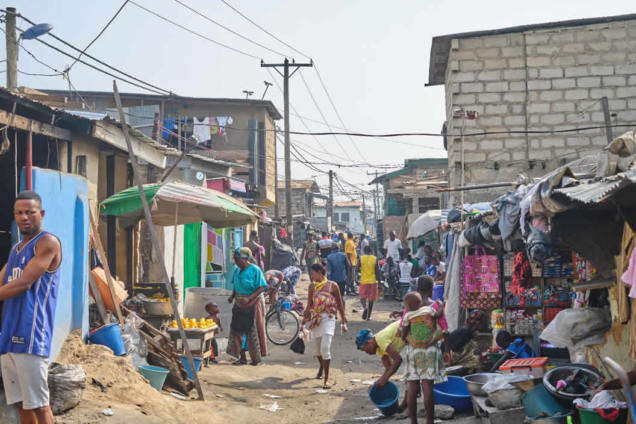
The latest Ghana Multidimensional Poverty Report published by the Ghana Statistical Service (GSS) has painted a stark picture of poverty levels across the country, revealing that employment and living conditions are the largest contributors to multidimensional poverty.
Employment and living conditions contribute the highest to multidimensional poverty in most regions ranging from 47.8 percent to 12.7 percent and 35.9 percent to 15.5 percent respectively.
According to the Director of Social Statistics at the GSS, Omar Seidu, the root causes of the complex poverty are often linked to educational attainment of household heads.
"Four out of ten households where the head of household has no education, then that household is multidimensionally poor," he explained.
Key Findings: Widespread Poverty
The report identified that a total of 7.3 million Ghanaians, representing 24.3% of the household population, are multidimensionally poor.
This type of poverty measures deprivation in several dimensions simultaneously, including education, health, and living standards. Of these, 43.8% are experiencing severe poverty.
Rural vs. Urban
Multidimensional poverty affects a significant portion of the rural population, with 36.7% of rural residents falling below the poverty threshold. The severity of poverty is nearly identical in rural (44.0%) and urban (43.4%) areas.
Regional Disparities
The Savannah Region stands out with the highest proportion of multidimensionally poor households, at 49.5%, almost double the national average of 24.3%.
Despite this, the Ashanti Region has the largest number of multidimensionally poor individuals, totaling 959,031.
Seidu highlighted, “However, the actual number of persons who are multidimensionally poor, the Ashanti Region tops (18%) because it has a lot of population. This is more than most of the regions.”
The Multidimensional Poverty report showed that nine regions exhibit alarming poverty levels, with over a quarter of their populations facing multiple deprivations. These regions include Savannah (49.5%), North East (48.1%), Upper East (43.0%), Oti (40.8%), Northern (38.4%), Upper West (37.4%), Volta (27.3%), Western North (27.0%), and Western (25.7%).
Employment and Living Conditions
Employment contributes 32.6% and living conditions 27.9% to multidimensional poverty, making them the primary factors. Health insurance also plays a critical role, accounting for 21.5% of the poverty indicators.
Demographic Insights
The incidence of poverty is notably higher among female-headed households (27.0%) compared to male-headed households (23.0%). Younger household heads below 25 years and older heads above 60 years are also more susceptible to poverty.
Educational Disparities
Educational attainment significantly affects poverty levels. "Four in ten multidimensionally poor persons have never attended school," the report indicates. Households whose heads have only basic education have a poverty incidence of 20.0%, which is 12.9 percentage points higher than those with tertiary education (7.1%).
Sectoral Impact
Households headed by individuals working in agriculture face the highest poverty rates (34.3%), compared to those in the services sector, who are more than 5.5 times better off, and those in the industry sector, who are 3.8 times better off.
The findings underscore the need for targeted interventions to address the root causes of multidimensional poverty. Enhancing educational opportunities, improving living conditions, and creating sustainable employment are crucial for alleviating poverty and fostering equitable development in Ghana.
Latest Stories
-
8 Foods that can help you sleep better at night, according to nutrition experts
1 minute -
JoyNews Republic Bank Habitat Fair clinic set for September 11–13 at Marina Mall
3 minutes -
Parents troop to Joy FM Back-to-School Fair for school deals and discounts
5 minutes -
Government brings home remains of Ghanaian killed in alleged South Africa mob attack
7 minutes -
41 more Ghanaians return home from South Africa after xenophobic attacks
9 minutes -
GH¢70,000 gift allegation gives Parliament chance to clean up vetting process – Dr Dramani
11 minutes -
Ghana will be present at Prof Arday’s funeral to pay our respects – Ablakwa
12 minutes -
Chief Justice must avoid appearing as government ‘cheerleader’ – Prof Boadi
15 minutes -
ATU launches HND in Paramedical Trichology to formalise hair and scalp care training
16 minutes -
Health HR practitioners charged to lead sector transformation at 2nd Annual AHRMPHG conference
17 minutes -
NCCE steps up efforts to consolidate nation’s democratic gains
18 minutes -
Government raises GH¢3.15bn in 4-year bond at 12%
29 minutes -
Ampem Darkoa Ladies set sight on CAF Champions League return with Edo Queens the hurdle
44 minutes -
Government unveils five-pillar plan to build resilient economy
45 minutes -
GJA opens entries for 30th Media Awards, introduces 2 new categories
50 minutes