

Audio By Carbonatix
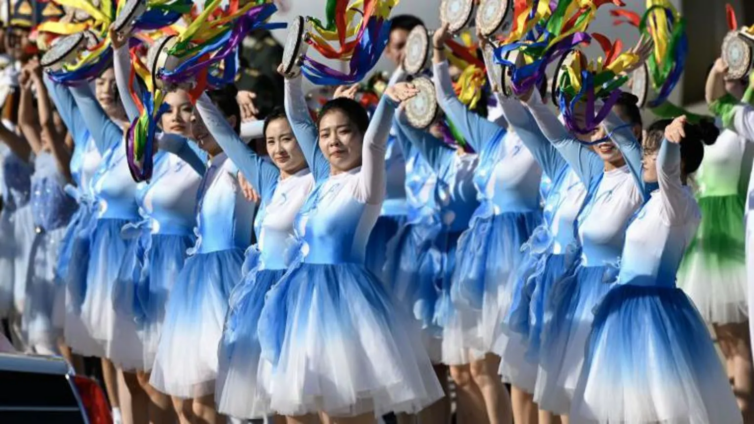
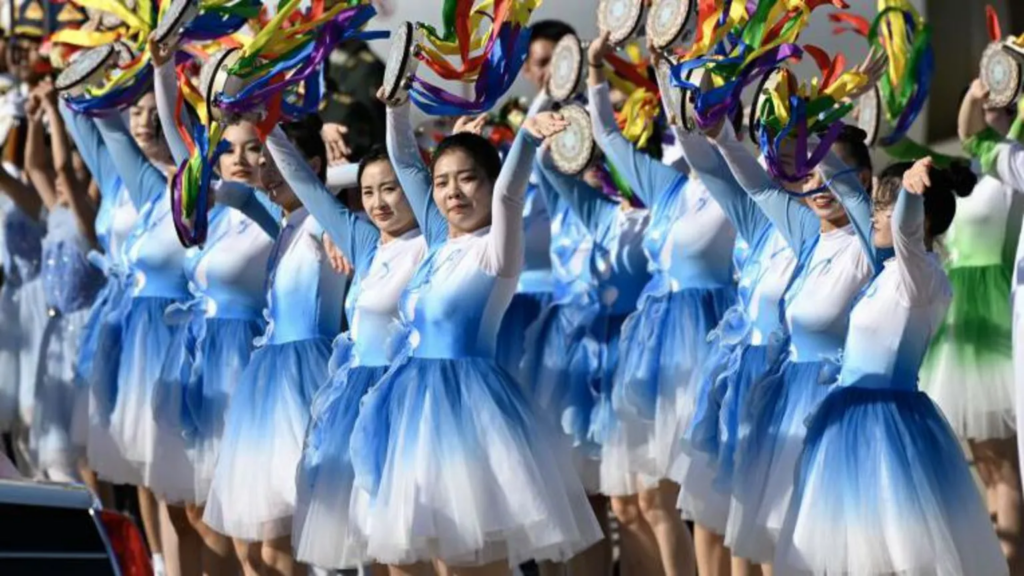
With pomp and splendour, China has welcomed more than 50 African leaders to Beijing this week for a summit to strengthen ties at a time of increasing political and economic turmoil around the world.
“It appeals to their vanities,” Macharia Munene, a Kenya-based professor of international relations tells the BBC, referring to the red carpet welcome - spiced up with entertainment by dancers in colourful costumes - that the leaders received.
The optics were carefully choreographed to make the leaders feel that it is a meeting of equals.
Many of them - including South Africa's President Cyril Ramaphosa and Kenya's William Ruto - held one-to-one meetings with their Chinese counterpart Xi Jinping and were given tours of Beijing and other cities at the heart of China's development ahead of the summit.
As Prof Munene puts it, China's aim is to show African leaders that "we are in the same boat, we are all victims of Western imperialism".
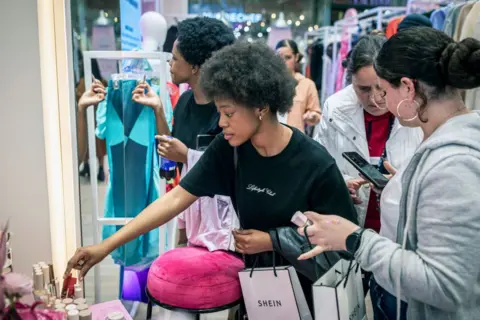
Paul Frimpong, executive director of the Ghana-based Africa-China Centre for Policy and Advisory, says that Western powers - as well as oil-rich Gulf states - are trying to match China's influence in Africa.
“There is a keen interest and competition in and around what Africa’s potential is,” he tells the BBC.
Cobus van Staden, co-founder of the China-Global South Project, writes that China goes out of its way to emphasise its own status as a developing country, signalling solidarity with Africa and the rest of the Global South.
"It avoids the dreariness of the US and EU’s ongoing aid focus with its attendant conditionality and preaching,” he adds.
Over the last two decades, China's diplomacy has paid off. Out of all the countries in the world, it has risen to become Africa's largest trading partner.
Data from the International Monetary Fund (IMF) shows that a fifth of Africa’s exports go to China, the bulk of which includes metals, mineral products and fuel. The exports have quadrupled in US dollar terms since 2001.
For African countries, China is also the “single largest source of imports" of manufactured goods and machinery, according to the IMF.
But the balance of trade, in most cases, favours China massively.
This is something Mr Ramaphosa sought to address in his bilateral meeting with President Xi.
“We would like to narrow the trade deficit and address the structure of our trade,” South Africa's president said.
A joint communique issued afterwards said that “China showed it was willing to uplift job creation, citing recruitment conferences for Chinese enterprises to promote local employment in South Africa".
Kenya, on the other hand, is seeking more credit, despite a heavy debt burden that gobbles up nearly two thirds of its annual revenue and which recently triggered street protests after the government sought to introduce new taxes to fund the budget deficit.
Mr Ruto hopes to secure funding for various infrastructure projects, including the completion of the Standard Gauge Railway (SGR) to connect Kenya's coast to neighbouring Uganda, the building of roads and dams, the establishment of a pharmaceutical park and a technology-driven transport system for the capital, Nairobi.
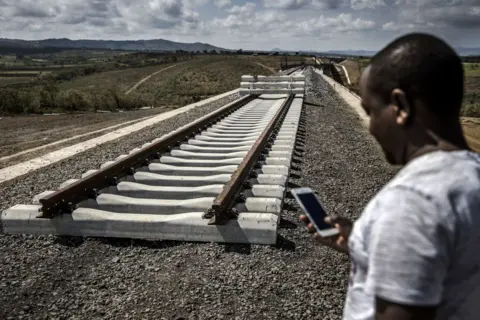
After connecting Nairobi to the port city of Mombasa, China discontinued its financing of the controversial SGR four years ago, leading to rail tracks ending in a field outside the lake city of Naivasha.
As a major bilateral lender to many African countries, China has often come under scrutiny for its deals, particularly in recent years when several African countries, including Ghana, Zambia and Ethiopia, experienced debt distress.
Debt sustainability is at the centre of discussions at every major forum on Chinese and African relations, and it is likely to be the case at the latest summit as well, Mr Frimpong says.
The debt crisis is a reminder that foreign powers are motivated by their own interests - and African states need to improve their economies and finances in order to reduce their reliance on them.
This is especially the case as the IMF predicts that China’s economic growth will continue to slow - and recommends that African countries adapt by deepening regional economic integration and implementing structural reforms to increase local revenue.
Most of all, as Dr Van Staden points out, African leaders need to "overcome the velvet rope aspect of these summits to make their own deals, set their own terms, and throw their own parties".
Latest Stories
-
Ghana, Germany deepen cooperation on railways, labour mobility
15 seconds -
Huge crowds greet Pope in Paris for open-air Mass
11 minutes -
‘I never said I’ll declare a state of emergency’ – President Mahama on galamsey
52 minutes -
Bobby Banson condemns EOCO’s attempted arrest of Nana Agyei Baffour Awuah
1 hour -
When Kumasi begins to look like somebody is in charge
1 hour -
Parliamentary probe into cocaine seizure would be a waste of time – Inusah Fuseini
1 hour -
Cocaine seizure: Focus on Ghana’s reputation, not partisan blame – Osae-Kwapong
1 hour -
Two Invitations, Three Interrogations: Did Baffour Awuah tell the whole story?
2 hours -
Drug cartels may be seeing Ghana as easy route – Lenin Anane Agyei
3 hours -
Ghana risks gaining notoriety as drug-trafficking hub – Bobby Banson
3 hours -
Government dismissed my drug trafficking warning, then tried to arrest me – Ntim Fordjour
3 hours -
Day Two: 3rd Republic Bank-JoyNews Habitat Fair Clinic underway at Junction Mall
3 hours -
NACOC addressing inherited gaps in fight against drug trafficking – Deputy Director-General
3 hours -
Taekwondo goes to school as GTF launches five-region youth campaign
3 hours -
The issues Mourinho is struggling to fix at Real Madrid
3 hours