

Audio By Carbonatix
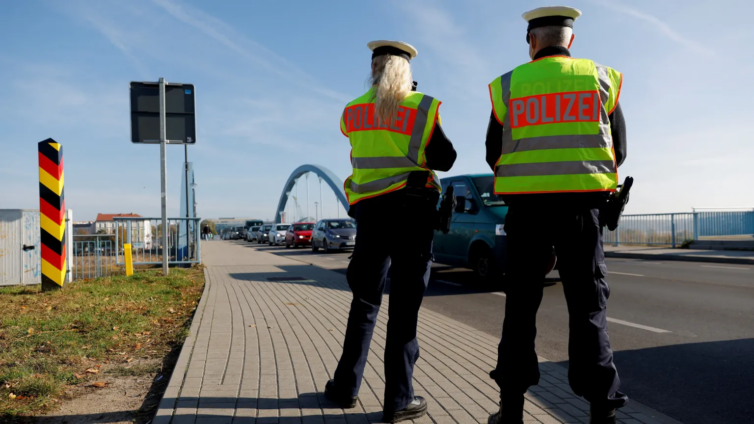
Polish Prime Minister Donald Tusk has denounced as "unacceptable" Germany's decision to extend temporary controls to all its land borders as part of its response to irregular migration.
He is one of several figures from neighbouring countries to criticise the move. Restrictions already in place at some of Germany's land borders will apply from next Monday with France, Belgium, the Netherlands, Luxembourg and Denmark.
The head of a Dutch-German alliance of border communities said it was a "panic reaction", while Austria's interior minister stressed it would not be take in anyone turned away by Germany.
However, Germany's opposition conservatives said Berlin had not gone far enough.
The three-parties in Chancellor Olaf Scholz's government have come under increasing pressure to respond to poor results in state elections in eastern Germany where immigration was the biggest issue.
In Thuringia, the far-right Alternative for Germany came first, and another election is on the horizon in less than two weeks in Brandenburg.
The migration debate has been ignited by the killing of three people at a festival in Solingen in western Germany where a Syrian failed asylum seeker who should have been deported was arrested.
The conservative CDU/CSU parties said initially they would take part in a migration summit of the government and state leaders on Tuesday, aimed at reaching an agreement on the next steps.
But they pulled out, accusing the government of not taking seriously conservative proposals to reject asylum seekers at the border.
"Clearly the federal government is hopelessly divided internally and cannot agree on effective measures," said CDU leader Friedrich Merz.
Germany and all its neighbours are part of the Schengen border-free zone and under European Union rules temporary controls are allowed "as a last resort measure, in exceptional situations" for up to six months.
German Interior Minister Nancy Faeser explained the expanded controls would protect against the "acute dangers posed by Islamist terrorism and serious crime".
Under her plan put to the 16 German states, police would check whether an asylum seeker had already sought protection in another EU country and swiftly start proceedings to send them back if they had.
However, Poland's prime minister was in no doubt that the measures were triggered by "the internal German political situation... and not our policy towards illegal migration at our borders".
Poland has faced a surge in illegal migrant crossings over its border with Belarus since 2021 which it considers part of a "hybrid war" waged by both Belarus and Russia. Many of the migrants head for Germany.
Donald Tusk told a meeting of Polish diplomats in Warsaw he would ask for urgent consultations with all the countries affected.
European Commission spokeswoman Anitta Hipper said any reintroduction of border checks had to be done in line with the Schengen code, so while Germany's measures were possible, "these controls must be necessary and proportionate".
In Austria, where the far right is leading the opinion polls ahead of 29 September elections, Interior Minister Gerhard Karner said that he had instructed the head of police not to take anyone back who had been rejected by Germany.
"There is no leeway," he told the Frankfurter Allgemeine Zeitung.
The mayor of a Dutch border town, Joris Bengevoord, said the border region with Germany had already experienced delays during the Euro 2024 football championship over the summer when Germany imposed temporary border checks.
"At some border crossings, waiting times were up to half an hour," said Bengevoord, who is chairman of the Euregio alliance of German and Dutch border towns.
Dutch transport group TLN accused Germany of undermining the Schengen agreement.
Some political leaders on the right in the Netherlands have taken a different view.
"If Germany can do it, why can't we?" asked Geert Wilders, whose anti-immigration, far-right Freedom Party came first in last year's Dutch elections and is now part of the government. "As far as I'm concerned, the sooner the better."
Dilan Yesilgöz of the centre-right liberal VVD was also keen on the "super-interesting" German plan. It sent a message that the government wanted control, she said, even if political symbolism by itself was of little help.
Latest Stories
-
Power restoration fault suspected in Kumasi Central Market fire
40 minutes -
The 7-foot giant of Ngleshie Amanfro: Seven-foot Ghanaian Ephraim Saawa dreams of joining the national basketball team
1 hour -
Government promises support for Kumasi Central Market fire victims
1 hour -
Vibes The Movie: Big Ghun’s Ghanaian film earns five nominations at 2026 REFFA
2 hours -
MamaCare CEO warns unresolved conflicts among health workers could undermine maternal and neonatal care
2 hours -
Health professionals urged to translate medical knowledge into practice to save mothers
2 hours -
Conflicts among care providers linked to maternal, neonatal deaths – Expert
4 hours -
GIS marks 10th TIME conference, champions improved teaching practices
4 hours -
BRICS Or Balance? What Ghana’s bid really means
5 hours -
GPRTU wants full TRAFFITECH-GH implementation to start in 2027
5 hours -
Mahama announces plans to import electric wheelchairs for PWDs
5 hours -
KGL U17 Colts 2026: Western beat Prempeh Elite Academy to set up final final with Greater Accra Region
5 hours -
Late Solanke strike salvages 10-man Spurs draw at Man United
5 hours -
Gender Ministry to monitor welfare of Nana Akua Addo’s children amid domestic violence case
6 hours -
Benedict Okyere Yeboah: Ghana’s football problem goes beyond sacking a coach
6 hours