

Audio By Carbonatix
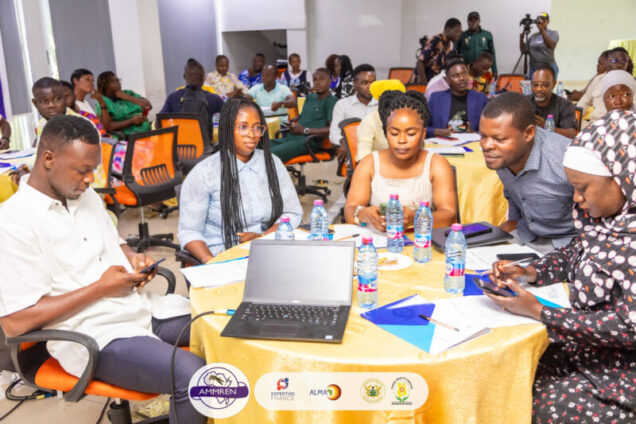
A training workshop aimed at enhancing health journalism was held, bringing together various stakeholders in the media and healthcare sectors.
The workshop focused on the role of journalists in community health initiatives and the importance of effective communication between healthcare providers and the public.
Dr. Charity Binka, the Executive Secretary of the African Media and Malaria Research Network (AMMREN), opened the session with a call to action for journalists.
“We, the journalists, are the voice of the voiceless. We play a role journalists play in health communication,”
She expressed gratitude for the support from various partners and highlighted the long standing journey of AMMREN in promoting health discourse in Africa.
Reflecting on the history of AMMREN, Dr. Binka said, “So many years ago, in fact, 22 years ago in the year 2000, we had discussions about health issues in Lagos. There were discussions that took place about eradicating certain health challenges and the collective efforts made by African leaders. The African leaders gathered in Lagos to strategize on health initiatives,” she said.
Dr. Binka shared insights on the collaboration between AAMREN and other stakeholders, including the French government.
“We have been on this journey since 2002, focusing on improving health services across the continent,” she explained.
She emphasised the necessity for journalists to engage with healthcare systems critically.
“We must understand the communities we serve to effectively communicate health initiatives,” she said.
During the training, Deputy Director, Information, Monitoring And Evaluation, at the Ghana Health Service, Dr. Andrews Ayim discussed the necessity for journalists to form strong relationships with healthcare providers.
“We want to get closer to the community, to understand them so that we can work together to promote health,” he stated.
Dr. Ayim noted the challenges of reporting on sensitive health issues and emphasised the importance of accurate representation.
“Sometimes, the way we report health issues can misrepresent the realities on the ground. It is necessary to provide context,” he advised.
A key part of the workshop involved discussions on community health assessments, specifically the community scorecard initiative.
Deputy Chief Biostatistics Officer – Policy, Planning, Monitoring and Evaluation, Ghana Health Service, Mr Divine Kwame Amanieh, explained that this initiative allows communities to evaluate the quality of healthcare services.
“The community scorecard helps us understand how our facilities are performing. It’s about transparency and accountability,” he said.
Journalists were encouraged to report on these assessments, highlighting both strengths and weaknesses within the healthcare system.
Dr. Binka highlighted the need for journalists to play an active role in community health education.
“We have a responsibility to report on health issues accurately and to highlight community needs. Journalists must engage with the public to raise awareness,” she said.
She encouraged participants to think critically about the information they disseminate and to be advocates for community health.
The workshop also included interactive sessions where journalists were given the opportunity to ask questions and discuss specific health issues within their communities.
One participant raised concerns about the barriers faced by the elderly in accessing healthcare services.
Dr. Ayim responded, “We recognize that transportation and accessibility are significant issues. We are working to empower local health centres to support community members better.”
Participants also discussed the role of technology in improving health reporting.
“Digital platforms can enhance our ability to reach wider audiences,” one journalist said.
Dr. Binka agreed, stating, “We must leverage technology to disseminate information effectively. It’s an essential tool in today’s media landscape.”
As the training progressed, the conversation shifted to the importance of collaborative efforts between journalists and healthcare providers.
Dr. Ayim emphasised the need for ongoing dialogue, stating, “We must work together to bridge the gap between communities and health systems. It requires a commitment from both sides.”
Dr. Binka concluded the session by reiterating the significance of the journalists’ role in health advocacy. “We cannot afford to overlook the importance of our work. Every story we tell has the power to change lives,” she said.
Latest Stories
-
AMA announces Post-Homowo clean-up exercise for September 5
7 minutes -
Asantehemaa welcomes Otumfuo home after US engagements
21 minutes -
No automatic duty on travellers carrying more than two phones – GRA clarifies Customs rules
27 minutes -
School rivalry cannot justify arson – Peace Council condemns clashes between Okuapeman, Mount Sinai SHS
36 minutes -
From recognition to redistribution: Women’s leadership and the future of Africa’s economy
45 minutes -
Chief Justice’s visits to Executive institutions raise neutrality concerns – Prof Duah
53 minutes -
Gbande rejects NPP’s call for Chief Justice to resign
56 minutes -
AT Ghana’s PPL Net must clear audit arrears before spectrum allocation – Sam George
1 hour -
GSE to close 2026 with 81% return for investors
1 hour -
New oil agreements should spur economic development – Deloitte Senior Partner
2 hours -
Health Ministry, Peace Corps mark 65 years of partnership between Ghana and US
2 hours -
One injured in fire outbreak at Akyeremade, several tenants rendered homeless
2 hours -
Joint security operation in Binduri recovers AK-47 and 28 rounds of ammunition
2 hours -
GSE ranked best-performing stock market in Africa as of August 2026
2 hours -
Ace National Junior Tennis Camp 2026 ends in Accra, strengthens pathway for young talent
2 hours