

Audio By Carbonatix
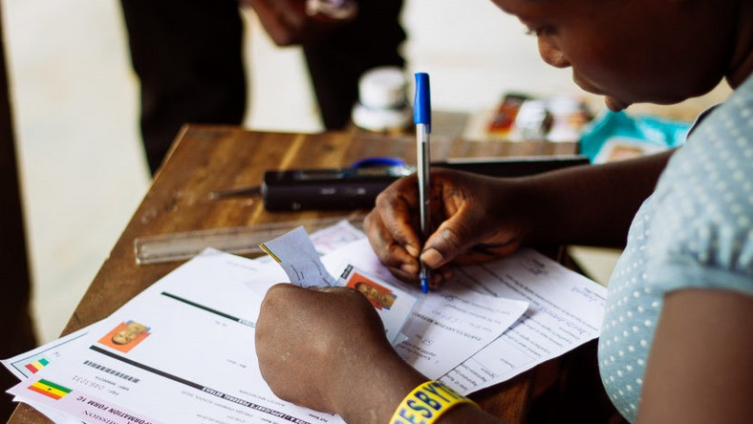
Ghanaians go to the polls on Dec. 7 to choose a new president and parliament in an election investors are watching closely to determine how the winner will steer an economy emerging from debt default.
The leading contenders to replace 80-year-old President Nana Akufo-Addo, who is stepping down after two terms at the helm of the gold and cocoa-producing country, are former president John Dramani Mahama and current Vice President Mahamudu Bawumia. There are 11 other candidates.
Ghanaians go to the polls on Dec. 7 to choose a new president and parliament in an election investors are watching closely to determine how the winner will steer an economy emerging from debt default.
The leading contenders to replace 80-year-old President Nana Akufo-Addo, who is stepping down after two terms at the helm of the gold and cocoa-producing country, are former president John Dramani Mahama and current Vice President Mahamudu Bawumia. There are 11 other candidates.
Mahama, 65, who is leading in a number of polls, has pledged to try and renegotiate the terms of the IMF deal to secure more financing. He has promised to amend the law to introduce a public debt ceiling of 60-70% of GDP to prevent over-borrowing.
But under his previous presidency in 2012-17, the government increased borrowing to invest in the construction of infrastructure projects like roads. He also faced criticism for electricity shortages and high inflation.
Bawumia has campaigned on modernising the economy with digitisation, low taxes and fiscal discipline to lift annual growth to an average of 6%.
The 61-year-old has also pledged to cap public spending at 105% of the previous year's tax revenue, introduce a flat rate tax scheme and redirect 3% of GDP of public spending into private hands for the provision of public infrastructure.
CAN THE WINNER RENEGOTIATE THE IMF PROGRAMME?
It is fairly common for leaders coming into office to reach out to the IMF and talk about existing programmes - as was just the case in Sri Lanka.
The IMF, lender of last resort to Ghana as it restructures its debt under the G20's Common Framework initiative, says its primary focus is to support the government in restoring macroeconomic stability while enabling debt sustainability and inclusive growth.
It has so far approved Ghana's economic performance under the current $3 billion loan programme.
The Fund says there is a possibility of adjusting Ghana's current programme, since IMF-supported reform programmes are developed jointly with governments and reviewed periodically.
However, any discussions need to take into account the need to preserve a country's ability to achieve set economic objectives.
WHAT ARE THE OTHER ECONOMIC ISSUES AT PLAY?
Whoever wins the election will have to tackle a cost-of-living crisis, widespread unemployment, high costs of living and frequent electricity outages.
Mahama's party, the National Democratic Congress, plans to increase government spending in social sectors like health and education if it wins, as well as the infrastructure, to support growth and create employment.
Bawumia's New Patriotic Party wants to prioritise economic stability by lowering inflation and attracting more private investments.
The next government will face limited choices due to Ghana's high debt burden, Oxford Economics said in a research note. Mahama's promises on the campaign trail to boost the economic circumstances of individuals and households could also be tested by the need to balance his policies against IMF's demands for fiscal restraint, the consultancy's analysis showed.
COMMODITIES AT STAKE
The new government will have to steer the processes of licensing new oil and gas projects, where production, which began in 2010, flagged in the five years to 2024.
Mahama plans to offer locals more ownership in future oil and mining projects if he wins.
The cocoa sector also requires urgent attention.
Output in the world's number two cocoa-producing country fell to a 20-year low last season, mired by low pay to farmers, plant diseases, heightened bean smuggling and illegal gold mining destroying plantations.
The global cocoa market will be watching with interest whether a new president will implement an IMF policy suggestion for far-reaching reforms in the sector, and whether a new marketing model that replaced the over three-decade-old cocoa loan syndication will be continued.
Latest Stories
-
Court orders police to file disclosures in Labone robbery case
2 minutes -
Central Regional Minister lauds Gomoa Central Assembly for effective utilisation of Common Fund
8 minutes -
What must gov’ts do to make food systems drive job creation in Africa? – Fareeda Mustapha asks Rwanda’s Kagame
12 minutes -
Gender Minister calls for equitable gender roles to support girls’ development
13 minutes -
Prioritise rural businesses in Women’s Bank – NETRIGHT urges gov’t
19 minutes -
Guinea backs Morocco’s Sahara autonomy plan as ‘sole solution’ to dispute
22 minutes -
NDPC, Youth Empowerment Ministry collaborate to mainstream youth into National Development Planning
24 minutes -
Mahama calls for rebranding of Ghanaian football
30 minutes -
Emeritus Prof John Bright Kobla Aheto, Esq
33 minutes -
GTA CEO honoured at Africa Brain Bank Summit and Awards
36 minutes -
CHRAJ urges stakeholder collaboration, intensified public campaign
41 minutes -
$350m project to end Weija Dam flooding to commence this year
46 minutes -
24-Hour Economy’s job creation push yet to gather speed – Nii Moi Thompson
51 minutes -
Why I rejected political offers that could have made me billionaire – Omotola Jalade
1 hour -
Singer Davido sternly warns those trying to move like him
1 hour