

Audio By Carbonatix
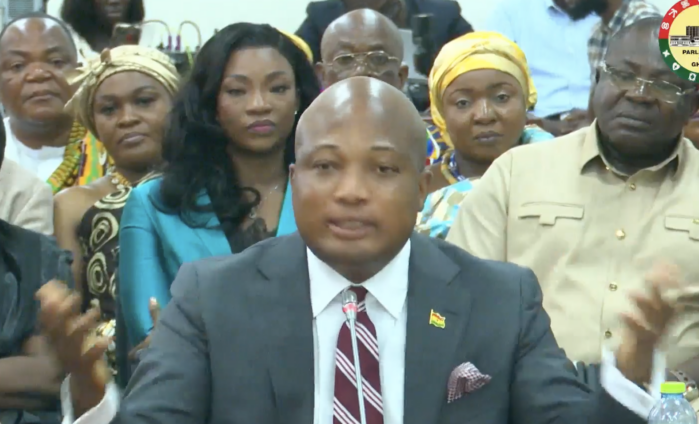
Minister nominee for Foreign Affairs, Samuel Okudzeto Ablakwa, has pledged to use foreign policy as a tool to ensure Ghanaians abroad have dignified work.
Human rights organisations advocate for safe workplace conditions for all, particularly women, promoting the rights of women workers around the world.
In Ghana, there have been concerns about reports of ill-treatment and horrible experiences some Ghanaian women seeking jobs in the United Arab Emirates in particular encounter.
Addressing this issue before Parliament’s Appointments Committee on Friday, January 31, Mr Ablakwa outlined his vision to address the problem through strategic bilateral agreements.
“One of the priority areas that the President tasked me to work on is how the Foreign Ministry can be re-positioned to help resolve the unemployment crisis in our country. According to the Ghana Statistical Service, unemployment has risen from 8.6% in 2016 to 14.7% currently," he stated.
Mr Ablakwa emphasised the need to turn labour migration into a structured and beneficial system for both the workers and the nation.
“We need to make sure this migration that is going on because of the search for employment benefits, must be regulated so that it becomes a win-win situation,” he noted.
He cited countries like Cuba and Indonesia, which have successfully leveraged foreign policy to secure employment for their citizens abroad. “They sign bilateral agreements with other countries and export labour legally, ensuring that workers rights are protected while also generating revenue for the country,” he explained.
Mr Ablakwa assured that under his leadership, the Foreign Ministry would prioritise economic diplomacy in a way where bilateral agreements will be signed.
“There are many countries looking for Ghanaian nurses, teachers, professionals, artisans, and domestic workers. Why can’t we take advantage of that to solve our unemployment crisis?” he asked.
He also highlighted the need to protect Ghanaian workers from exploitation, particularly in the Gulf region. “When these receiving countries know that the labour they have received is not from some clandestine agency engaged in human trafficking, they will be more mindful of how they treat these workers,” he stressed.
He concluded by promising to formalise and aggressively pursue these arrangements.
“Expect that we will formalise these arrangements and be very deliberate in creating jobs for our young people. We can make sure that brain drains become brain gain.”
Latest Stories
-
Adu-Boahen Trial: Court gives Atta Akyea final chance to end cross-examination
2 minutes -
Adu-Boahene trial adjourned to September 2 as defence gets extra day to cross-examine witness
4 minutes -
Rising fuel prices will inevitably push up transport fares – COPEC
6 minutes -
GoldBod now appears to be operating a forex bureau – NPP
7 minutes -
Rapid urban expansion outpacing Ghana’s electricity infrastructure – Electrical engineer warns
25 minutes -
Common Fund must not be used to finance Accra waste management, residents must pay – Ayariga
27 minutes -
Palm oil should not be used to induce vomiting
28 minutes -
Nearly 3 out of 4 women give birth without a trained professional in Sene East
34 minutes -
PRURide 2026: Elite race set for September 6
37 minutes -
Forms Capital empowers young Ghanaian innovators to reimagine the future of finance at Hack54 2026
39 minutes -
Recovering ECG’s losses could strengthen power sector without tariff increases – Ing. Quaye-Larbi
40 minutes -
Local Government Minister declares war on indiscipline over sanitation rates
41 minutes -
OSP is becoming a nuisance and has exceeded its mandate—Kwadwo Poku
41 minutes -
Gold contributed only $1.30 to every $100 added to Ghana’s reserves in 2025 – NPP claims
43 minutes -
Mahama demands protection of civilians, unhindered aid access in Gaza
44 minutes