

Audio By Carbonatix
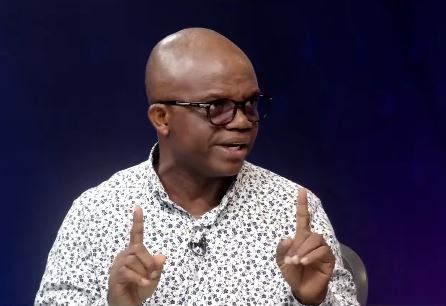
Former Deputy Finance Minister Dr Stephen Amoah has dismissed President John Mahama's claims that Ghana’s economy is in a dire state.
According to the Nhyiaeso MP, while the economy faces challenges, the President’s portrayal of the situation as a near-collapse is misleading and does not reflect reality.
“....Our President, John Mahama is respectfully creating a picture as if the economy is in a coma. Totally, it is not true," he asserted on JoyNews PM Express on Monday, March 3.
He argued that Ghana’s current economic trajectory under the former President Akufo-Addo-led administration is far better than what was handed over in 2016 by the National Democratic Congress.
He stated that while economic growth stood at 3.4 per cent in 2016, it had risen to 6.3 per cent by the end of 2024.
Similarly, agriculture, which grew at 2.7 per cent in 2016, had improved to 4.5 per cent by the time of transition.
Dr. Amoah also attributed some of the country’s economic challenges to global factors, particularly the impact of COVID-19.
He noted that Ghana’s debt-to-GDP ratio increased because of necessary debt financing, as government revenues took a major hit due to the pandemic.
“Maybe, if you say we have challenges, that one is true. Maybe our president is still dwelling on what happened with post-COVID, 2022, where the world grew negative 3.3 - we grew 0.4 or 0.5. We even grew positive, but it was too small,” he said.
He further noted that during the pandemic, civil servants were paid despite working in shifts, while over 40,000 private sector employees lost their jobs.
These, he said, were necessary but difficult decisions that impacted the economy.
“I've never seen in the history of this country that public and then civil service workers were asked to stay home, but they were paid for some months, and even beyond the months they ran a shift way over one year. That's if they’re 10, five workers go for one week or two weeks, and they were all being paid,” he explained.
Additionally, Dr. Amoah argued that Ghana’s debt situation should be analysed in context, stressing that debt-to-GDP ratio is more critical than nominal debt figures.
“You know, everywhere in the world, majorly, you use debt financing or your revenue. So if your revenue goes down badly, you will resort to debt financing. And debt to GDP is what matters, not even the nominal value,” he noted.
Latest Stories
-
Two lorry station masters arrested over alleged plot to kill creditor over ₵91k debt
23 minutes -
SIGA’s claim on highest audited proportion inaccurate – Bright Simons
24 minutes -
Money bouquets, spraying and dancing on cash unlawful – BoG warns
50 minutes -
Sam George pushes for nationwide 4G upgrade of rural telephony sites
51 minutes -
Local Government Ministry to support MMDAs to deliver gov’t agenda
1 hour -
At least five killed in Sudan’s South Kordofan in attack by rebel group
1 hour -
“Music is so stressful” – Headless YouTuber on why he won’t return
1 hour -
Cleveland police chief proud of force but being ‘let down’ by funding
2 hours -
Black Sherif drops new 6-track EP ‘Sun Sherif’
2 hours -
GTA partners Africa’s Brain Bank for Medical City groundbreaking
2 hours -
How to check 2026 WASSCE results on mobile phone
3 hours -
President Mahama is a professional comedian – DKB
3 hours -
Final day of Joy FM Back-to-School Fair: Come shop, save and prepare for the new school year
4 hours -
GSE showed strong performance in August 2026 despite recording more stock losses
6 hours -
If CJ needs ethics law to know SOE comments were wrong, he may not be worthy of office – Arthur Kennedy
7 hours