

Audio By Carbonatix
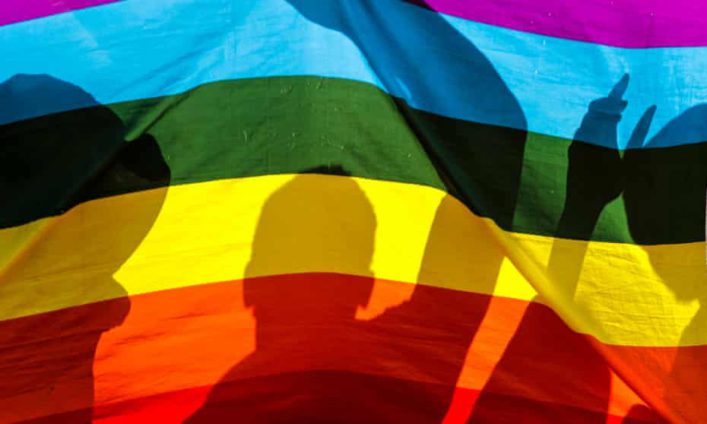
A group of 10 MPs have resubmitted a controversial bill that would impose some of the toughest restrictions on LGBT rights in Africa.
The bill prescribes a three-year jail term for people who identify as gay, and five to 10 years for promoters and advocates.
The legislation was passed by parliament last year, but the former President, Nana Akufo-Addo, declined to sign it into law before leaving office in January, citing legal challenges.
It has been widely condemned by both local and international human rights groups, with some describing it as draconian.
At the dissolution of the previous parliament ahead of last December's general election, all bills that had not completed the legislative process, including receiving the president's signature, were dropped.
It is unclear whether the speaker of the new parliament will admit the bill for consideration.
Gay sex is already punishable by up to three years in prison in the conservative West African country.
President John Mahama has said he would prefer the bill to be state-sponsored, ensuring broader support and consultation.
"I do think that we should have a conversation on it again so that all of us, if we decide to move that bill forward, move it forward with a consensus," he said.
Supporters claim the legislation would help preserve what they consider to be Ghanaian culture and family values.
However rights groups have decried the legislation.
"The anti-LGBT rights bill is inconsistent with Ghana's long-standing tradition of peace, tolerance, and hospitality and flies in the face of the country's international human rights obligations," said Human Rights Watch researcher Larissa Kojoué last year.
"Such a law would not only further erode the rule of law in Ghana, but could also lead to further gratuitous violence against LGBT people and their allies."
Va-Bene Elikem Fiatsi, a Ghanaian trans woman and LGBT activist, told the Reuters news agency the bill's reintroduction was "disheartening and hard to process" but insisted LGBT activism would continue.
The bill's potential impact on Ghana's economy is a significant concern.
The country's former finance minister warned that passing the bill could result in Ghana losing up to $3.8bn (£2.9bn) in development funding from the World Bank and affecting its $3bn (£2.3bn) IMF support programme.
Opposition lawmaker John Ntim Fordjour told Reuters the country no longer needed to fear economic sanctions, citing the election of Donald Trump as US president.
"The global political climate is favourable for conservative values as demonstrated in the bold conservative pronouncements of President Donald Trump," he said.
The bill was first introduced to parliament in 2021 but has faced many delays.
Latest Stories
-
Sparrow Studios, OldFilm Productions launch three movies for Ghana at 70
44 seconds -
Mahama is doing well – UT Bank founder Prince Kofi Amoabeng pledges support
1 minute -
All 6,300 GES staff recruited without clearance have been paid – Finance Ministry
17 minutes -
Akwaboa chiefs decry health and economic impact of deplorable roads in the area
23 minutes -
Local Government Minister inspects Aayalolo buses at Madina, Achimota and Kinbu
34 minutes -
President Mahama raises concern over exodus of Ghana’s young talents
36 minutes -
TUC challenges government’s distinction between PSP and ECG privatisation
46 minutes -
Gov’t to continue engaging TUC in good faith over ECG privatisation – Energy Ministry
55 minutes -
Mahama calls for stronger support for women’s football
1 hour -
The 24-hour economy and Ghana’s MSMEs: A strategic roadmap for inclusive industrial transformation
2 hours -
Mahama raises concern over refereeing as Medeama, Nations FC receive support
2 hours -
TUC clarifies threat of ‘legal action’ over ECG privatisation
2 hours -
IES urges transparency in proposed ECG private participation
2 hours -
Five Association International School students commission borehole for Tamanja in Oti Region
2 hours -
Mahama inaugurates Independent Fiscal Council
2 hours