

Audio By Carbonatix
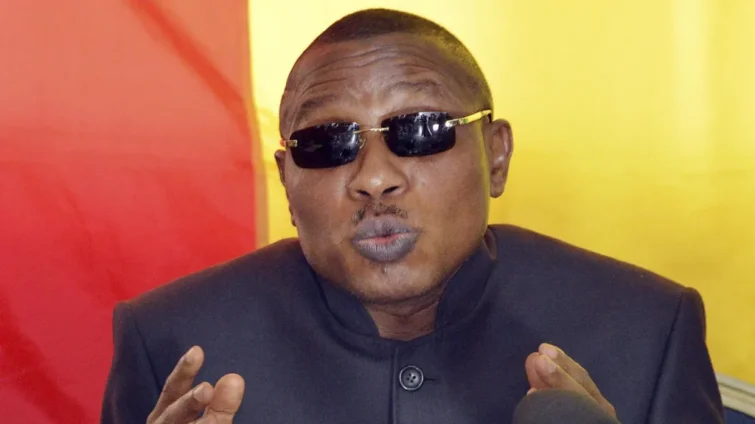
Guinea's ruling junta has pardoned former military leader Moussa Dadis Camara, less than a year into a 20-year sentence for crimes against humanity linked to one of the country's worst massacres.
A decree read on state TV said the pardon had been granted for health reasons.
In 2009, troops under his command opened fire during a rally calling for a return to civilian rule, killing more than 150 people. Scores of women were also raped.
Camara seized power when long-time President Lansana Conté died in 2008. He fled following an assassination attempt not long after the massacre, but returned in 2022 to face justice, insisting he was innocent.
Camara, 61, was a virtually unknown army captain when he led the coup. He was convicted along with seven of his military commanders in July 2024 after a 22-month trial.
His pardon comes in the wake of an announcement earlier in the week that the current military government intends to pay compensation to the victims of the massacre - which Camara and the others convicted had been ordered by the court to cover.
According to Justice Info, a website reporting on international justice, the estimated breakdown of the payouts is:
- $173,000 (£134,000) - per rape victim
- $115,500 - per death or disappearance
- $57,000 - per case of looting
- $23,000 - per case of torture.
The massacre took place in September 2009, when tens of thousands gathered at a stadium in the capital, Conakry, to press Camara not to stand in a presidential election.
Many were shot, stabbed, beaten, or crushed in a stampede as security forces fired tear gas and charged into the stadium. At least 109 girls and women were raped.
It is not clear what health problems Camara faces. His younger brother, Jean Dadis Camara, told AFP: "Everyone is happy. We thank the president."
When Camara fled Guinea after being shot in the head, he was treated for six weeks in Morocco before taking up residence in Burkina Faso for 12 years.
His deputy went on to organise an election in 2010 that ushered in a decade of civilian rule, which brought Alpha Condé to power as president.
He was overthrown in a coup in September 2021 in the wake of protests over his controversial third term.
Latest Stories
-
Modric plans to play for Croatia past 41st birthday
27 seconds -
Bayern fail to score for first time in 59 games
4 minutes -
Bawumia preparing new cocoa policy package for farmers – Annoh-Dompreh
8 minutes -
Wa-Tumu-Bolga road upgrade will unlock agriculture, trade – Agbodza
11 minutes -
Ghana Maritime Authority readies oil-spill response vessel for deployment
12 minutes -
Ayariga turns to drones, AI to tackle Agbogbloshie waste mountain
21 minutes -
Agbogbloshie waste heap must go – Mahama Ayariga declares
32 minutes -
Government to upgrade all rural telephony sites to 4G – Communications Minister
32 minutes -
Rural calls, data to become cheaper by Q1 2027 – Sam George
38 minutes -
National Chief Imam remains Ghana’s strongest symbol of interfaith harmony – Mahama Ayariga
48 minutes -
Nhyiaesohene pledges support to ECG to curb encroachment
48 minutes -
Somanya residents demand asphalt overlay to protect road investment
55 minutes -
Kumawu MP leads stakeholders meeting on human rights, child labour
59 minutes -
Breakfast: To skip or not to skip? An evidence-based perspective on weight management and overall health
1 hour -
Breast Cancer survivor Miriam Ablah Anani breaks silence on infertility stigma, abandonment and cancer battle
2 hours