

Audio By Carbonatix
The devastating war in Sudan, which has been raging since April 2023 between the national army and the Rapid Support Forces (RSF), has resulted in the deaths of thousands and the displacement of millions.
As the conflict continues, famine has spread across various regions of the country. According to a United Nations report, over 32 million Sudanese are now in urgent need of humanitarian assistance.
The Integrated Food Security Phase Classification (IPC) warns that 17 additional areas are at risk of famine. Nearly half of Sudan’s population—around 24.6 million people—are facing severe levels of food insecurity.
The organisation has highlighted that this reflects an unprecedented worsening and broadening of the food and nutrition crisis in Sudan, driven by the destructive conflict that has engulfed the country for nearly two years.
The war has triggered mass displacement, economic collapse, the breakdown of essential social services, significant societal unrest, and limited humanitarian access.
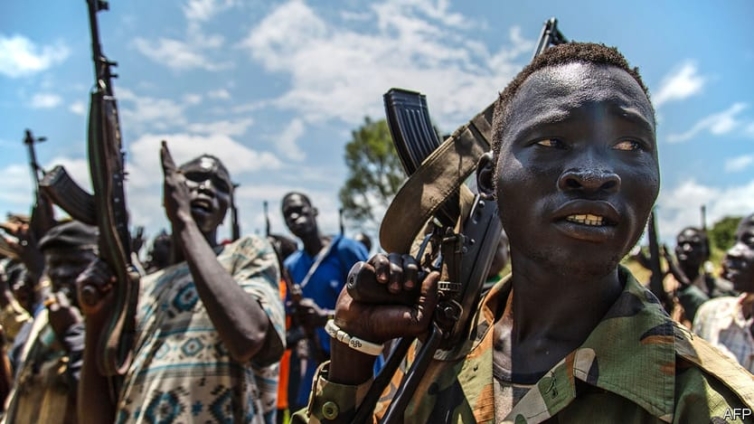
Amid this worsening tragedy, both foreign and domestic militias have emerged as central players in the war, fighting alongside the army amid accusations of serving external agendas.
Foreign Forces and Shadow Battalions
Reports indicate the presence of foreign forces backing the Sudanese army, led by Abdel Fattah al-Burhan, particularly in the states of Al-Jazira and Al-Qadarif. International reports and organisations have documented military support from Iran and Turkey.
The army is also reported to have enlisted troops affiliated with the Tigray People’s Liberation Front (TPLF), stationed in the Upper Atbara and Setit rivers region, about 30 kilometres from the city of Al-Shawwak within Al-Qadarif state.
Some of these forces were recently relocated to the Harira camp, situated along the road linking Al-Qadarif to Al-Faw, which serves as a key coordination hub for joint operations with the army. Additional TPLF units are reportedly based near the Al-Maqrah camp on the outskirts of Al-Faw.
The Sudanese army has also reportedly integrated fighters from the Al-Baraa ibn Malik Battalion—an Islamist faction linked to the Muslim Brotherhood and accused by local and international organisations of committing serious abuses against civilians.
According to a report by the Sudanese news site Al-Rakoba 13, the growing presence of these so-called “shadow battalions” highlights the Islamist movement’s firm grip on the conflict and reveals the roots of the persistent obstruction to negotiations and efforts to resolve the crisis.
The report further connects the Al-Baraa ibn Malik Battalion to the "Popular Defence Forces," a paramilitary group that was active during the rule of ousted President Omar al-Bashir. Now rebranded as the “Shadow Battalions,” they have become increasingly active in supporting the Sudanese Armed Forces in its battles against the RSF.
A Vision to Preserve Sudan’s Identity
As foreign and Islamist militias become more entrenched within the army, the Rapid Support Forces have continued their campaign, presenting themselves as defenders of the Sudanese people.
The RSF has expressed its willingness to engage in any solution that would end the war and lead to a civilian-led government chosen by the Sudanese people.
While the army remains opposed to negotiations and continues to distract both domestic and international attention with accusations against neighbouring countries, the RSF has proposed a roadmap aimed at uniting the nation and protecting it from external domination and religious extremism.
In collaboration with civilian political forces, the RSF has introduced a foundational charter that outlines the establishment of a decentralized, secular, and democratic state in Sudan—one based on the principles of freedom, equality, and justice.
The proposed state would be free from any allegiance to ethnic, cultural, religious, or regional identity, and would recognise and represent Sudan’s diverse components on an equal footing.
It also explicitly prohibits the formation of political parties or the dissemination of political propaganda based on religion or ethnicity.
The charter unequivocally affirms the principle of voluntary unity, the sovereignty of the state over its full territory, natural resources, and territorial waters, and asserts that the Sudanese people are the original custodians of national sovereignty and the primary source of authority.
Amid the deepening entanglement of militias within the army and the erosion of its institutional military identity, the charter also calls for the creation of a new national army based on professional and non-partisan military doctrine, subject to full civilian oversight.
It likewise proposes a professional police force dedicated to safeguarding Sudan’s internal and external security.
Latest Stories
-
Sanitation crisis: Minority demands dedicated fund as municipalities struggle with basic waste collection
16 minutes -
Deadly shark attack prompts rare kill order in Western Australia
16 minutes -
192 cocaine wraps confirmed in Wa drug bust
16 minutes -
Arrest everyone involved in the handling chain of cocaine-linked container – Kofi Bentil
41 minutes -
Saudi Arabia issues first air raid alerts for Riyadh since Houthis escalated attacks
41 minutes -
Oti Police intercept truck with 5,164 suspected narcotic parcels
58 minutes -
We don’t have the capacity to effectively monitor our ports – Oliver Vormawor
1 hour -
NACOC exclusion from routine sea port checks contributing to rising cocaine trafficking – Akwatia MP
1 hour -
3.9 metric tonnes of cocaine bust in France a national embarrassment to Ghana – Kofi Bentil
1 hour -
Kofi Bentil questions Mahama’s meetings with security officials over cocaine shipment linked to Ghana
1 hour -
GES orders SHS heads to stop unauthorised charges, warns of sanctions
1 hour -
Police’s conflicting identities for ‘Ghana Jollof’ embarrassing – Lawyer for remanded nurse
2 hours -
Ghana Jollof case: Nursing officer’s lawyers challenge remand, seek High Court bail
2 hours -
Kofi Adams clarifies government’s position on funding supporters for major tournaments
2 hours -
University of Ghana athletes return from 12th FASU Games after medal success in Cairo
2 hours