

Audio By Carbonatix
Ghana’s battle against corruption has stagnated in recent years, with the country maintaining a score of 43 out of 100 on the international corruption index for three consecutive years — a score widely considered inadequate for a nation striving to become corruption-free.
The financial toll is alarming. Ghana reportedly loses over $3 billion annually to corruption — the same amount it seeks in its current arrangement with the International Monetary Fund (IMF).
In response, the Ghana Anti-Corruption Coalition (GACC) is calling for stronger collaboration between anti-corruption agencies, such as the Office of the Special Prosecutor and CHRAJ, alongside greater citizen participation to curb the growing menace.
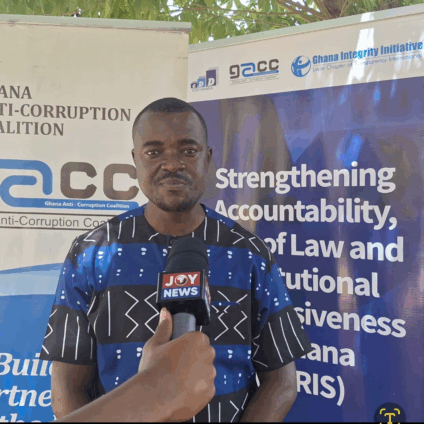
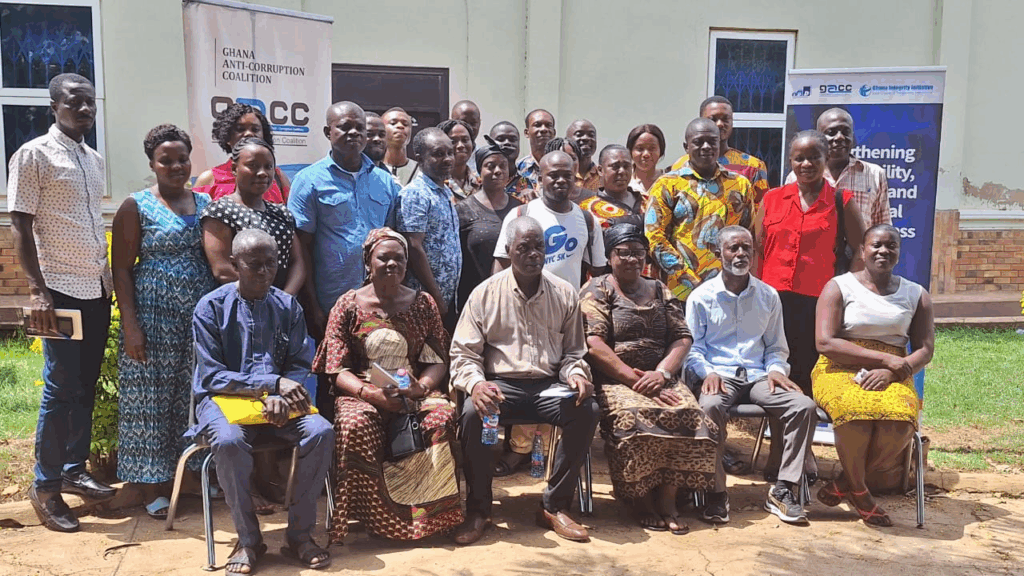
Speaking during a regional advocacy workshop in Bechem in the Ahafo Region, GACC Programmes Officer Harrison Cudjoe underscored the importance of enforcement and civic engagement.
“There is more room for improvement in the fight against corruption in the country,” Cudjoe said. “We need an all-hands-on-deck approach to reduce the menace. Government, citizens, and other institutions must play their roles in ending it.”
He stressed that while the government must strengthen laws against embezzlement, misappropriation, and financial loss, ordinary citizens also have a critical role to play by being vigilant, asking questions, and raising alarms on suspected corruption.
Cudjoe also urged President John Mahama to review Section 1.5.12 of the newly launched Code of Conduct for public office holders, which regulates the receipt of gifts.
“The section addresses gifts received by public appointees, but it is silent on gifts given by the same people. This is a loophole that must be addressed,” he said.
The advocacy workshop formed part of GACC’s “Strengthening Accountability, Rule of Law, and Institutional Responsiveness in Ghana” (SARIS) initiative — implemented in partnership with CDD-Ghana, the Ghana Integrity Initiative (GII), and other local collaborators, with funding from the European Union.
The SARIS initiative aims to promote transparency, accountability, and institutional responsiveness through media development, civil society empowerment, and targeted anti-corruption reforms.
The GACC has so far organised similar training programmes in the Bono and Bono East regions, aiming to deepen citizens’ understanding of public financial management, audit processes, and the need for active monitoring and reporting of corruption.
Yaw Gyebi, a participant, expressed his appreciation on behalf of the beneficiaries: “The knowledge and skills we’ve gained will not only benefit us but the entire country. In unity and patriotism, we can win the fight against corruption.”
Latest Stories
-
Sam George cautions ministers against reading unverified AI-generated speeches
2 seconds -
Ghanaian entrepreneur Mary Nyamekye Asamoah wins Africa Travel 100 award
3 minutes -
Obuasi SHTS abuse: Sanction all officials who failed to act – Moving Masculinity
8 minutes -
Lucy Agyepong honoured for excellence in engineering education at maiden GAAS Women’s Awards
11 minutes -
Harriet Afia Konadu Asiedu
18 minutes -
AFCON 2027: Sports Minister ‘convinced’ Black Stars will qualify despite losing opening two games
19 minutes -
CUTS welcomes VAT collection on cross-border digital services, urges fair treatment of Distance Learning students on overseas programmes
23 minutes -
Leave the Chiefs and fix the Galamsey Problem: Dr Solomon Owusu Advises President Mahama
26 minutes -
Pay attention to teachers and give them what is due – Ho District GNAT tells government
30 minutes -
Authorities knew of abuse allegations against Obuasi headmaster months before suspension – JoyNews investigation
35 minutes -
US teenager appears in court over alleged Hindu temple shooting plot
37 minutes -
Academic City donates paediatric rehabilitation staircase to Ga East Hospital
40 minutes -
Services drive 7.4% expansion in Ghana’s economic activity
52 minutes -
‘I don’t make music for awards, I make it to connect people’ – Rocky Dawuni
1 hour -
Farmer jailed for three months over assault on wife in viral video
1 hour