

Audio By Carbonatix
When urgency outruns judgment, single lanes meet split-second theology—and the casualty figures keep the score.
On the Accra–Kumasi highway, time doesn’t fly—drivers do. Each dawn, the asphalt hosts our unofficial national sport: lane-guessing with freestyle overtaking, scored by horn decible and proximity to disaster. Somewhere between Suhum and Nkawkaw, a Sprinter bus becomes a brutal lesson in momentum and stopping distance, a fuel tanker is a rolling wall—slow to stop and impossible to dodge at the last second—and the hard shoulder moonlights as a car park with a taste for ambush.
The scoreboard is not kind. Ghana recorded 13,489 crashes and 2,494 deaths in 2024, with 15,607 injuries. In the first half of 2025 alone, 1,504 people were killed in road crashes—about eight lives erased between breakfast and bedtime daily. If this were malaria, we’d declare an emergency; because it’s “just” road crashes, we convene a presser and design a banner.
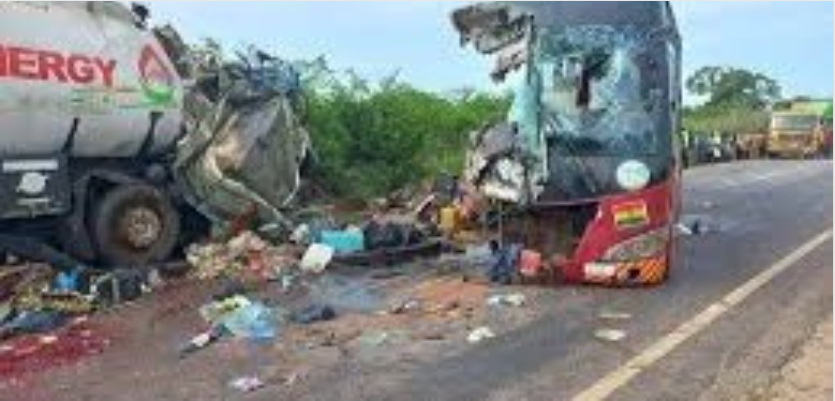
The tragedy has addresses. Ask Asuboi—the stretch that trends for the wrong reasons. On August 16, 2025, at least five people died in yet another wreck on the Kumasi–Accra corridor. A tyre bursts; the driver loses control; families receive calls that fold the soul. Earlier this year near Amanase (close to Suhum), at about 5:00 a.m. on April 22, 2025, a Sprinter collided with a fuel tanker, leaving 11 dead before sunrise. We call them accidents, as if they arrived by parachute.
The scientists have mapped the pain. Using 16 years of police reports, researchers flagged emerging and intensifying hot spots along major roads—including the Accra–Kumasi corridor—where injury severity keeps climbing. The pattern is painfully simple: head-on collisions flourish where single carriageways carry huge volumes, and one bad overtaking becomes a two-way tragedy. The boring engineering fix—dualize the corridor—remains the most exciting life-saving idea we keep treating like a luxury.
Let’s talk causes without hiding behind grammar. Speeding is our state religion—about 39% of crash fatalities are linked to it, according to the NRSA. Add wrongful overtaking and failure to observe signs, and you have the Holy Trinity of Crashology. Sprinkle driver fatigue—the dawn-drive nap nobody planned—and the recipe is complete. Long-distance drivers work like athletes without physiotherapists; caffeine holds the ceremonial title “co-pilot,” and eyelids file for divorce at Apedwa.
Then there is the Shoulder Safari. Around the Nkawkaw bypass, heavy trucks routinely occupy the shoulders, turning sightlines into jump scares and breakdown zones into booby traps. We call it improvisation; the coroner calls it evidence. Even the NRSA has had to mount operations against roadside parking on this very stretch.
“On this highway, urgency is cheap; arrival is premium.”
“One lane, two destinies, zero mercy—that’s the math of head-ons.”
“Speeding is a belief system; physics is not impressed.”
Mock Press Conference
If satire must serve, let it serve as a mirror. Picture a mock press conference:
- The Overtaker-General (Ministry of Split-Second Decisions): “We overtook three vehicles on a bend to save four minutes. Unfortunately, we also saved two lives—for later.”
- Captain Siesta (long-haul veteran): “Eight hours at the wheel, ten minutes with an energy drink. It’s called balance.”
- The Minister for Single Lanes & Long Prayers: “Dualization is on course. Which course? The long one.”
What Would Save Lives (Quick Wins)
Between the punchlines are adult solutions that don’t require a donor conference:
- Dualize the Accra–Kumasi corridor, phased by the worst hot spots. Dualization kills head-ons the way daylight kills streetlights.
- Enforce speed with teeth—cameras and a points-based licence regime beat sermons every time.
- Tame fatigue—two drivers on long intercity runs with logged, enforced rest. (Sleep is cheaper than funerals.)
- Clear the shoulders—designated lay-bys with lighting, and zero tolerance for highway-verge parking.
- Public education that bites—people remember truth and consequences, not posters.
An Akan proverb says, “The one who asks for the road does not get lost.” We know the road—and the map isn’t rocket science. Dualize. Enforce. Rest. Clear. Teach. If we still refuse, the Republic of Uncommon Sense will keep publishing its grim editorial on the tarmac—with names.
The writer, Jimmy Aglah, is a media executive, author, and sharp-eyed social commentator. His latest book, Once Upon a Time in Ghana: Satirical Chronicles from the Republic of Uncommon Sense, now available on Amazon Kindle, delivers a witty, piercing take on Ghanaian society and governance. When he’s not steering broadcast operations, he’s busy challenging conventions—often with satire, always with purpose.

Latest Stories
-
Government to prioritise creation of decent jobs – Finance Minister
5 minutes -
Ghana’s ocean is not land under water: Why the Fisheries Commission is right to demand a proper assessment of offshore gold exploration
10 minutes -
Teacher unions maintain strike as FWSC, GES negotiations yield no deal
13 minutes -
Photos: Mahama Ayariga engages World Bank on sustainable cities development
18 minutes -
Foreign Affairs Minister warns embassies over long queues, ‘inhumane’ conditions for visa applicants
20 minutes -
Photos: AMA steps up enforcement to clear traders from BRT shelters
21 minutes -
Shortage of health information officers threatens quality of healthcare data – GHIMA
22 minutes -
Ghana’s National Chess Team, The Golden Knights return from Samarkand with gold and seven new international titles
23 minutes -
Northern Births and Deaths Director to face PAC over GH¢71k withdrawals
32 minutes -
Djokovic claims 102nd title of career with China Open win
36 minutes -
Desire FC teams up with Hellas Verona to develop emerging talent in Ghana
40 minutes -
Labone robbery case adjourned to October 22 as prosecution prepares supplementary statements
41 minutes -
BoG must come again on Cedi bouquets; people can use their money as gifts once they don’t deface it – Ayariga
42 minutes -
Mahama Cares administrator calls for stronger financial support for chronic illness patients
45 minutes -
Wontumi not yet confirmed among Mahama’s pardoned convicts – Palgrave
47 minutes