

Audio By Carbonatix
Ecotoxicological Impact of Galamsey: The Entire Ecosystems Affected
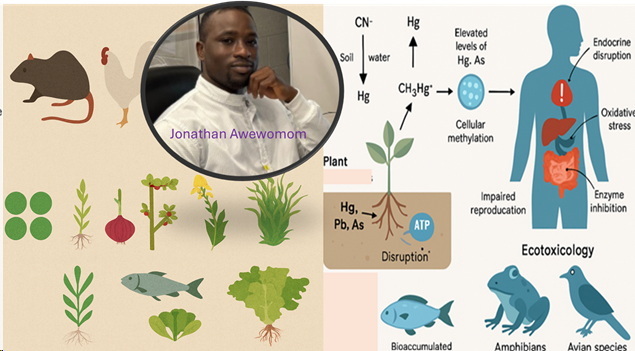
The story of galamsey does not end at the riverbank or the tailings pond, its ripples spread silently through entire ecosystems, altering the very balance of life. Every droplet of mercury, every grain of cyanide-laced soil, and every plume of diesel soot sets off a cascade of toxicological effects that move from microbes to mammals, shaping the destiny of forests, rivers, and farmlands long after the last pit is abandoned.
Aquatic Ecosystems and Food Web Disruption
Freshwater systems, the first receivers of galamsey runoff, pay the heaviest price. Aquatic vertebrates such as tilapia and catfish suffer from bioaccumulation of heavy metals, leading to stunted growth, reduced fertility, and population declines. Amphibians, with their permeable skin, absorb waterborne toxins like mercury and cyanide directly, causing developmental deformities and local population crashes. These disruptions at the base of the aquatic food web cascade upward, affecting predatory fish, birds, and mammals that depend on these ecosystems for food, eventually finding their way to the dinner tables of nearby communities.
Terrestrial and Soil Communities
Galamsey does not spare the soil. The microbes that quietly cycle carbon and nitrogen; invisible engines of fertility are silenced by heavy metal contamination. This leads to slower decomposition of organic matter, reduced nitrogen fixation, and declining soil resilience. Plants growing in these soils show inhibited root growth, reduced chlorophyll content, and lower yields, gradually turning once-productive farmlands into wastelands. For rural communities, this means a direct loss of food security and a long-term decline in agricultural potential.
Wildlife and Higher Trophic Levels
Birds and mammals suffer indirectly through the poisoned web of life. Secondary poisoning from consuming contaminated prey leads to endocrine disruption, neurological damage, and reproductive failure. Raptors that rely on fish and amphibians, and mammals such as otters and mongooses, have shown population declines in disturbed areas, shifting local biodiversity and destabilizing predator–prey dynamics. As apex predators vanish or decline, mesopredator populations can boom unchecked, further altering ecosystem balance.
The Plants
Plants are silent record-keepers of galamsey pollution, absorbing contaminants through their roots and leaves. Heavy metals such as mercury, arsenic, and lead disrupt photosynthesis, stunt root growth, and reduce crop yields, gradually degrading soil productivity. Hydrocarbons and cyanide residues can impair seed germination and inhibit enzymatic processes critical for plant development. In Ghana’s mining belts, studies have shown elevated metal levels in staple crops like cassava, maize, and leafy vegetables, posing a direct risk to food security and human health. The loss of plant diversity near galamsey sites further destabilizes ecosystems, reducing pollinator populations and increasing vulnerability to erosion and climate extremes.
Ecosystem Function and Resilience
The ultimate impact of galamsey pollutants is the erosion of ecosystem resilience, the ability of natural systems to recover from disturbance. When microbial processes slow, amphibians disappear, and predators decline, the entire system becomes more fragile, more prone to collapse under additional stressors like climate change or drought. Galamsey thus leaves behind not just a polluted landscape but an ecosystem less able to protect itself and the humans who depend on it.
The Silent Collapse
Galamsey’s most dangerous legacy may not be what we see, but what we lose without noticing. When the frogs no longer sing in the rainy season, when the soil no longer feeds the crops as it once did, when the rivers no longer teem with fish the warning bells have already been ringing for years. These are not just environmental losses; they are signals that Ghana’s natural safety net is fraying. The question is not only how to stop illegal mining, but how to restore the broken links in the chain of life before they are gone forever.
Latest Stories
-
Contractors move to site for construction of 120-bed trauma hospital in Bole – Kwakye Ofosu
8 minutes -
Poor institutional leadership hindering Ghana’s creative industry – Oscar Provencal
20 minutes -
CSA demands faster sharing of cyber threat intelligence among financial institutions
36 minutes -
CSA warns Ghanaians to verify money requests as AI makes online fraud harder to detect
41 minutes -
NEIP CEO urges Africa to build systems that turn ideas into businesses
42 minutes -
Global Organised Crime Index says cybercrime is undermining Ghana’s digital sector
43 minutes -
Global Organised Crime Index says fraud and tax evasion are widespread across Ghana’s economy
46 minutes -
Threats to journalists limit coverage of cocaine trade in Ghana – Global Organised Crime Index
48 minutes -
Kumawu MP commissions 4-unit nurses’ quarters at Bodomase
49 minutes -
Two arrested after suspected narcotics intercepted at Kasoa
50 minutes -
Our pipes stock are all gone — Duraplast Marketing Manager counts losses after Avenor fire
54 minutes -
Ntim Fordjour calls for cancellation of Ghana-Colombia maritime deal over drug trafficking concerns
56 minutes -
Daily Insight for CEOs: The CEO’s Q4 leadership priorities
59 minutes -
Cybersecurity is a business risk, not just an IT issue – CSA Director-General
59 minutes -
NSA releases 70,072 postings for 2026/2027 national service year
1 hour