

Audio By Carbonatix
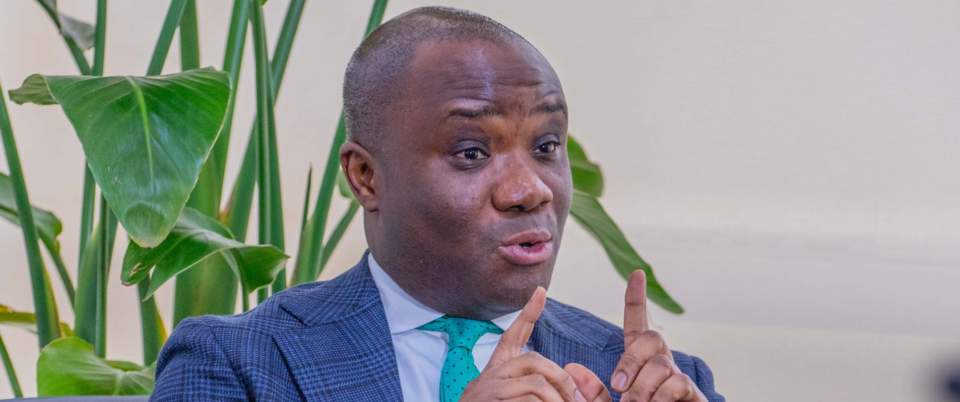
Minister in Charge of Government Communications Felix Kwakye Ofosu has defended President John Dramani Mahama’s request to the NDC Parliamentary leadership to suspend the introduction of a Private Members’ Bill seeking to scrap the Office of the Special Prosecutor (OSP).
His comments come amid concerns over possible executive overreach after President Mahama formally asked the Majority Leader, Mahama Ayariga, and the Majority Chief Whip, Rockson-Nelson Dafeamekpor, to halt their planned bill seeking to abolish the Office of the Special Prosecutor.
Speaking on JoyNews’ The Pulse on Thursday, December 11, he dismissed suggestions that the President was interfering with the work of the legislature, insisting that the President merely made a request, not a directive.
According to him, the President fully respects the principle of separation of powers and has no intention of dictating to Parliament.
“The President has not issued a directive but a request. It is true that the principle of separation of powers ought to be respected and the President respects that. But these are members of his party — the NDC — and on almost all issues, we tend to find a middle ground and consensus.
"So there is nothing wrong with engaging for further consultation to arrive at a common decision on a particular matter. It does not mean the President will get up and direct Parliament on what it should or should not do,”he stated.
When asked how he would personally navigate the issue as both a government spokesperson and a Member of Parliament expected to follow the direction of Parliamentary leadership, Mr. Kwakye Ofosu said:
“My records will show that when the matter first came up, I had my reservations. I felt doubtful about its necessity and about the work that has been done so far. But that does not mean the President—who is the leader of this nation—cannot hold a contrary opinion. And if he holds a contrary opinion and advances sound arguments, there is nothing wrong with considering them.”
He added that collaboration is essential when decisions have broader consequences for the country’s anti-corruption agenda.
“If other actors within the governance space are considering taking an action which the President believes may not augur well for the overall fight against corruption, there is nothing wrong with reaching out, dialoguing, and finding an amicable solution that benefits the people of Ghana,” he noted.
Latest Stories
-
Ex-gang boss found guilty in 1996 murder of rapper Tupac Shakur
2 minutes -
Ex-gang boss guilty of orchestrating 1996 murder of rapper Tupac Shakur
2 minutes -
Ghana between resources and rival powers: The politics of strategic choice
17 minutes -
I’ll do everything possible to help Bawumia win power in 2028 – Boakye Agyarko
24 minutes -
Zanetor pledges to turn scientific research into jobs, industrial growth
1 hour -
Trade Minister inspects site for Cape Coast garment factory
1 hour -
$270m poultry investment to create 12,000 jobs under 24-Hour Economy
1 hour -
My petition against Special Prosecutor put on ice after political intervention – Kpebu
1 hour -
‘Don’t fail our teachers’ – Parents demand full implementation of strike deal
2 hours -
Ghana Baptist Convention ordains 92 ministers, urged to live above reproach
2 hours -
SIGA’s GH¢19.8bn SOE profit claim misleading – Bright Simons
2 hours -
Kpebu vows to publish full petition if case against OSP is thrown out
2 hours -
Central Regional Minister inspects projects in Assin South
2 hours -
Mahama must show stronger leadership in galamsey fight – Prof. Bokpin
2 hours -
Abu Jinapor defends Domestic Gold Purchase Programme, credits Bawumia with its introduction
2 hours