

Audio By Carbonatix
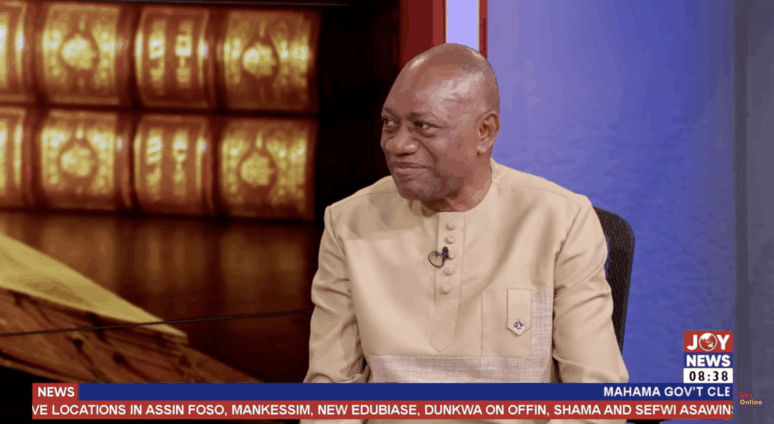
Labour Minister Rashid Pelpuo has attributed Ghana’s relatively calm industrial climate and improving economic outlook to effective conflict management, worker commitment, and sustained investments in skills development, particularly in emerging green jobs.
Speaking in an exclusive interview on the AM Show on JoyNews, the Minister for Labour, Jobs and Employment said the absence of major labour unrest over the past year is a key indicator of his ministry’s performance.
“One of the ways you measure achievement is the fact that we don’t have extreme labour agitations and conflicts that disrupt work. People are going to work,” he said.
Mr Pelpuo acknowledged that workers may still be dissatisfied with certain conditions, but stressed that his ministry’s core responsibility is to manage tensions before they escalate into nationwide disruptions.
“The purpose of my office and my ministry is to look at the tensions that arise and try to cool them down,” he explained.
He described the current labour front as “relatively quiet,” noting that workers across sectors, including mining and industry, remain committed to productivity.
“People are committed to work, increasing their energy, pushing Ghana to the next level, and you can see the results in everything we are doing,” he added.
According to him, labour stability has played a crucial role in maintaining economic confidence and continuity.
“Everything that happens, the economy is stable, everything is going on well. It is the labour force and what they project themselves into doing,” he said.
Beyond industrial harmony, the Minister pointed to ongoing training and skills development initiatives as another key measure of success. He said the government is actively preparing Ghanaian youth for emerging opportunities in the green and digital sectors.
“You can also measure our success by the training that is going on to upskill labour in the new green jobs,” he stated.
Mr Pelpuo revealed that several young people have already completed specialised training programmes, equipping them with skills for sectors that previously did not exist or were underdeveloped.
“There have been some training and passing out of young people in specific areas that they can go in and get jobs,” he noted.
He added that the ministry, working with youth-focused agencies, has rolled out multiple empowerment programmes aimed at tackling unemployment and preparing the workforce for future demands.
Latest Stories
-
Power restoration fault suspected in Kumasi Central Market fire
4 hours -
The 7-foot giant of Ngleshie Amanfro: Seven-foot Ghanaian Ephraim Saawa dreams of joining the national basketball team
5 hours -
Government promises support for Kumasi Central Market fire victims
5 hours -
Vibes The Movie: Big Ghun’s Ghanaian film earns five nominations at 2026 REFFA
5 hours -
MamaCare CEO warns unresolved conflicts among health workers could undermine maternal and neonatal care
6 hours -
Health professionals urged to translate medical knowledge into practice to save mothers
6 hours -
Conflicts among care providers linked to maternal, neonatal deaths – Expert
7 hours -
GIS marks 10th TIME conference, champions improved teaching practices
7 hours -
BRICS Or Balance? What Ghana’s bid really means
8 hours -
GPRTU wants full TRAFFITECH-GH implementation to start in 2027
8 hours -
How 10-mile walks for basic education birthed a 50-year legal career for Justice Korbieh
8 hours -
Mahama announces plans to import electric wheelchairs for PWDs
8 hours -
KGL U17 Colts 2026: Western beat Prempeh Elite Academy to set up final final with Greater Accra Region
9 hours -
Late Solanke strike salvages 10-man Spurs draw at Man United
9 hours -
Gender Ministry to monitor welfare of Nana Akua Addo’s children amid domestic violence case
9 hours