

Audio By Carbonatix
The International Monetary Fund (IMF)’s Resident Representative in Ghana says restoring trust in public institutions depends on strong and sustained checks and balances in the management of public money, even after the current IMF programme ends.
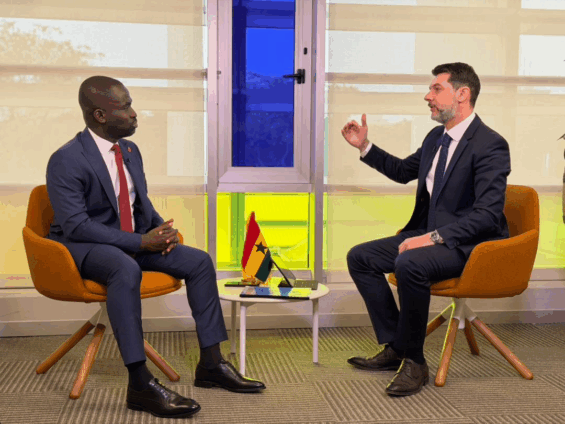
Dr Adrian Alter, speaking on Joy News’ PM Express Business Edition on Thursday, agreed with concerns that the frequency of IMF programmes in Ghana raises questions about policy credibility and the durability of past reforms.
“I agree,” he said, pointing to safeguards built into Ghana’s fiscal framework as critical tools for rebuilding confidence and preventing a repeat of past slippages.
“With the measures that were put in place, the checks and balances on the Fiscal Responsibility Act and the implementation of the independent Fiscal Council will eventually lead to more checks and balances for how the public money is spent,” he said.
According to him, these mechanisms are designed not only to restrain fiscal excesses but also to rebuild public trust over time.
“And eventually will lead to more trust in the public institutions and the government,” Dr Alter added.
His comments come amid public debate over why Ghana has had to return to the IMF repeatedly, despite earlier programmes that were meant to anchor reforms and stabilise the economy.
Host of the programme, George Wiafe, noted that if reforms were firmly grounded, concerns about policy credibility should not resurface just a few years after programme completion.
Dr Alter said the real test of the current programme would be whether the reforms outlive IMF supervision.
“So we hope that these efforts, these hard-won gains, will not be rolled back once the IMF program ends,” he said.
He stressed that sustaining fiscal discipline beyond the life of the programme is essential.
“And we hope this will continue beyond the program,” he added.
The IMF has repeatedly emphasised that lasting economic stability depends less on external oversight and more on domestic institutions that enforce discipline, transparency and accountability. Dr Alter’s remarks underscore the Fund’s view that Ghana’s long-term credibility hinges on preserving these checks and balances long after the IMF steps back.
Latest Stories
-
Road inspections not a witch-hunt against contractors — Agbodza
11 minutes -
HTU clinic upgraded to primary hospital after HeFRA inspection
12 minutes -
“When I am gone, people will appreciate” – Kurt Okraku
38 minutes -
“I love people who are not only critical but constructive” – Kurt Okraku
42 minutes -
TECNO’s Modular Phone and TAURUS win gold at IFA 2026, recognising breakthroughs in mobile and gaming technology
56 minutes -
Youth Forum in Accra calls for debt cancellation, reparations and African economic independence
1 hour -
Dr Abu Sakara urges African youth to seize global upheaval for economic emancipation
1 hour -
Fulham booed off after third defeat in a row
1 hour -
Joy FM Back-to-School Fair 2026 ends in massive success after two days of discounts and one-stop shopping
1 hour -
Man City maintain 100% start with win over Coventry
2 hours -
Kwesi Pratt urges African youth to reject ‘Gen Z revolution’, reclaim Africa’s resources
2 hours -
Forest and Tottenham both still looking for first win after scrappy draw
2 hours -
Inter Milan mount stunning comeback to beat Napoli
2 hours -
PPF urges African youth to demand debt cancellation and reparations
2 hours -
Kwesi Pratt says reparations must deliver equal rights, African self-reliance
2 hours