

Audio By Carbonatix
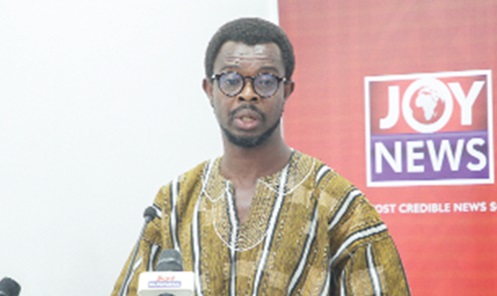
A Professor of Finance at the University of Ghana, Legon, Professor Yegandi Paul Alagidede, has urged the Bank of Ghana (BoG) and the Ministry of Finance (MoF) to move gradually from borrowed economic doctrines that are based on looking externally for liquidity.
He said the central bank and MoF must shift from the current system of looking out and rather anchor the economy more in the domestic asset base.
“We can operationalise this and take full control of our monetary system and root it in our indigenous natural resources that we already have here,” he said.
Delivering a public lecture titled “In the midst of abundance of gold, we are liquidity trapped,” Prof Alagidede said the two institutions could establish prudential guardrails that maintained the liquidity and growth through activated equity.
“And then at the Ministry of Finance, we must transition from managing the flows to managing the national balance sheet. This will give us more leverage to manage the economy,” he stated.
Ghana’s goldmine of power
Prof Alagidede said Ghana was really at the crossroads where indigenous intelligence met global algebra.
By establishing natural capital treasuries and sovereign tokenization, he said the central Ghana would be changing Ghana’s accounting system and also reclaiming “our soul”.
“And really, like rich people, Ghana is not a poor nation; it is a wealthy nation in a temporary state of Amnesia, and it is time to wake up.
“So if we look at just the $10 billion that we have harvested last year alone through GoldBod, we can declare that the era of the wealthy poor is officially over.
Ghana is a goldmine of power
He also urged the Statistical Service to undertake a proper sovereign asset audit of the country.
“If you want to tokenise gold, you really need to verify these assets and be able to measure properly and get the correct stocks.
“Not just gold, but our land, our other resources that we have achieved, but establish a credit foundation for a true national balance sheet,” he said.
Ghana not poor
Justifying the calls for the central bank to move from borrowed economic doctrines that are based on looking externally for liquidity, Prof Alagidede said over the past 60 or so years, Ghana’s economy had been constantly looking out for liquidity buffers in spite of the fact that that liquidity was already within the economy.
He said that was in spite of the fact that the economy had tremendous amount of resources that could be unlocked for domestic liquidity.
“This is because we have an accounting system and the economic thought that is running is one of the key problems that keeps us returning and looking outside for liquidity to finance an economy that is already rich.
“So I get what we call the paradox of locked greenery as the current system of national accounting only counts visible gold that leaves our shores, meaning that we are forced to borrow paper from abroad while sitting on the bedrock of wealth at home.
“So, speaking in real terms, Ghana is not a poor country.
This is a very rich nation and it is a rich house with a locked door and we have been begging for bread on the streets while our greenery is full simply because we have lost that key to our balance sheet,” he said.
He pointed out that gold was an asset and a permanent foundation for the cedi, budget and for our national development plans.
“So we can create our own liquidity without triggering inflation if that liquidity is anchored and verified in the resource that we have in abundance in this country and that is the gold.
In spite of having the riches gold in the world, he said Ghana had not been able to translate gold into the reserve.
“But elsewhere, this gold has made kingdoms, the crowns of kings and queens in different lands,” he said.
Prof. Alagidede further advised the two entities entrusted with Ghana’s financial stability to shift from the two economic models, which though helpful, were also restrictive.
He stressed that the two economic models –the orthodox model and the heterodox model -- had been successful in many ways in giving Ghana ideas about how to proceed with development and organise society.
In some sense, however, the models had also been quite limited in their ability, especially to take developing countries like Ghana that were resource-dependent into high-level, sustainable and steady-state growth.
“So they create what I call the paradox of scarcity in the midst of abundance,” he said.
Latest Stories
-
Building Ghana better: Why architects must be at the heart of national development
42 minutes -
GMet warns of severe rainstorm across northern Ghana
1 hour -
Semenyo eyes bigger targets after breaking Yeboah’s Ghanaian Premier League record
2 hours -
Health Ministry reviews NDC manifesto commitments
2 hours -
Mfantsipim School @ 150 and Creech’s Mfantsipim Diaries: My First Shock
3 hours -
Labour backs proposed IPEC but demands full involvement in pay reforms
4 hours -
Ashaiman, parts of Accra to face a 15-hour power outage today
4 hours -
Mohammed Baantima Samba retains NPP Northern Regional chairmanship
5 hours -
Qatar denies capturing three Iranian pilots after downing fighter jets
6 hours -
Jeff Konadu Addo retains NPP Eastern Regional chairmanship
6 hours -
Peru cracks down on illegal gold mining in Amazon reserve with military show of force
7 hours -
NPP polls: Makafui Woanya re-elected as Volta Regional Chairman
7 hours -
NPP polls: List of newly elected NPP regional chairmen
7 hours -
Eleven killed in Israeli strikes on southern Lebanon, authorities say
8 hours -
MTN launches Bright Scholars Alumni Network to harness opportunity
8 hours