

Audio By Carbonatix
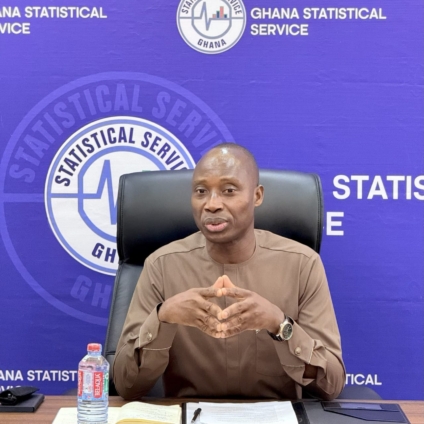
Multidimensional poverty in Ghana declined from 23.9% in the first quarter of 2025 to 21.9% by the third quarter, according to the latest Multidimensional Poverty Index (MPI) report released by the Ghana Statistical Service (GSS).
The report indicates that the decline reflects improving access to basic services and living conditions for many households.
Within a single quarter, more than 360,000 people exited multidimensional poverty between the second and third quarters of 2025. Overall, about 950,000 persons moved out of poverty between the third quarter of 2024 and the third quarter of 2025.
Despite the progress, regional inequality remains pronounced. The North East and Savannah Regions continue to record poverty incidence above 50%, while Greater Accra and the Western Region remain below 20%, highlighting persistent geographic disparities.
The rural–urban gap also remains wide, with poverty incidence in rural areas estimated at 31.9%, compared to 14.2% in urban areas, representing an 18-percentage-point difference.
According to the GSS, health and living conditions are the largest contributors to multidimensional poverty. Health-related deprivations account for 40.9%, largely driven by gaps in health insurance coverage. Poor living conditions contribute 33.8%, with overcrowding, inadequate nutrition, sanitation challenges, and housing conditions cited as key factors.
Education and employment continue to offer protection against poverty. Households with no formal education recorded a poverty incidence of 38.5%, compared to 5.7% among those with tertiary education.
Similarly, unemployed persons recorded a poverty incidence of 35.6 percent, while those in formal public and private sector employment recorded rates of about 5 percent.
The report also notes that vulnerable groups remain disproportionately affected, including persons with disabilities, households engaged in informal activities, female-headed households, and communities in high-poverty regions.
In addition, the share of the population facing a triple burden of unemployment, poverty, and food insecurity increased slightly. The proportion rose from 1.4% (208,000 people) in the second quarter of 2025 to 1.5% (227,500 people) in the third quarter.
The Ghana Statistical Service says sustained poverty reduction will require targeted social protection, expanded healthcare coverage, improved education outcomes, and decent job creation, particularly in rural and high-poverty areas.
Latest Stories
-
Today’s Front pages: Tuesday, September 1, 2026
15 minutes -
More work ahead despite significant progress in Africa’s food systems – AGRA report
30 minutes -
Young Ghanaian entrepreneurs pursue investment opportunities at Africa Food Systems Forum in Rwanda
36 minutes -
Ex-gang boss found guilty in 1996 murder of rapper Tupac Shakur
44 minutes -
Ghana between resources and rival powers: The politics of strategic choice
60 minutes -
I’ll do everything possible to help Bawumia win power in 2028 – Boakye Agyarko
1 hour -
Zanetor pledges to turn scientific research into jobs, industrial growth
2 hours -
Trade Minister inspects site for Cape Coast garment factory
2 hours -
$270m poultry investment to create 12,000 jobs under 24-Hour Economy
2 hours -
My petition against Special Prosecutor put on ice after political intervention – Kpebu
2 hours -
‘Don’t fail our teachers’ – Parents demand full implementation of strike deal
2 hours -
Ghana Baptist Convention ordains 92 ministers, urged to live above reproach
2 hours -
SIGA’s GH¢19.8bn SOE profit claim misleading – Bright Simons
2 hours -
Kpebu vows to publish full petition if case against OSP is thrown out
2 hours -
Central Regional Minister inspects projects in Assin South
2 hours