

Audio By Carbonatix
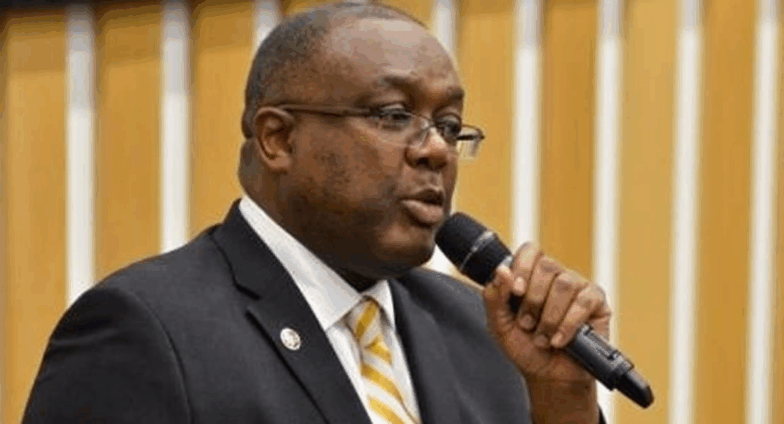
Ghana’s Ambassador to the United States, Victor Smith, has warned that corruption in national life does not begin after politicians enter office, but starts much earlier—during the campaign season, when money and gifts are used to influence voters.
“Corruption in our national life does not begin in the office — it begins in the campaign,” he said.
In an article from Washington DC, Ambassador Smith argued that when politicians distribute money, food, gifts, or favours in exchange for votes, the act must be described plainly as corruption.
“When money, gifts, food, or favours are distributed to influence voters, we must call it what it truly is: corruption in its earliest form,” he stated.
The National Democratic Congress (NDC) has given a three-member committee up to Tuesday, February 10, 2026, to submit its findings on allegations of widespread inducement and vote-buying during the party’s recent parliamentary primaries in the Ayawaso East constituency.
Reacting to the issue, he rejected attempts to frame vote-buying as generosity or kindness, warning that it is often a calculated transaction.
“It is not generosity. It is not kindness. It is an investment — an investment made with the expectation of profit,” he said.
Ambassador Smith said the consequences are predictable: once such individuals secure public office, their motivation for governance shifts from service to personal recovery.
Read more: NDC committee given February 10 deadline to submit Ayawaso East vote-buying report
“Once such a person gains appointment or public office, governance is no longer about service. It becomes a mission of recovery — recovering campaign expenses, rewarding financiers, and securing personal benefit before the next election cycle,” he wrote.
He warned that the state would then become the victim of private political spending, as officials began treating public funds as compensation for campaign costs.
“The public purse then becomes the reimbursement account for private political spending,” he said.
According to the Ghanaian envoy, vote-buying not only compromises elections but also creates conditions for corruption after the polls.
“In this way, vote-buying does not merely distort elections; it manufactures corruption after elections,” he noted.
Ambassador Smith argued that Ghana cannot claim to be fighting corruption if it focuses only on procurement and government contracts while allowing vote-buying to flourish during elections.
“We therefore deceive ourselves if we fight corruption only in government contracts and procurement while tolerating corruption at the ballot box,” he said.
He stressed that the quality of governance is shaped by the integrity of the electoral process.
“The seed determines the harvest. A corrupted mandate produces corrupted governance,” he warned.
Ambassador Smith called for a fundamental shift in how democracy is practised, insisting that politics must not become a marketplace where leadership is sold to the highest bidder.
“Our democracy must not be transactional. Leadership must not be purchased,” he said.
He also warned against reducing public office to a profit-making venture.
“Public office must never become a business venture whose profits are extracted from the suffering of citizens,” he stated.
Ambassador Smith said Ghana must reach a national understanding that both the giver and receiver in vote-buying are complicit in undermining democracy.
“The time has come for a national understanding: accepting inducements undermines accountability, and giving inducements destroys integrity,” he wrote.
He concluded that genuine change will require voters and politicians alike to reject inducements and return to principle-based politics.
“If we truly want honest leadership, then both the voter and the politician must reject the politics of gifts and embrace the politics of conscience.”
Latest Stories
-
At least 27 people killed in two shootings in South African township
4 minutes -
Iranian minister says only negotiation can end conflict after Trump rejects Hormuz deal
22 minutes -
Some Ghanaians use free speech to destroy reputations – Bobby Banson
36 minutes -
Crowds, deals and home solutions as Republic Bank-JoyNews Habitat Fair enters final day
4 hours -
Fire Service finds only five functional hydrants in Ministries enclave
4 hours -
Government to sign 1,200MW gas power deal before end of 2026 – Mahama
4 hours -
West Mamprusi launches community-led WASH and livelihoods project across 100 communities
4 hours -
Iran says it will wait for official US response after Trump rejects Strait of Hormuz proposal
4 hours -
90 Oti communities to benefit from government electrification project
4 hours -
Floods leave 246 without shelter as 93 houses collapse in North East Gonja
4 hours -
Labour Minister wants SOEs to help shape new public pay system
9 hours -
IPEC will ensure Equity and Sustainability in SOEs Compensation
10 hours -
White House bars CNN from travelling with Trump on Air Force One
10 hours -
Fennis wins second consecutive ITF J60 title in Accra
10 hours -
Spain beat England in thriller after Kane penalty miss
10 hours