

Audio By Carbonatix
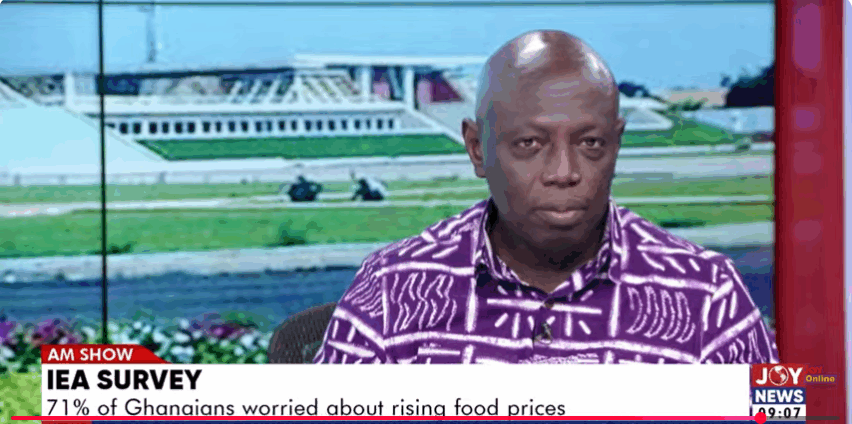
The Dean of the Faculty of Accounting and Finance at the University of Professional Studies, Accra (UPSA), Isaac Boadi, says many Ghanaians continue to face economic hardship because the prices of goods and services remained unchanged despite a sharp decline in inflation.
Speaking on the JoyNews AM Show on Friday, February 13, Prof Boadi explained that the recent drop in headline inflation to 3.8% does not mean the cost of living has reduced, stressing that inflation measures the rate of price increases rather than an actual fall in prices.
“People are going through hardship,” he said, insisting that the decline in inflation has not translated into relief for consumers at the market.
According to him, many people wrongly assume that a fall in inflation automatically leads to cheaper goods and services. However, he explained that inflation only reflects how fast prices are rising.
“When you record a reduction in inflation, it does not mean prices of goods and services have gone down. It only means the pace of increase has reduced,” he stated.
Prof Boadi noted that the cost of living remains a major concern for most households, estimating that nearly nine out of every 10 Ghanaians are struggling with the rising prices of goods and services. He added that both food and non-food items continue to put pressure on consumers.
He also expressed concern about rising unemployment, which he believes is worsening the economic situation and contributing to the hardship experienced by citizens.
The economist further questioned reports suggesting price declines in some parts of the country. He cited data indicating negative inflation or deflation in the Oti Region, Savannah Region and Upper North
Region, which typically suggests falling prices. However, he said the general market conditions do not reflect significant reductions in the cost of commodities.
He cautioned against celebrating the inflation figures without considering the lived experiences of citizens.
“So we should not be celebrating the headline inflation figure of 3.8%. When you go to the market, prices are still high,” he stressed.
His comments come amid ongoing national discussions about Ghana’s economic recovery, cost of living pressures, and the impact of inflation trends on households and businesses.
Prof Boadi emphasised that while official data may show improvements in key economic indicators, the persistent rise in the prices of goods and services means many Ghanaians continue to struggle to meet their daily needs.
Latest Stories
-
Black Stars: Adu Kwabena a doubt for September-October games after head injury
7 minutes -
Fire guts four-bedroom apartment at Millennium City
9 minutes -
KMA seeks funding to restart stalled Kumasi Central Market Phase II project
29 minutes -
Government unveils new guidelines to improve regulation of non-profit organisations
35 minutes -
Annoh-Dompreh cautions against partisan application of law in political speech cases
41 minutes -
Oti Peace Council sensitises Assembly Members in Jasikan, Kadjebi on conflict prevention
52 minutes -
Nawara petitions Ghana Police over alleged armed raid, gold seizure and destruction of mining equipment
54 minutes -
Ahafo Ano South West DCE Abubakar Sedik dies after brief illness
1 hour -
Ghana must draw lessons from Nkrumah’s Seven-Year Development Plan — Kwesi Pratt
1 hour -
Oil hits over 1-week low on hopes of boost to diplomacy in Iran war
3 hours -
They take GH¢100, sometimes GH¢200 – Okada riders allege police extortion in Accra
3 hours -
NACOC: We’ve found no presidential escort among suspects in €225m France cocaine case
3 hours -
Don’t turn students away over trunks and chop boxes – GES
3 hours -
Italian Apple store employees strike on iPhone 18 Pro launch day
3 hours -
Apple’s Tim Cook sees Australia’s social media curbs as ‘world-leading’, PM says
4 hours