

Audio By Carbonatix
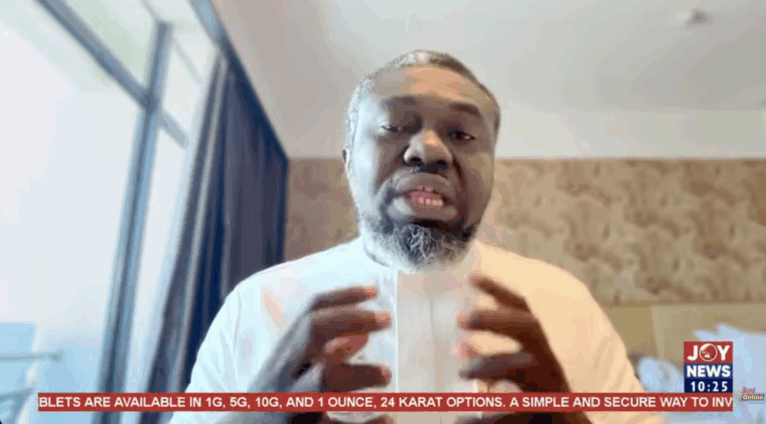
Political parties can eliminate vote-buying by using revenues from filing fees to cover legitimate delegate expenses, removing any justification for candidates to give gifts during elections, constitutional rights advocate Oliver Barker-Vormawor has suggested.
The Democracy Hub convener, speaking on Joy News' Newsfile programme following the Ayawaso East vote-buying controversy, proposed that parties take charge of transportation and other delegate costs to close the loophole often exploited by candidates.
His comments come as the National Democratic Congress (NDC) faces intense criticism over its handling of the Ayawaso East parliamentary primary held on February 7, 2026.
Reports suggest that the winning candidate, Mohammed Baba Jamal Ahmed's campaign team, distributed 32-inch television sets and boiled eggs to delegates during the primary, sparking national outrage and investigations by the Office of the Special Prosecutor.
Despite a three-member investigative committee recommending that the primary should ideally be annulled, the NDC maintained Baba Jamal as its candidate, citing time constraints and constitutional limitations. The party needed to present a candidate to the Electoral Commission by February 11, 2026, ahead of the March 3 by-election.
"If the parties have allowed this because, well, you know, delegates must be given some transportation money and things like that, they raise so much money from filing fees. They can decide that a component of it would subsidise the cost of that. The party will take charge of that cost so that anybody who gives any person would have no justification," Barker-Vormawor stated.
Barker-Vormawor argued that if parties covered legitimate delegate costs, the common justifications for giving gifts would disappear entirely.
"There cannot be gifts around election time; there cannot be all the things that we are claiming, or you know the things that we are using around this when we all know what the truth is," he said, dismissing attempts to rationalise vote-buying as delegate motivation.
The constitutional lawyer emphasised that various mechanisms exist to tackle the problem if there is genuine political will.
"Parliament can compel the political parties to do this. It can create legislation that empowers the Electoral Commission to disqualify when it's supervising this election. There's a whole range of tools that we can use to be able to deal with this if we wanted to," he explained.
Latest Stories
-
At least 27 people killed in two shootings in South African township
4 minutes -
Iranian minister says only negotiation can end conflict after Trump rejects Hormuz deal
22 minutes -
Some Ghanaians use free speech to destroy reputations – Bobby Banson
37 minutes -
Crowds, deals and home solutions as Republic Bank-JoyNews Habitat Fair enters final day
4 hours -
Fire Service finds only five functional hydrants in Ministries enclave
4 hours -
Government to sign 1,200MW gas power deal before end of 2026 – Mahama
4 hours -
West Mamprusi launches community-led WASH and livelihoods project across 100 communities
4 hours -
Iran says it will wait for official US response after Trump rejects Strait of Hormuz proposal
4 hours -
90 Oti communities to benefit from government electrification project
4 hours -
Floods leave 246 without shelter as 93 houses collapse in North East Gonja
4 hours -
Labour Minister wants SOEs to help shape new public pay system
9 hours -
IPEC will ensure Equity and Sustainability in SOEs Compensation
10 hours -
White House bars CNN from travelling with Trump on Air Force One
10 hours -
Fennis wins second consecutive ITF J60 title in Accra
10 hours -
Spain beat England in thriller after Kane penalty miss
10 hours