

Audio By Carbonatix
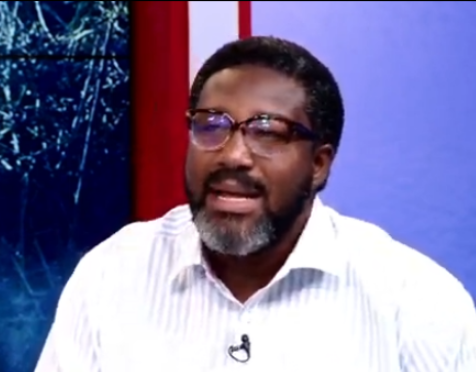
Lawyer and energy expert Lom-Nuku Ahlijah has called on the government to urgently diversify Ghana’s energy sector, warning that the country’s heavy reliance on fossil fuels leaves it exposed to global shocks.
His comments come in the wake of escalating military exchanges involving Israel, Iran, and the United States, which have heightened fears of a broader regional confrontation. Amid the strikes and counterstrikes, the Strait of Hormuz, one of the world’s most important shipping routes for global oil transit, has been shut, raising concerns about disruptions to international energy supplies.
Speaking on JoyNews AM on Monday, 16 March, Mr Ahlijah said the developments underscore the interconnected nature of the global economy and the vulnerability of countries that rely heavily on imported energy.
“It is true that a global economy is linked. Everything that is happening in other parts of the world has impacts in other places,” he said.
He noted that only a handful of countries operate with minimal external economic exposure.
“Even North Korea trades with Iran, they trade with Russia, they trade with China, and all that. You can have a buffer based on how the structure of your economy is,” he explained.
Mr Ahlijah cited recent security incidents in Burkina Faso to illustrate how international developments can quickly affect domestic markets in neighbouring countries such as Ghana.
According to him, the implications go beyond security concerns, extending directly into trade and supply chains.
Mr Ahlijah stressed that while global conflicts, from the ongoing war involving Ukraine to tensions in the Middle East, may be outside Ghana’s control, the country can still take steps domestically to mitigate their economic impact.
“So the point here is that a lot of these issues related to the fuel price increment, the war, and all of those things, whether it is Ukraine, whether it is now Israel, US and so on, are about what you do domestically to cushion.”
The energy expert urged the government to prioritise renewable energy and modern technologies as part of a broader restructuring of the country’s energy system.
He noted that Ghana’s Ministry of Energy now also carries a mandate for green transition, which he believes should translate into stronger policy interventions.
“What kinds of interventions, for example, are we putting in place as far as renewable energy is concerned?” he asked.
Mr Ahlijah warned that Ghana’s electricity generation mix has shifted dramatically over the past decade, with thermal power now dominating.
According to him, thermal sources—largely fuelled by fossil fuels such as gas—account for roughly 80 percent of the country’s power generation, while hydroelectric power contributes only about 20 percent. A decade ago, the situation was largely reversed.
He argued that while the shift towards gas has helped stabilise power supply, it also highlights the need to broaden the country’s energy base.
“The same way that we’ve been able to move more towards a fossil fuel like gas means that we should also be thinking about how we can move to other alternative sources of energy as far as our country’s dependence on these things is concerned,” he said.
Mr Ahlijah also pointed out that Ghana has struggled to meet its renewable energy targets despite several policy initiatives.
While solar and other renewable projects have been introduced, he said their contribution remains marginal.
“We haven’t seen the impact. In the generation mix, we don’t have even anywhere close to five percent," he noted.
Mr Ahlijah also referenced Ghana’s long-running nuclear energy ambitions, which began during the administration of former president John Agyekum Kufuor in 2007.
Although successive governments have continued to pursue the project, the country has yet to establish a nuclear power plant.
“We’ve talked about nuclear. We started our journey since 2007 during President Kufuor’s administration. Successive governments have continued, but we are still not there,” he said.
For Mr Ahlijah, the key lesson from the current geopolitical tensions is that Ghana must take more decisive action to prepare its energy sector for future disruptions.
“So it’s not only about the buffer,” he said. “The buffer is important, but we have a lot of things that we need to do.”
“My recommendation to this government is that we should begin to diversify the energy space in a more significant way,” he added.
Latest Stories
-
NPP shall prevail in 2028 – Afenyo-Markin rallies delegates
4 minutes -
Baffour Awuah’s detention is about showing him where power lies after resisting EOCO’s ‘unlawful arrest’ – Oppong Nkrumah
6 minutes -
NPP NEC elections – Bawumia sets the tone for post-election peace and unity for victory in 2028
11 minutes -
NPP needs leaders with vision, track record to support Bawumia – Mike Oquaye
13 minutes -
Kufuor urges NPP unity, says Ghana needs party back in power
14 minutes -
Let’s select NPP leaders based on careful examination, not great talk – Kufuor urges delegates
18 minutes -
Investigations, arrests aimed at silencing opposition MPs – Ahmed Shaib
29 minutes -
NPP Conference: Akufo-Addo urges new officers to unite party for 2028
48 minutes -
NPP delegates approve constitutional amendment making flagbearer leader of party
49 minutes -
Mahama Ayariga gives MMDCEs 30-day deadline to secure land for waste transfer stations
1 hour -
NPP approves 14 constitutional amendments despite earlier call to defer exercise
1 hour -
NDC walks out as NPP Delegates Conference suffers hours of delay
1 hour -
PNC cautions NPP against making flagbearer automatic party leader
1 hour -
Treat healthcare as an investment, not a budget cost – Mahama
2 hours -
Mahama outlines Ghana’s strategy to expand healthcare and produce medicines locally
2 hours