

Audio By Carbonatix
Ghana’s external reserves have recorded a notable increase, reaching approximately $14.5 billion, according to the Bank of Ghana, providing about 5.8 months of import cover and strengthening the country’s external position.
The latest figure marks an improvement from just over $13 billion reported at the previous Monetary Policy Committee (MPC) meeting in January 2026, reflecting a steady build-up of buffers to support the economy against external shocks.
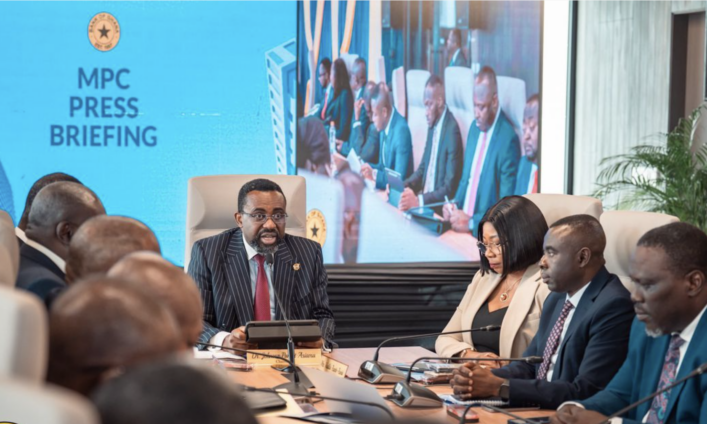
Addressing the opening of the 129th MPC meeting on Monday, March 16, Governor Dr Johnson Pandit Asiama said the development forms part of a broader trend of improving macroeconomic conditions, with the economy performing better than initially projected.
He noted that inflation has continued to ease, declining to 3.3 per cent in February and extending a streak of 14 consecutive monthly reductions. The rate has now fallen below the central bank’s medium-term target band, presenting new considerations for policymakers.
Dr Asiama also pointed to improved fiscal performance, with Ghana recording a primary surplus of 2.6 per cent of GDP at the end of 2025. He added that economic activity in the real sector is gradually picking up, supported by rising business and consumer confidence as well as a modest recovery in credit growth.
“Taken together, these indicators suggest that the economy is stabilising faster than many anticipated, underscoring the impact of disciplined policy measures,” he said.
The Governor stressed that the stronger reserves position is essential for maintaining investor confidence and enhancing Ghana’s ability to withstand global economic shocks.
He further disclosed that reserve accumulation will remain a priority under the government’s Ghana Accelerated National Reserve Accumulation Programme (GANRAP), which aims to significantly boost the country’s external buffers over the medium term.
According to him, the initiative targets an increase in reserves to the equivalent of 50 months of import cover by 2028, compared with the current level of about 5.8 months.
However, Dr Asiama cautioned that such ambitious programmes require careful coordination, noting that they could have implications for liquidity conditions, the central bank’s balance sheet and the conduct of monetary policy.
Despite the positive indicators, he emphasised that the MPC’s task goes beyond acknowledging improvements, as it must also consider how to sustain the gains amid global uncertainties.
He warned that rising tensions in the Middle East are already affecting global energy markets and shipping routes, increasing the risk of imported inflation for Ghana and posing fresh challenges for economic management.
Latest Stories
-
NSMQ 2026: Asanteman SHS books one-eighth spot as Senya SHS’s 2nd bid ends in heartbreak
3 minutes -
GHS unveils new framework to improve Ghana’s preparedness for health emergencies
8 minutes -
Suspected robber crashes stolen taxi into traders while fleeing mob at Ejisu
51 minutes -
NSMQ 2026: Kumasi Academy secures one-eighth spot after commanding win over Bueman SHS, Hohoe EP SHS
1 hour -
Republic Bank-JoyNews Habitat Fair: Day 2 ends on high note as patrons enjoy exciting discounts
1 hour -
Big Push: Upper West MPs inspect N12 works, optimistic improved roads will curb robberies
2 hours -
India is turning to ancient water systems as modern ones run dry
2 hours -
NSMQ 2026: Anum Presby survive tense battle to deny St. Charles Minor Sem. one-eighth spot
3 hours -
NSMQ 2026: Heartbreak for OLA SHS as Aburi Presby SHTS deny them one-eighth spot
3 hours -
Laptop catches fire on US flight, with passenger treated at airport
3 hours -
Tano North chiefs tackle police over ‘routine release’ of arrested illegal miners
3 hours -
Accra-Kumasi Expressway almost complete – Roads Minister
3 hours -
ECG announces temporary power outages in parts of Tema and Ashanti Regions
3 hours -
Somalia child hunger crisis deepens after aid cuts, UNICEF says
3 hours -
Media urged to help shape Constituency Games implementation
4 hours