

Audio By Carbonatix
Ghana has a habit that many of us can relate to: having plenty of potential but still depending on others when things get tough. The country is blessed with gold, cocoa, oil, diamonds, manganese, and a relatively stable political environment, yet every time there’s a global crisis, the economy seems to catch a cold.
COVID-19 came, and everything slowed down. The Russia–Ukraine war followed, and suddenly fuel and food prices shot up. Now tensions in the Middle East are making global markets jittery again. It’s almost like Ghana is seated in a cinema watching a movie it didn’t pay for but still feeling every punch, explosion, and plot twist.
The “We’ll Import It” Mindset
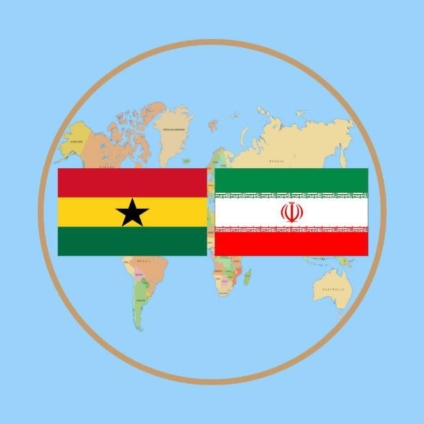
For years, Ghana has leaned heavily on imports of fuel, machinery, finished goods, even basic household items and industrial inputs. It’s a bit like owning a farm but buying your food from the market every day. Convenient? Yes. Sustainable? Not really. Meanwhile, some countries didn’t have that luxury. Take Iran.
Now, whatever one’s political views, there’s no denying one thing: Iran has had to survive under pressure. Decades of sanctions didn’t give it the option of saying, “Let’s just import it.” Instead, it had to build things itself, steel industries, pharmaceuticals, universities, and yes, a surprisingly advanced defence sector.
They didn’t necessarily choose self-reliance. They were forced into it. But in that pressure, they adapted. Ghana, on the other hand, still has the chance to choose it.
From Galamsey to “High-Tech Sey”
Let’s bring it home—illegal mining, or galamsey. I know some drones have already been deployed by the Minerals Commission, but. This isn’t just a rural nuisance anymore. It’s a full-blown national headache. Rivers are turning brown, forests are disappearing, and enforcement teams sometimes look like they’re playing hide-and-seek with people who clearly aren’t hiding very well.
And then there’s the uncomfortable truth we don’t say loudly enough: in some cases, politicians and local leaders have become both the arsonists and the firefighters at the same time publicly condemning galamsey while quietly enabling or benefiting from it behind the scenes. That contradiction is part of why the fight feels like running in circles.
We’ve tried task forces. We’ve tried bans. We’ve tried burning excavators, which, frankly, feels like setting your own TV on fire because of bad programming. Yet the problem persists.
Now imagine this: instead of chasing illegal miners on foot, Ghana deploys drones quietly flying over hotspots to capture real-time footage, identify activity patterns, and guide targeted interventions. No drama, no guesswork.
Iran, interestingly, has become known for developing relatively low-cost but effective drone technology. Not the Hollywood kind, but practical, adaptable systems used for surveillance and monitoring.
And let’s be honest, if drones can keep tabs on complex battle zones, they can probably handle a few excavators in a forest.
Security: Better Early Than “Sorry”
Ghana has long been seen as an island of peace in a rough neighbourhood. But that neighbourhood is getting noisier.
Terrorist activity in parts of the Sahel is creeping closer. Burkina Faso isn’t that far away. And as we all know, trouble doesn’t usually send a formal invitation before arriving.
The reality is simple: Ghana needs to strengthen its security, not because something has happened, but because something could.
Here again, technology matters. Surveillance drones, intelligence systems, rapid-response capabilities, these are no longer luxuries. They’re essentials.
Iran’s defence approach, shaped by years of external threats, focuses less on size and more on smart, flexible systems. That’s something a country like Ghana, with limited resources but big responsibilities, can learn from.
It’s Not About Picking Sides
Now, before anyone starts imagining dramatic geopolitical headlines, let’s be clear: engaging Iran doesn’t mean Ghana is suddenly switching teams like a football transfer window surprise. This is not about East versus West. It’s about Ghana doing what works for Ghana.
Countries all over the world quietly learn from each other, technology here, strategy there, expertise somewhere else. The smartest nations are not the loudest; they’re the most practical.
If Iran has figured out how to build industries under pressure, why not study that?
If they’ve developed cost-effective drone systems, why not explore that? It’s called learning, not loyalty.
The Bigger Picture: Building Our Own Strength
At the heart of this conversation is something deeper than defence or diplomacy. It’s about mindset. Do we continue reacting to global events, or do we start preparing for them?
Do we keep importing solutions, or do we begin building them?
Iran’s story, complicated as it is, offers one key lesson: when you don’t have the option to depend on others, you figure things out. Ghana doesn’t need to wait until it’s forced into that position.
A Little Courage Goes a Long Way
Engaging Iran carefully, strategically, and transparently could open doors in defence technology, industrial development, and technical education. Not as a silver bullet, but as part of a broader effort to stand on our own feet. Because at the end of the day, Ghana’s biggest challenge isn’t a lack of resources. It’s the gap between what we have and what we choose to do with it.
And maybe, just maybe, it’s time we stopped watching the global movie passively and started writing a bit more of our own script.
Latest Stories
-
Senyocue: Highlife will dominate global music in the next 20 years
21 minutes -
Innovare Limited congratulates Ahantaman Community Bank on ISO/IEC 27001:2022 certification urges others to follow suit
41 minutes -
Today’s front pages: Friday, October 2, 2026
53 minutes -
GPL 2026/27: Opoku Agyemang strike sends Kotoko third after Karela win
59 minutes -
Government ‘cannot dissolve’ GFA – Sports Minister Kofi Adams
1 hour -
Baffour Awuah granted GH¢50m bail after EOCO detention
2 hours -
“Every genre we create doesn’t have to be ‘Afro’ something” – M.anifest
2 hours -
GMTF marks first anniversary with lifesaving equipment for 9 more hospitals
2 hours -
NAIMOS seizes 10 excavators in raid on illegal mining sites blocking River Pra’s flow
2 hours -
Pump prices may stay unchanged as government holds TOR, Sentuo prices
3 hours -
Akra Reads! 2026: Ladé Wosornu poetry contest expands to JHS
3 hours -
K9 dog sniffs out 72lbs of prohibited Ghanaian food items at JFK
3 hours -
If family planning is our choice, why isn’t it in our budget?
3 hours -
Mahama, Lordina to attend World Assemblies of God Congress opening in Accra
3 hours -
‘The power play is disgusting’ – Atta Akyea questions Baffour Awuah’s detention by EOCO
3 hours