

Audio By Carbonatix
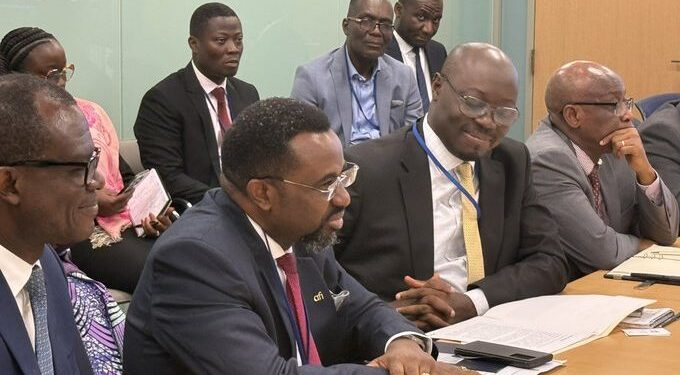
The Governor of the Bank of Ghana, Dr Johnson Pandit Asiama, has disclosed that government has begun steps to recapitalise the central bank, with a bond already issued to support the process.
According to him, the government remains the majority shareholder of the central bank and is legally mandated to restore its capital position.
“Government has given us a bond to kick-start the recapitalisation process. Government is the main shareholder, and the law mandates the government to recapitalise the Bank of Ghana, and there is an Memoranda of Understanding to that effect,” he stated.
The recapitalisation follows the significant impact of the Domestic Debt Exchange Programme, which led to losses on the central bank’s holdings of government securities and weakened its balance sheet. The programme formed part of broader fiscal and monetary reforms aimed at restoring macroeconomic stability.
Dr Asiama explained that the bond issuance is part of a structured plan agreed between the central bank and government to gradually rebuild capital buffers and ensure the Bank remains financially sound.
He further assured that despite these challenges, the central bank remains committed to its core mandate of maintaining macroeconomic stability.
“We will continue to meet our mandate of price and exchange rate stability,” he emphasised.
The Governor added that recent policy measures, including a 150 basis points cut in the policy rate to 14 percent, reflect growing confidence in the economy’s recovery path. He noted that easing inflationary pressures, relative exchange rate stability, and improved external sector conditions have created room for such policy adjustments.
In addition, the Bank reported improvements in the financial sector, with total assets of the banking industry increasing and non-performing loans declining due to a reduction in the stock of impaired loans. However, credit growth to the private sector remains subdued, highlighting the need for sustained policy support to stimulate lending.
The recapitalisation effort is therefore expected to reinforce the Bank of Ghana’s ability to sustain recent economic gains, support financial sector stability, and enhance the effectiveness of monetary policy in driving growth.
Latest Stories
-
Gov’t moves to upgrade rural 2G, 3G networks to 4G – Sam George
1 second -
Akaa Assembly Member appeals for telecom mast over poor network coverage
5 minutes -
Cybersecurity Authority responds to 3,363 incidents in six months – Sam George
6 minutes -
Ghanaians now get more data for less money- Sam George
7 minutes -
MTN commits US$1.1bn to Ghana network expansion after 5G reforms – Communications Minister
10 minutes -
Ahafo Clergy call for stronger action against galamsey and Tano river pollution
10 minutes -
GMSA calls for protection of Muslim students’ religious rights in mission schools
13 minutes -
MTN cuts 100 Mbps fibre package from GH¢987 to GH¢299 – Sam George
14 minutes -
Sam George touts lower data costs, enhanced DStv value under Mahama
16 minutes -
Women’s Football: Sharon Sampson, Evelyn Badu and top performers from the weekend
16 minutes -
NACOC warns of rising cannabis addiction among children in Volta through toffees, soft drinks
17 minutes -
3,372 BECE candidates without results to get second chance to resit exam
17 minutes -
Elsie Appau-Klu calls for Cosmetology Council, formalisation of beauty and wellness sector
22 minutes -
Government to deploy sovereign virtual platform for secure high-level meetings – Nana Oye Bampoe Addo
23 minutes -
Fire destroys belongings in Tabora Alhaji apartment
24 minutes