

Audio By Carbonatix
Emergency cholera medical supplies for several African countries have become stuck in a logistical quagmire caused by the Iran war, aid officials told Reuters, raising concerns about preparations ahead of the high-risk rainy season.
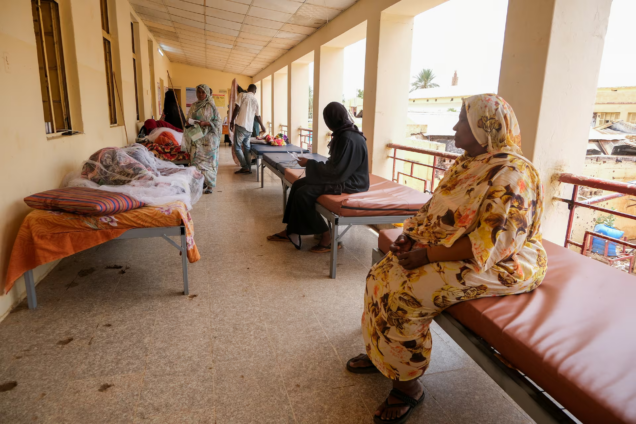
The stocks stranded in Dubai warehouses are contingency supplies placed in cholera-prone countries, including Chad and Sudan, ahead of the rainy months starting from May to curb any future outbreak of the fast-spreading, potentially fatal diarrhoeal disease.
Both the World Health Organisation and the International Federation of the Red Cross and Red Crescent Societies told Reuters that some of their African cholera supplies were stuck in a backlog in Dubai.
They are either trying to fly them out at 70% above the normal rate or buy replacements.
The kits create mini field hospitals for thousands of people, providing rehydration treatments and chlorine to treat sewage and drinking water to prevent further spread.
"We don't know if the kits will come in time, and it will be more costly and delayed," the IFRC's Danielle Brouwer said.
"Five cholera kits to treat 3,000 people a month, intended for Chad, which hosts camps for Sudan's war refugees, are among those affected, as well as tents for cholera patients in South Sudan, she added.
RELIANT ON IMPORTS
Last year was exceptionally bad for cholera, with more than 600,000 cases in 34 countries and 8,000 deaths globally, the WHO said.
So far in 2026, the number of cases is down by about 50% versus 2025, but the agency warned against complacency.
"A disruption of the supply chain will have dramatic consequences because we're talking (about) an explosive disease," said WHO's Lorenzo Pezzoli, team lead for epidemic bacterial diseases.
"If you don't have the time or the resources to control it in a matter of days or even hours, you would have an extreme contamination."
With the Strait of Hormuz shut amid Iranian attacks linked to nearly a month of U.S.–Israeli strikes, competition to use alternative overland or air routes is creating congestion and soaring costs, the IFRC said.
Many African countries, like Chad, do not produce their own medicines and rely fully on imports. One doctor said there have been no cholera cases this year so far, but that, if they do return, there is only enough medicine for about 100 people in the eastern province of Ouaddai.
Latest Stories
-
There is no time to waste – Bawumia orders NPP to begin 2028 work
4 minutes -
Sarkodie visits MobileMoney Fintech LTD
6 minutes -
John Boadu unveils new NPP strategy to win back youth and modernise party
12 minutes -
Hawa Koomson elected NPP National Women’s Organiser
14 minutes -
John Boadu begins NPP rebuild from grassroots ahead of 2028 election
15 minutes -
Titus Glover wins NPP National Organiser race on second attempt
18 minutes -
Winning 2028 election won’t be easy; we must work harder – Bawumia
19 minutes -
You’ll be part of 2028 campaign; there’s enough work for all of us – Bawumia to NPP aspirants
27 minutes -
John Boadu moves to unite NPP after heated leadership contest
29 minutes -
Today is not a day of victory but a day of responsibility and great unity – John Boadu
30 minutes -
Let us choose unity over division – John Boadu to NPP
33 minutes -
Our task is to build a renewed NPP – John Boadu
36 minutes -
Teamwork, discipline will drive NPP’s 2028 victory – Justin Kodua after retaining General Secretary position
43 minutes -
John Boadu elected National NPP Chairman
53 minutes -
Justin Frimpong Kodua retains position as NPP General Secretary
53 minutes