

Audio By Carbonatix
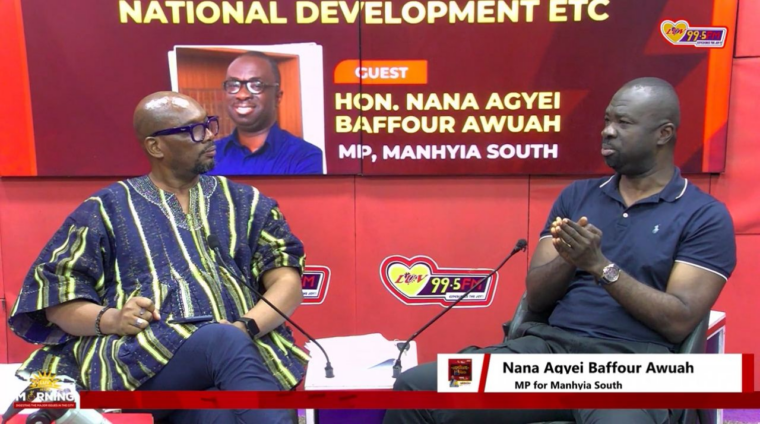
Member of Parliament for Manhyia South, Nana Agyei Baffour Awuah, is alarmed over the rapid and unregulated commercialisation of residential areas within the constituency.
Speaking on Luv FM, the MP warned that well-known residential neighbourhoods, including Ashtown and Alabar, are steadily being converted into commercial hubs, a development he characterised as “proper decadence.”
He described the trend as a reflection of systemic planning failures at the national level.
“It tells you that there is growth in business, but it also tells you that we are not planning as a country. It doesn’t happen anywhere that residential areas would become industrial areas unless there is rezoning. So, in the absence of rezoning, it represents what the country has become,” Mr. Awuah said.
The MP linked the problem to what he described as decades of neglect of the Ashanti Region, noting that the standard of urban management in Kumasi has declined significantly over the years.
He argued that the region’s leaders lack the resources and focus to properly discharge their duties in key districts, adding that broader systemic changes are also undermining governance at both the regional and city levels.
“Too many things are changing that are affecting how we are managing the country, particularly the region and the city of Kumasi,” he said.
Nana Baffour Awuah warned of the long-term consequences of inaction, suggesting that Manhyia South as a constituency could eventually lose its residential character entirely, with the exception of a few communities such as Dichemso, CPC, and Krobo Odumase.
“Ashanti Newtown and other places are becoming markets. I am even scared that over time, Manhyia South as we have come to know it may not exist,” he cautioned.
While acknowledging that the commercial activity signals economic growth, the MP stressed that prosperity without deliberate planning is counterproductive.
“Development is deliberate, you don’t leave it to happen on its own,” he said.
He also criticized the country’s local government and city authorities, accusing them of treating building permits as a revenue-generation tool rather than an instrument for ensuring proper urban development.
“Here, a permit is just a revenue generation mechanism by our city authorities,” he said, calling for a fundamental rethink of how building approvals are granted and enforced.
He urged relevant authorities to act urgently and creatively to address the crisis without placing an undue financial burden on the state.
“The time has come for all of us to now do the hard thinking, to find very creative ways to do things at a very cheaper cost to this country,” he concluded.
Latest Stories
-
AFCON 2027Q: ‘We should assemble the best squad’ – George Afriyie speaks on Black Stars’ team
5 minutes -
Public money belongs to the people, not government officials – Ato Forson
13 minutes -
Power, politics and the battle for electoral credibility: Is Ghana’s electoral commission truly independent?
16 minutes -
Sports Fund Administrator urges boxing fraternity to pursue partnerships beyond government funding
18 minutes -
Total number of jobs advertised increased 32% year-on-year to 3,578 in 7 months of 2026
41 minutes -
KNUST to receive 2,000 additional laptops for One Million Coders Programme
44 minutes -
President Mahama urges churches to provide safe spaces for children and vulnerable people
49 minutes -
George Dadzie Junior highly tipped in NDC regional secretary race due to grassroots experience
58 minutes -
Passenger arrivals at airport improved by 23% in first 7 months of 2026
60 minutes -
Aklerh returns to reggae roots with new single ‘Wo Dor’
1 hour -
Stacy Mense’s ‘W’ahyira Me’ gains airplay on radio, digital platforms
1 hour -
Economic activities mixed in 7 months of 2026; Cement sales decline by 10%
1 hour -
GFA and Sports Ministry must not rush Black Stars head coach appointment – Nana Fitz
1 hour -
Nkrumah Showboy: Chief Moomen’s play to explore Ghana’s first President’s early years
1 hour -
SEC to develop Social Bond Guidelines; over half of listed firms report on ESG indicators
2 hours