

Audio By Carbonatix
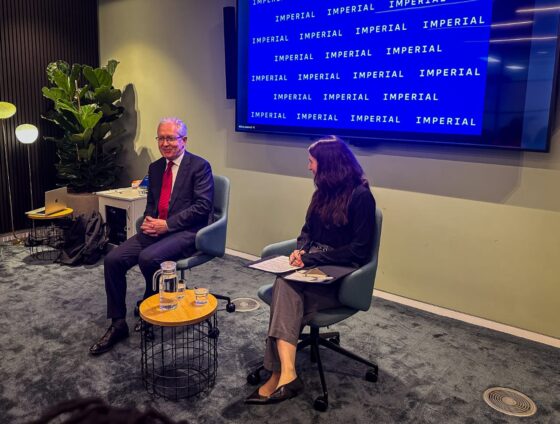
The President of Imperial College London, Prof. Hugh Brady, has emphasised the urgent need for stronger science communication, global collaboration and deeper Africa–UK partnerships to drive innovation and research impact.
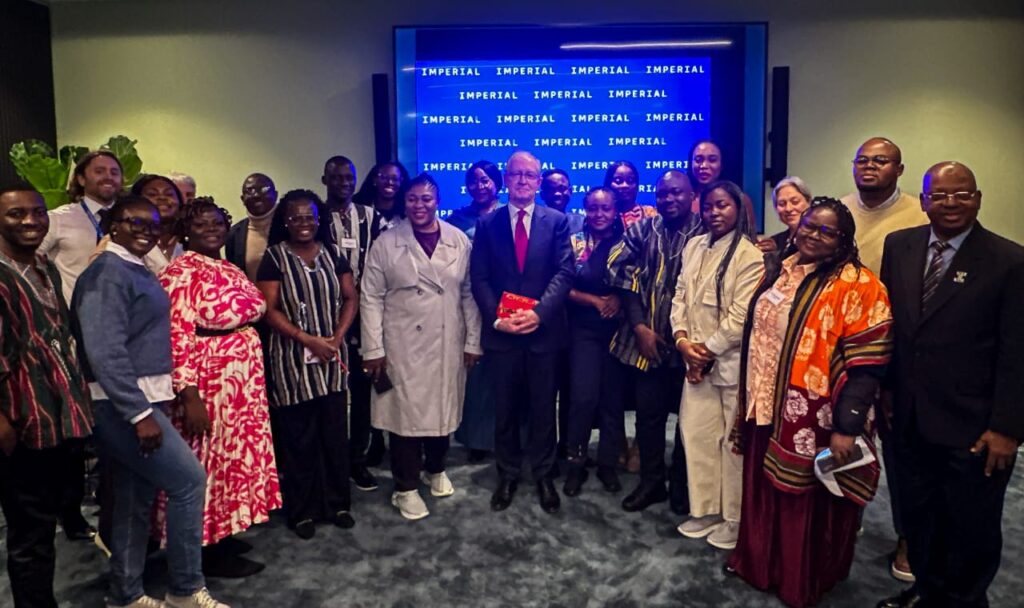
Addressing journalists from Ghana and Nigeria during a Science, Technology and Innovation (STI) Journalism Training Programme supported by the British High Commission in Ghana and partner institutions, Prof. Brady stressed that scientists must not only generate knowledge but also communicate it effectively to society.
He warned that failure to explain scientific discoveries clearly could weaken public trust and reduce investment in research.
“We must not only find the science, but learn how to tell the story,” he emphasised, noting that public understanding is essential for attracting government investment and inspiring young people—particularly girls—to pursue careers in science and engineering.
Prof. Brady noted that at Imperial College London, doctoral training now includes structured science communication to ensure researchers can explain complex discoveries in ways accessible to non-scientific audiences.
He also highlighted the growing importance of multidisciplinary collaboration, describing Imperial’s research model as “convergence science”, where experts in health, engineering, data science and business work together to address complex global challenges.
The Imperial President further called for deeper global collaboration in science, technology and innovation, stressing that the future of research depends on international partnerships and stronger links with Africa’s rapidly growing innovation ecosystem.
Speaking during the engagement, he shared insights from his academic journey across leading institutions, including University College Dublin, Harvard Medical School and the University of Bristol, as well as clinical training in Toronto.
He explained that his career in academic medicine was shaped by early exposure to clinical research integration during a 1981 student elective at Harvard, where he observed how scientific discoveries were rapidly translated from laboratories into clinical practice.
Prof. Brady noted that this “bench-to-bedside” model of innovation has strongly influenced his leadership philosophy at Imperial College London.
He emphasised that Imperial’s identity is rooted in STEMB—science, technology, engineering, mathematics and business—arguing that this focus distinguishes the university from traditional comprehensive institutions.
“Imperial was founded to be useful,” he said, noting that the institution’s 1907 mission has evolved from supporting industry to tackling global challenges such as climate change, health systems strengthening, energy transition and security.
Prof. Brady also underscored the importance of internationalisation, highlighting Imperial’s global innovation hubs in Accra, Singapore and San Francisco, which are designed to strengthen bi-directional exchange of talent, research and enterprise.
According to him, the West Africa hub has become particularly impactful, fostering collaboration in digital health, smart cities, enterprise education and research commercialisation.
He described the West African innovation ecosystem as a “kindred spirit” to Imperial’s mission, noting its growing appetite for enterprise, applied research and technology transfer.
Prof. Brady added that African students and innovators are demonstrating strong entrepreneurial potential and global competitiveness, particularly in technology-driven sectors.
The engagement formed part of broader efforts to strengthen STI journalism capacity in West Africa, enabling journalists to better report on science, innovation and research-driven development.
Prof. Brady concluded by stressing that science, innovation and communication must work together to create a virtuous cycle of knowledge, investment and societal impact.
Latest Stories
-
Ghana, Germany deepen cooperation on railways, labour mobility
43 seconds -
Huge crowds greet Pope in Paris for open-air Mass
12 minutes -
‘I never said I’ll declare a state of emergency’ – President Mahama on galamsey
52 minutes -
Bobby Banson condemns EOCO’s attempted arrest of Nana Agyei Baffour Awuah
1 hour -
When Kumasi begins to look like somebody is in charge
1 hour -
Parliamentary probe into cocaine seizure would be a waste of time – Inusah Fuseini
1 hour -
Cocaine seizure: Focus on Ghana’s reputation, not partisan blame – Osae-Kwapong
1 hour -
Two Invitations, Three Interrogations: Did Baffour Awuah tell the whole story?
2 hours -
Drug cartels may be seeing Ghana as easy route – Lenin Anane Agyei
3 hours -
Ghana risks gaining notoriety as drug-trafficking hub – Bobby Banson
3 hours -
Government dismissed my drug trafficking warning, then tried to arrest me – Ntim Fordjour
3 hours -
Day Two: 3rd Republic Bank-JoyNews Habitat Fair Clinic underway at Junction Mall
3 hours -
NACOC addressing inherited gaps in fight against drug trafficking – Deputy Director-General
3 hours -
Taekwondo goes to school as GTF launches five-region youth campaign
3 hours -
The issues Mourinho is struggling to fix at Real Madrid
3 hours