

Audio By Carbonatix
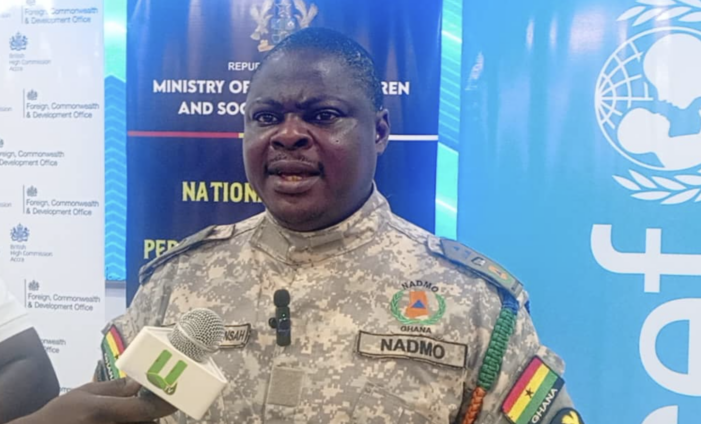
Ahead of the rainy season, the National Disaster Management Organisation (NADMO), in collaboration with key stakeholders, has begun a massive desilting of gutters, dredging of rivers and demolition of unauthorised structures on waterways, Ramsar sites and other low-lying areas in the Central Region.
The exercise, being supported by the military, has commenced in the Upper Denkyira East, Awutu Senya East, Abura Asebu Kwamankese and Ekumfi districts, Agona West Municipality and the Cape Coast Metropolis.
The demolition is aimed at mitigating flood risks and enhancing disaster resilience by clearing blocked waterways and vulnerable areas to prevent possible loss of lives, damage to property and disruptions during heavy rainfall.
Consequently, the Central Regional Director of NADMO, Mr Emmanuel Kwesi Dawood, has advised homeowners and developers occupying river buffer zones or structures earmarked for demolition to vacate immediately or face the law.
He warned that NADMO would not hesitate to pull down such illegal structures, which, he said, had choked drainage systems for years, turning low-lying areas into deadly flood traps even after light rains.
Mr Dawood made the remarks at the closing ceremony of a three-day leadership and capacity-building workshop for Metropolitan, Municipal and District Directors of NADMO and their deputies, held on Friday, April 10.
The workshop, on the theme: “Resetting NADMO for Improved Performance in Disaster Resilience,” brought together 125 participants and equipped them with critical skills through sessions on NADMO’s new direction and command structures, hydrometeorological disasters, fire management, relief operations, administration and training protocols.
Participants also undertook practical exercises to hone their disaster coordination skills and were presented with certificates upon completion.
Mr Dawood noted that the proactive disaster prevention measures had been reinforced by warnings from the Ghana Meteorological Agency that heavier rainfall was expected this year.
In response, he said NADMO had intensified public education campaigns on disaster prevention and management across the region since November 2025.
He therefore called on all stakeholders, particularly traditional and religious leaders, to lend their support, noting their influence in mobilising communities, disseminating early warnings through trusted local networks and encouraging behavioural change to improve resilience against floods and other hazards.
Some participants, including Mr Kennedy Owusu Agyei of the Assin Fosu Municipality, Mr Acquah Mensah of Agona East and Madam Fatimatu Iddrisu of the Gomoa Central District, commended the training, saying it had equipped them with the skills needed to respond swiftly to emergencies, mitigate risks and coordinate recovery efforts effectively.
Latest Stories
-
Restoring BDC confidence helped turn around TOR – MD
4 minutes -
I’m beginning to suspect NPP members may be involved in drug trafficking – Mustapha Gbande
7 minutes -
How hasty reading and inattention to complex texts may affect Ghanaian learners’ comprehension
11 minutes -
Public transport fares to increase by 8% from September 26
11 minutes -
How a $125m plant meant to fix Teshie-Nungua’s water crisis became a $235m judgment debt
11 minutes -
NPP calls for parliamentary inquiry into cocaine trafficking concerns
12 minutes -
Appiatse redevelopment enters final phase with 69 new housing units
13 minutes -
Ahafo Ano South West DCE was tipped to win parliamentary for NDC seat in 2028 – Ashanti Region NDC Chairman
19 minutes -
UniMAC Dean urges freshers to build strong personal brands, networks
22 minutes -
Meet Larry Prince: Maamobi-born artiste turning street experiences into music
23 minutes -
Career opportunity: Senior Geologist sought for key mining role
24 minutes -
Africa Nations Volleyball Championship: Ghana’s Black Spikers suffer narrow defeat to Cameroon in quarterfinals
25 minutes -
Jordan Ayew ruled out of Ghana’s AFCON qualifiers
37 minutes -
10% Sanitation Fund under DACF not enough– Parliamentary Committee
51 minutes -
From wooden stick to national gold: Wa West Girl’s remarkable javelin journey
55 minutes