

Audio By Carbonatix
Education policy think tank, Africa Education Watch (Africa Education Watch), is warning that Ghana’s teacher deployment system remains highly imbalanced, leaving many rural schools understaffed despite what it describes as a national surplus of teachers.
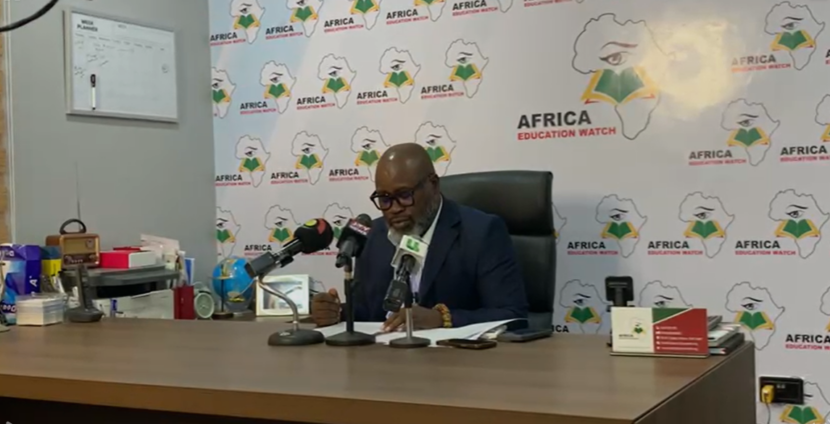
The Executive Director of the organisation, Kofi Asare, made the remarks at a press briefing, where he outlined what he described as persistent inefficiencies in how teachers are distributed across the country.
He noted that while Ghana appears to have enough teachers on paper, many rural districts continue to suffer shortages, especially at the basic education level.
“Ghana has about 15,000 more teachers than needed to meet the teacher-to-pupil ratio at the primary level,” he said, adding that the situation is different at the Junior High School level, where shortages remain, particularly in STEM subjects.
Mr Asare explained that the challenge is not necessarily recruitment, but distribution, arguing that teachers are disproportionately concentrated in urban centres at the expense of rural communities.
According to him, “about 30,000 classrooms still lack teachers due to distributive inefficiencies, culminating in surplus deployment in regional capitals, metropolitan areas, and urban municipalities.”
He further highlighted what he described as severe disparities in northern Ghana, noting that while some areas have surplus staff, rural schools remain critically underserved.
“In some districts, about 20 per cent of primary schools are being run by just one teacher,” he said, warning that such conditions undermine teaching and learning outcomes.
The organisation argues that addressing the imbalance requires deliberate policy interventions to ensure equitable deployment, particularly to rural and underserved areas.
Ghana’s education sector has, in recent years, faced ongoing debates over teacher shortages, deployment challenges, and quality of learning outcomes, especially as the government continues efforts to expand access to basic education.
Africa Education Watch says its findings should inform reforms aimed at improving efficiency and fairness in teacher allocation across the country.
Latest Stories
-
Bank of Ghana engages stakeholders in Techiman
6 minutes -
PIAC unable to verify GH¢21m petroleum-funded projects in Ayawaso West
13 minutes -
Ketu North MP led delegation petitions government over deteriorating Weta Irrigation Scheme
17 minutes -
Unpaid contractor delays KATH Mother and Baby Unit as materials deteriorate
22 minutes -
Kofi Adams says Ghanaians ignored warnings over World Cup visa payments
27 minutes -
Banks to apply 20% VAT on cross-border digital payments with Ghana-issued cards
32 minutes -
Education Minister appeals to GAUA to call off strike, resume work on October 19
37 minutes -
Mahama assures Assemblies of God of support for World Congress
42 minutes -
Ghana must prioritise home-grown AI solutions to meet national needs – UNDP
46 minutes -
Mahama truly cares – Obuobia Darko-Opoku
50 minutes -
Fire at GRIDCo Mallam substation disrupts power in parts of Accra
59 minutes -
Your client is Parliament, not a party; remain honest even when unwelcome – Speaker
1 hour -
Mahama urges chiefs to help tackle galamsey, protect water bodies
1 hour -
Bank of Ghana pilots digital cross-border payments with Rwanda, Nigeria
1 hour -
Cedi edges higher as GoldBod boosts dollar supply to banks
1 hour