

Audio By Carbonatix
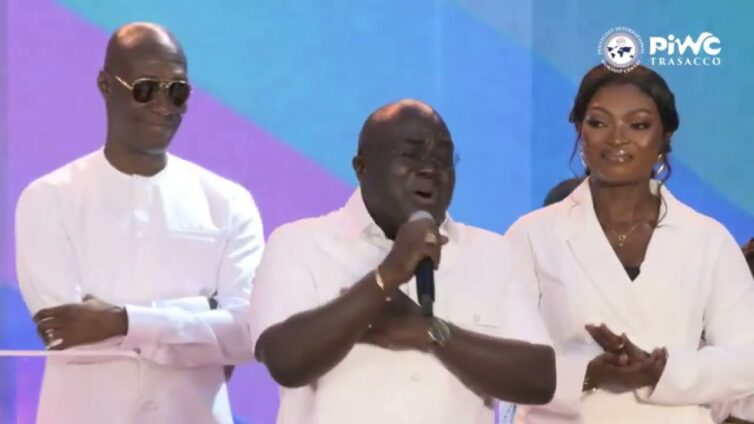
And it came to pass that when Julius Debrah drew near unto the matter, he beheld it, and was troubled in spirit.
And Julius wept.
But before the tears found their way to the public square, the apology had already taken its seat—calm, composed, and carefully dressed for the occasion.
Now, in the Republic of Uncommon Sense, timing is not a small matter. It is everything. The order in which things happen often tells you more truth than the things themselves. And so, when the apology arrives before the emotion, one must sit upright, adjust one’s cloth, and pay attention.
Not long ago, when the Government unveiled its Code of Conduct, the same Chief of Staff stood with the confidence of a headmaster on speech day and declared that the Code must be studied like scripture—no excuses, no explanations, no stories when the line is crossed. It was a powerful statement. The kind that makes you believe that, at last, the cane has been polished and discipline has returned to the classroom.
Then came the incident. And with it, the now-famous words of Mary Awusi, which have since been described in various ways depending on where one is standing—either as a harmless slip or as a full demonstration of power stretching its legs in public.
But before the nation could finish digesting the matter, the apology arrived. Ah, the apology. It did not come quietly, nor did it come empty-handed. It came with conditions, like a visitor who brings his own chair to a funeral.
“If Ghanaians feel my comments were unwarranted…”
That was the line.
Now, in our part of the world, we know the difference between “I am sorry” and “if you are offended.” One is a confession; the other is a conversation. One accepts the fault; the other politely invites debate. As the elders say, the goat that says it is only passing through your farm is the same one that has already tasted your cassava.
So the apology sat there, neither fully inside nor completely outside accountability, and just when the nation was still weighing its meaning, emotion entered the room.
The Chief of Staff came, saw, and—like the shortest verse in governance scripture—he wept.
Now, Ghanaians are not strangers to emotion. We understand that a leader must have a heart. A stone does not lead people; it only occupies space. But we are also students of sequence. We have watched governance long enough to know that when a matter is serious, action usually follows swiftly—sometimes before the ink on the complaint has even dried.
Which is why this particular story has left many scratching their heads like a man who has just been asked to pay school fees twice.
Because the sequence, as it stands, is curious.
A Code that promised no excuses.
An incident that raised serious questions.
An apology that negotiated its way through responsibility.
And a reaction that arrived with tears.
But somewhere between all these chapters, one page appears to be missing.
The page titled Consequence.
You see, when the headmaster declares that no student will escape punishment after breaking the rules, and the first offender is invited instead to share emotions at assembly, the rest of the class begins to revise their understanding of discipline. Soon, everybody is late—but everybody also has a story.
And so the citizens are asking—not with anger, but with the quiet persistence of people who have heard this sermon before:
If there shall never be any excuse when the line is crossed, why does the line now appear negotiable?
If the matter is weighty enough to draw tears from high office, why is it not weighty enough to draw consequences from the same office?
Meanwhile, the ever-composed Church of Pentecost sits in dignified silence, like an elder at a family meeting who says nothing but misses nothing. In Ghana, influence does not shout; it observes. And when it observes, those who understand power begin to adjust their posture.
But even then, the question remains.
In the Republic of Uncommon Sense, we do not lack laws. We do not lack codes. We do not even lack declarations that sound like scripture when they are first delivered.
What we occasionally struggle with is alignment—the delicate but necessary marriage between what we say, what we feel, and what we do.
Because when apology comes before tears, and tears come before action, the citizens are left reading a story whose ending has not yet been written.
And so, gently but firmly, they turn the page and ask:
If Julius wept…
When will the Code speak?
---
Jimmy Aglah is a media executive, satirical columnist, and author of *The Uncommon Sense Playbook: Thinking Clearly in Noisy Times*. He writes from the Republic of Uncommon Sense—where logic is optional, but consequences are not.
Latest Stories
-
Savio scores on debut as Spurs bounce back to beat Charlton
2 hours -
Uefa to push to remove Infantino after dropping boycott
2 hours -
GH¢1.7bn GoldBod loss misconstrued – IEA
3 hours -
Mahama unveils Bawku Revitalisation Fund Committee
3 hours -
Christians urged not to hide their gifts for church development
3 hours -
Deputy AG punches holes in Hannan’s counsels’ letters, medical reports
3 hours -
Field cashier of Cooperative Credit Union remanded for stealing
3 hours -
Ghana Armwrestling Federation engages Egyptian Ambassador over sports collaboration
4 hours -
NSMQ 2026: Augusco declared winners, book quarter-final spot after Anlo, Kumasi High walk off
4 hours -
Mourinho says hat-trick hero Mbappe hungry for Real Madrid history
4 hours -
Democracy Cup 2026: Winner to play in the United States in May 2027
4 hours -
NSMQ 2026: St. John’s Grammar knocks Mpraeso SHS off seeded spot, advances to quarter-finals
4 hours -
Rashid Pelpuo welcomes new role, thanks Mahama for keeping him in government
4 hours -
Mahama inaugurates committee to oversee GH¢1bn Bawku Revitalisation Fund
5 hours -
Berko’s US conviction does not automatically establish Ghana bribery claims – OSP
5 hours