

Audio By Carbonatix
In a region long considered politically unwinnable, he chose not to complain; he chose to rebuild. Where others saw an opposition stronghold, he saw an opportunity. Today, the man who once stitched together a fractured party base is quietly positioning himself for the highest office in the land.
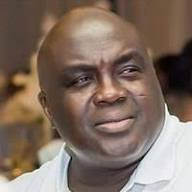
In Ghanaian politics, few journeys are as quietly strategic yet profoundly impactful as that of Mr Julius Debrah. His story is not one of overnight fame or sudden political fortune. Instead, it is a carefully constructed ascent built on grassroots mobilisation, organisational discipline, and an uncommon ability to unify competing interests within a deeply divided political landscape.
When Mr Julius Debrah assumed the role of Eastern Regional Chairman of the National Democratic Congress (NDC), scepticism was immediate and widespread. The Eastern Region had long been perceived as a stronghold of the rival New Patriotic Party (NPP). For decades, the NDC struggled to establish meaningful electoral dominance in the region. Party insiders and observers alike questioned whether Mr Julius Debrah could succeed where his predecessors had failed.
It was not just a political challenge; it was a test of leadership, strategy, and endurance.
Rebuilding from the Ground Up
Rather than rely on rhetoric, Mr Julius Debrah turned to structure. Within a remarkably short time, he embarked on an aggressive grassroots campaign, touring constituencies, resolving internal disputes, and reactivating dormant party offices. His approach was methodical: “rebuild trust internally before confronting external opposition.”
Constituency offices were not merely reopened; they were resourced, staffed, and transformed into active communication hubs. Party structures that once existed only in name became functional engines of mobilisation. Committees were formed to address factional divisions, creating a renewed sense of unity that proved difficult for political opponents to exploit.
At the grassroots level, Mr Julius Debrah introduced a simple but powerful idea, “Empower the base.” By equipping local activists with the tools and resources needed to organise effectively, he turned ordinary party members into strategic campaign anchors. These grassroots operatives became the backbone of a revitalised NDC presence in the region.
The results were tangible. The party began to make electoral gains even in areas previously considered untouchable strongholds of the opposition.
A Leadership Style Defined by Accessibility
For journalists covering the Eastern Region at the time, including this writer, Mr Julius Debrah’s leadership stood out for reasons beyond electoral performance. In an era where political figures often shield themselves from scrutiny, he remained unusually accessible.
He was available consistently. Whether responding to criticism, clarifying party positions, or engaging with the media on emerging issues, Mr Julius Debrah maintained an open line of communication. His humility, coupled with a respectful and measured tone, earned him credibility not just within party ranks but across the broader political and media landscape.
This accessibility was not accidental; it was strategic. In politics, perception shapes reality, and Mr. Julius Debrah understood the value of trust, both within the party and among the public.
From Organiser to National Power Broker
Mr Julius Debrah’s trajectory reflects a broader but less common political pathway in Ghana, the rise from party chairman to national leadership contender. While this route is more familiar in parliamentary systems globally, it remains relatively rare in Ghanaian politics.
Yet, Mr Julius Debrah has followed this path with precision.
After consolidating his influence at the regional level, he transitioned into national governance roles, serving as a minister and later as Chief of Staff under President John Dramani Mahama.
These positions elevated him from party operative to national power broker, someone capable not only of organising campaigns but of shaping governance at the highest level.
Each step in his journey has reinforced a central narrative that of a bridge-builder. Mr Julius Debrah has consistently positioned himself between the grassroots activists who energise the party and the elite stakeholders who sustain it financially and politically.
The Making of a Presidential Contender
Today, conversations about the future of the NDC increasingly include Mr Julius Debrah’s name. With eyes set on the party’s 2028 presidential primary, he is emerging as a potential flagbearer, one whose candidacy would be rooted not in populist appeal alone, but in organisational strength.
His potential contest with figures such as Dr Mahamudu Bawumia of the NPP underscores the scale of the challenge ahead. Yet, if Mr Julius Debrah’s political career offers any indication, he is no stranger to difficult terrain.
His strengths are clear:
- Fundraising Capability: A skill honed during his tenure as chairman, critical for sustaining national campaigns.
- Party Loyalty: Viewed as a builder rather than an outsider, he commands institutional trust.
- Strategic Networking: His ability to connect grassroots supporters with high-level decision-makers remains one of his defining assets.
Perhaps most importantly, he has demonstrated an ability to unify a rare quality in a political environment often defined by factionalism.
A Calculated Future
Mr Julius Debrah’s rise is not built on spectacle. It is built on systems, quietly constructed, carefully maintained, and strategically deployed. From the Eastern Region to the corridors of national power, his journey reflects a deep understanding of how political influence is earned and sustained.
Whether he ultimately secures the NDC’s presidential nomination remains to be seen. But one thing is increasingly clear: Mr Julius Julius Debrah is no longer just a party organiser.
He is a contender.
And in Ghana’s evolving political landscape, his story may well be a blueprint for a new kind of leadership, one that begins not at the top, but at the base, and rises steadily, deliberately, to the summit.
…End…
Latest Stories
-
GRA blames system failure for delay in issuing receipt over passenger’s customs duty
7 minutes -
Livestream: Newsfile discusses World Cup visa scandal, beach demolitions, education strikes, BRICS bid
10 minutes -
NC-PTAs welcomes end of teachers’ strike, urges parents to prepare children for Monday
20 minutes -
Government procures over 2,000 transformers as Ghana’s electricity access hits 89.13% – Energy Minister
47 minutes -
UTAG-UG threatens strike on October 19 over unpaid allowance
55 minutes -
Let The Constitution direct Chieftaincy to deliver “All Development Is Local”
2 hours -
John Jinapor outlines renewable energy, nuclear power priorities for 2027
3 hours -
Ghana explores centre of excellence for hearing, communication and cochlear implant care
3 hours -
Schizophrenia-related disorders lead mental health cases recorded in Ghana
4 hours -
Dutch authorities enlist Ghana in hunt for fugitive drug lord Bolle Jos
4 hours -
Ghana housing finance conference adopts communiqué to improve affordable housing access
9 hours -
Special Initiatives Minister urges Wa Technical Institute to enrol more girls as EU-backed solar training lab opens
9 hours -
In the matter of my first year at the Bar
9 hours -
ActionAid Ghana calls for an end to child marriage, greater investment in girls’ rights
9 hours -
Newsfile to tackle World Cup visa scandal, beach demolitions, education strikes, BRICS bid
10 hours